[Info] How Contract Upholstery Is Manufactured for Hospitality Seating

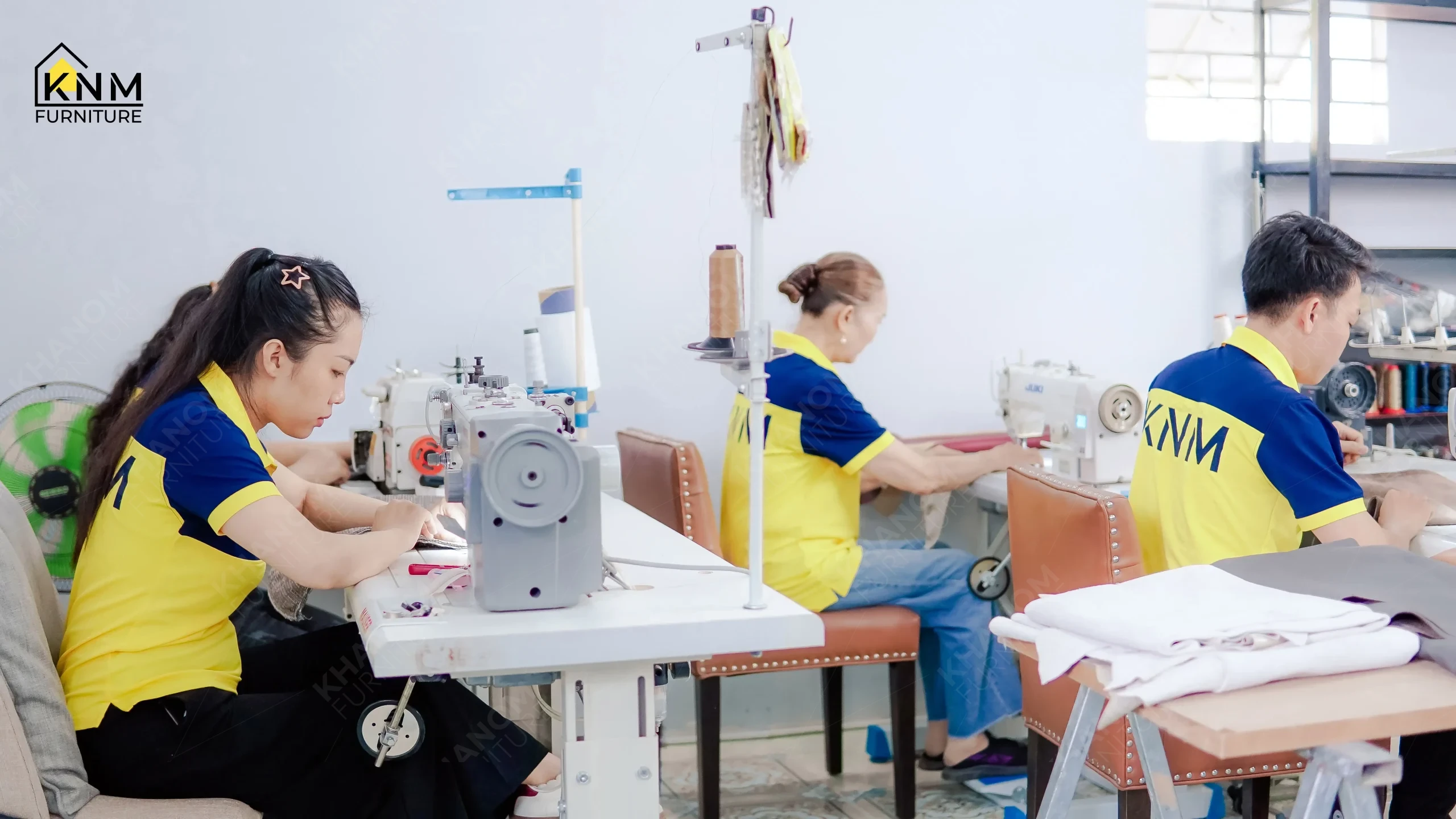
Row of Khanom Furniture (KNM Furniture) upholstery staff at flatbed and overlock sewing stations constructing seating fabric panels in the factory sewing room, Vietnam
Khanom Furniture (KNM Furniture) |

HOW CONTRACT UPHOLSTERY IS MANUFACTURED FOR HOSPITALITY SEATING

A Look Inside Foam Grading, Frame Tensioning, and Batch Consistency for FF&E Projects

Contract upholstery for hospitality seating follows six sequential steps: frame and webbing preparation, foam selection by density grade, pattern cutting and sewing, fabric tensioning and application, finishing and leg assembly, and pre-shipment verification. For COM-specified projects, fabric yardage, pattern repeat, and bias stretch direction are confirmed against the material schedule before the first panel is cut.

The 6 Stations of Contract Upholstery Production:

  • Frame and webbing preparation — suspension strap tension checked before foam padding is applied
  • Foam selection by density grade — seat, back, and arm positions matched to separate ILD grades
  • Pattern cutting and sewing — COM tracked separately from stock inventory, bias stretch confirmed
  • Fabric tensioning and application — tight-seat and tight-back sections fixed directly to frame
  • Finishing and leg assembly — legs, welt trim, and tufting completed after the panel is secured
  • Pre-shipment verification — batch comparison for tension, pattern alignment, and color consistency
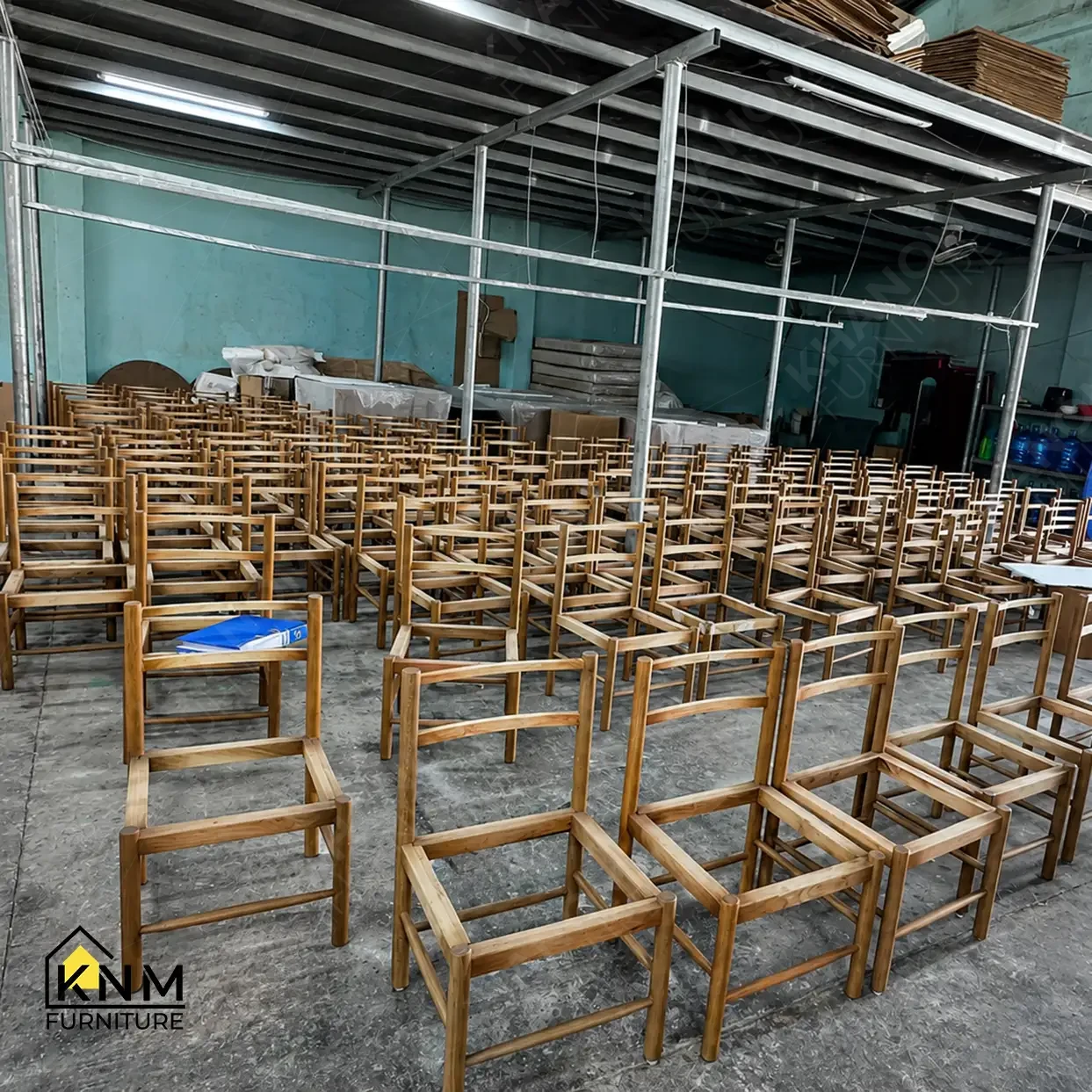
Rows of unupholstered solid wood dining chair frames staged on factory floor awaiting upholstery at Khanom Furniture (KNM Furniture), a contract furniture factory Vietnam

This process sits within Stage 5 of KNM Furniture’s broader hospitality furniture manufacturing sequence — see A Production Process Guide for FF&E Project Teams for the complete 8-stage overview from drawing review to export packaging. As a contract upholstery manufacturer for US hospitality FF&E projects, KNM ties every foam grade, tensioning step, and finishing detail back to the approved shop drawing rather than a standard catalog spec — from a single lounge chair to an extended banquette run.
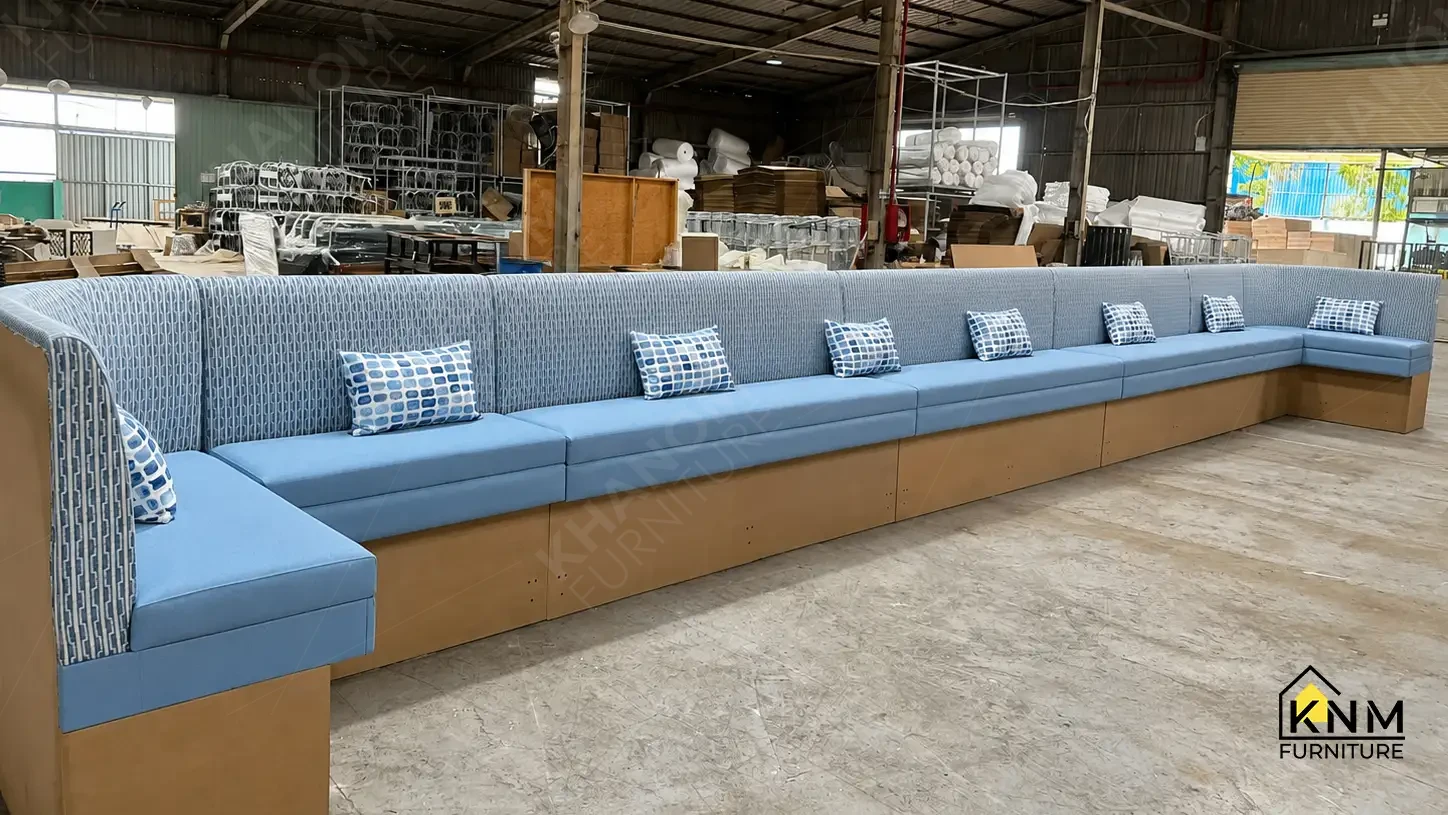
Extended blue upholstered banquette seating with patterned welt-trimmed pillows manufactured for a hospitality F&B project by Khanom Furniture (KNM Furniture) Vietnam

1. How Is a Frame Prepared Before Upholstery Begins?
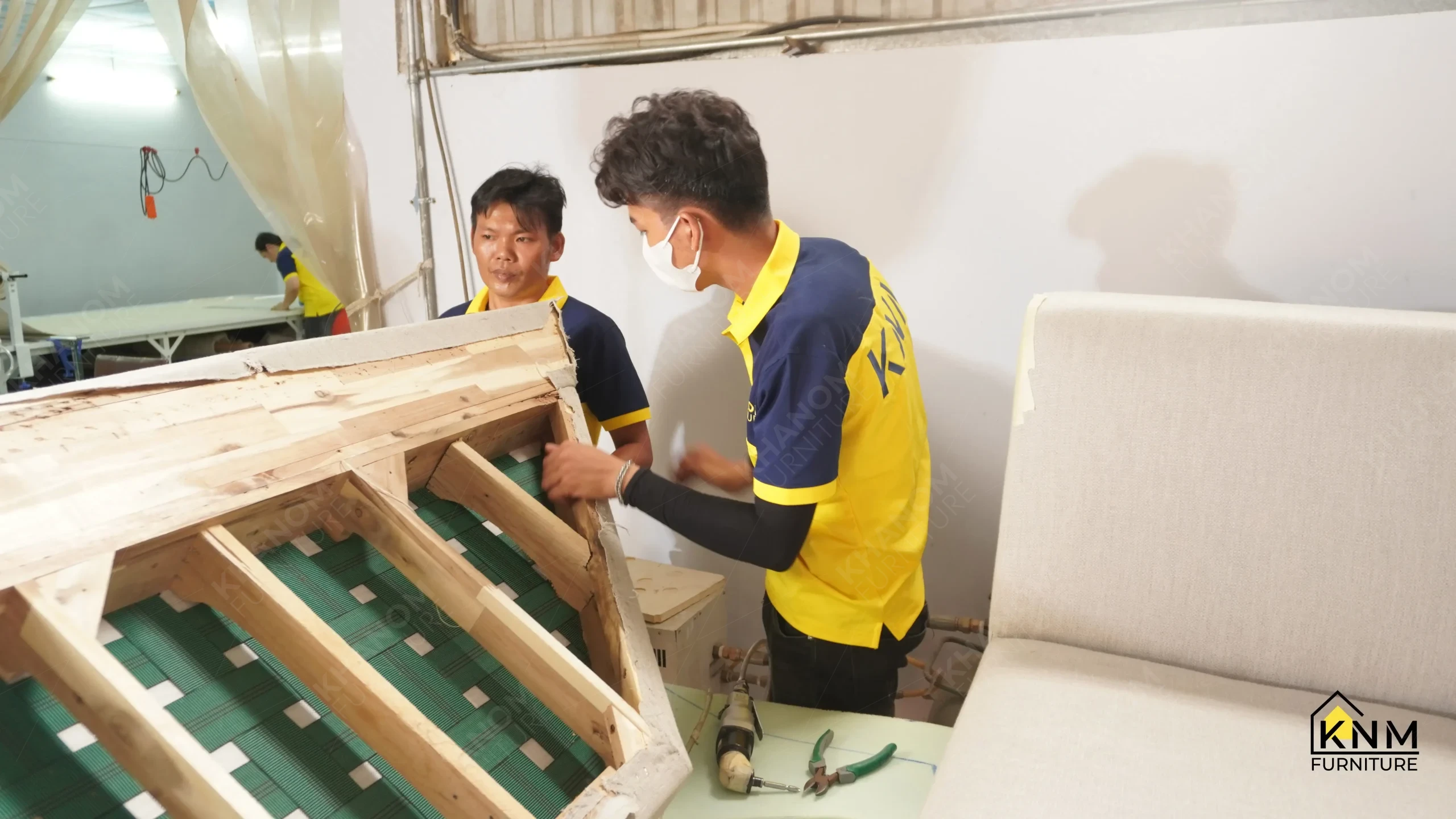
The seat and back frame is checked for webbing suspension tension before any foam padding is applied. The webbing suspension system — the woven support straps across the seat and back opening — is inspected at every strap intersection, because a tension inconsistency here does not surface until the seat is loaded during use. At that point, correction requires disassembly of the finished piece rather than a workbench adjustment.
Khanom Furniture (KNM Furniture) craftsmen inspecting the webbing suspension system on an overturned sofa frame before foam application, upholstery factory Vietnam

2. How Is Foam Selected for Commercial Hospitality Seating?
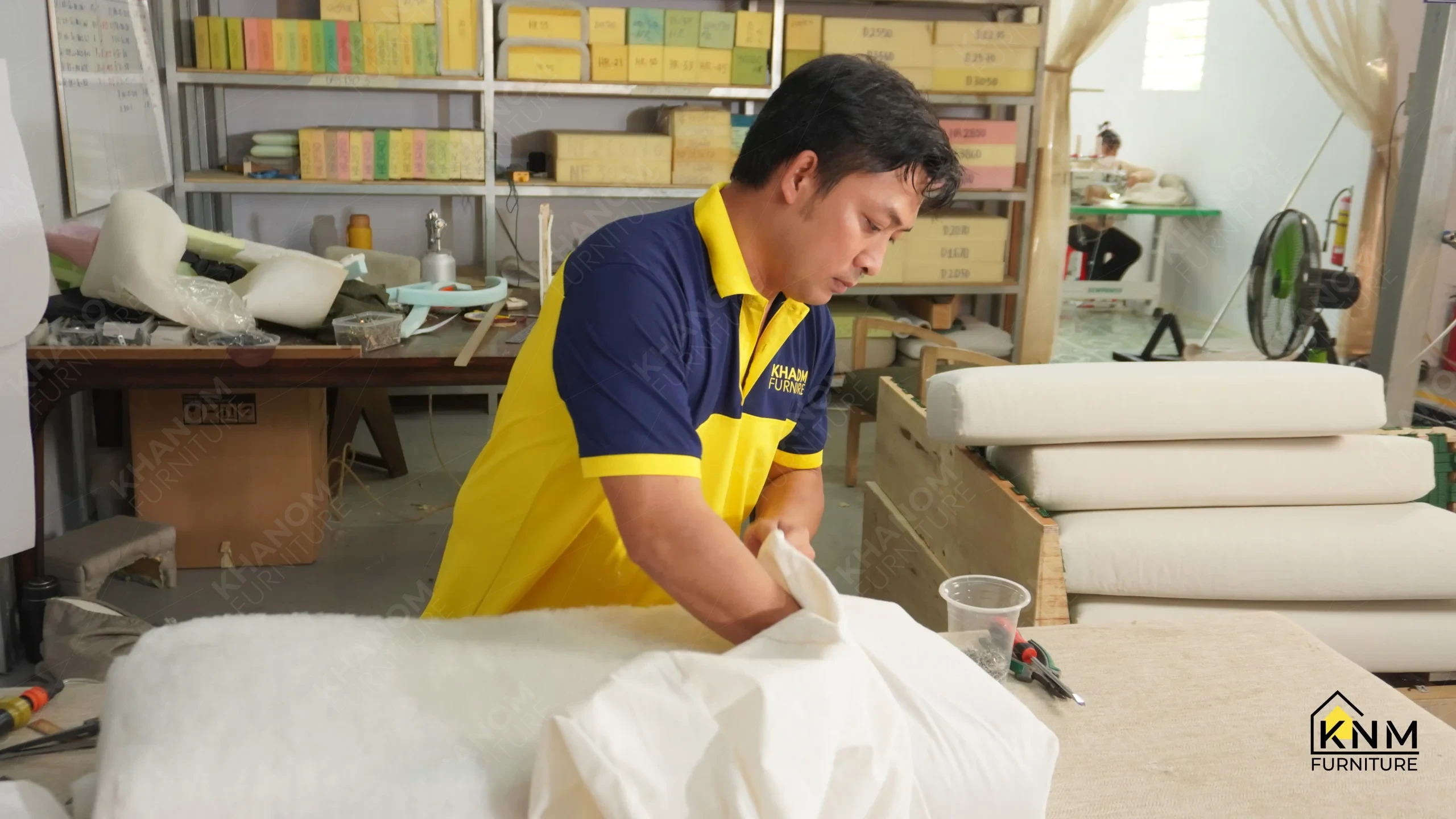
Foam is selected by section, not by a single generic block. Seat, back, and arm positions each carry a different density grade, and for commercial hospitality seating, seat foam typically falls within a 30–50 ILD (Indentation Load Deflection) range, matched to the expected use cycle and seating category. Foam blocks are shelved and labeled by grade code so the correct density reaches the correct cushion position — a seat cushion and a back cushion on the same chair are rarely built from the same foam.
Khanom Furniture (KNM Furniture) craftsman fitting fabric over a foam cushion insert, graded foam density blocks labeled by code visible on factory shelving in background

3. How Is Fabric Cut and Sewn for a Hospitality Seating Batch?
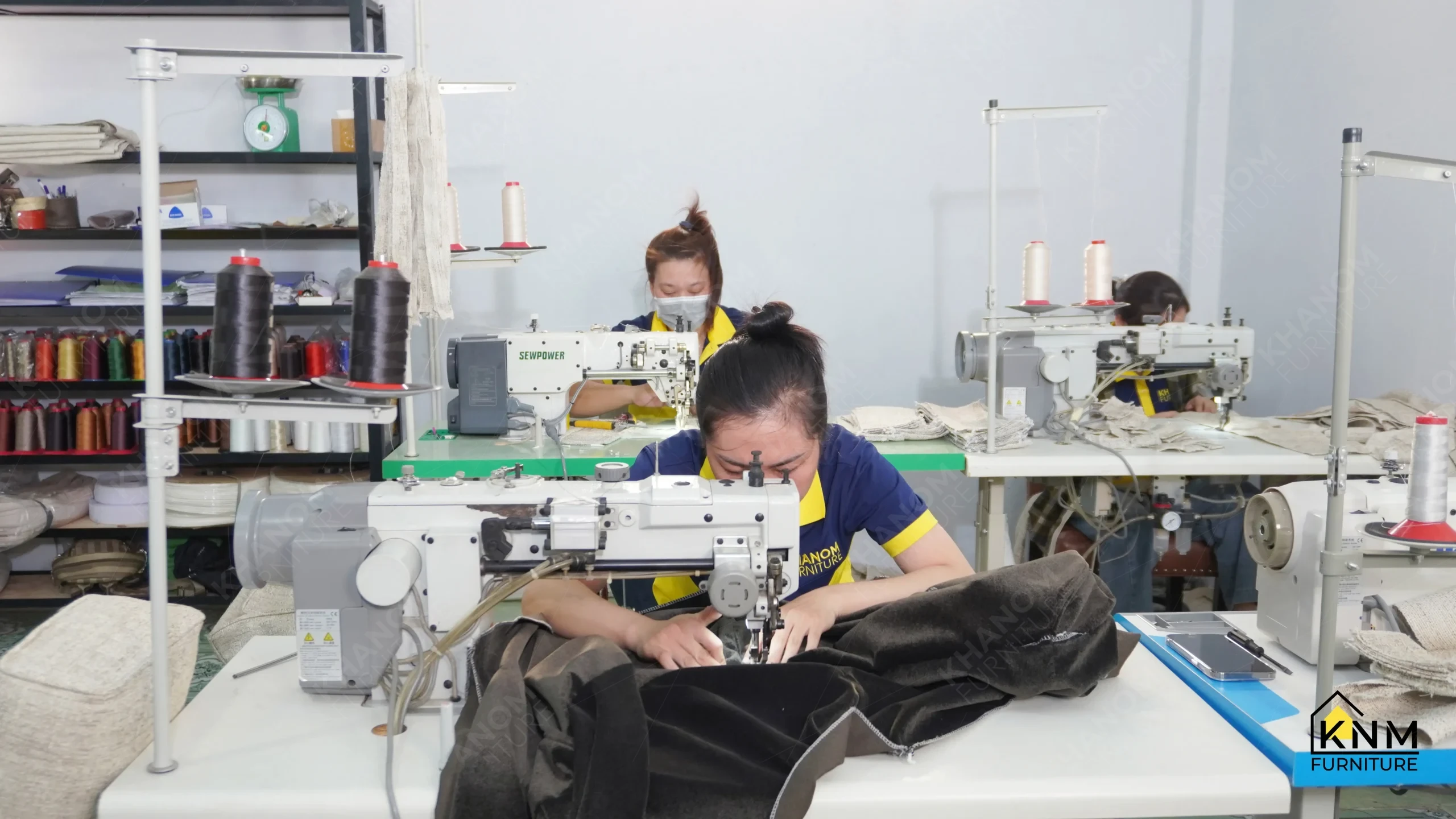
Fabric panels are cut against a confirmed pattern layout and sewn at dedicated stations, with COM (Customer’s Own Material) tracked separately from standard production inventory. Before the first panel is cut, yardage, pattern repeat, and bias stretch direction are confirmed against the specification — a step that prevents pattern misalignment from surfacing only after a multi-unit batch is assembled.
Khanom Furniture (KNM Furniture) upholstery staff operating industrial single-needle sewing machines to construct fabric panels, thread spools and material bolts visible on shelving

4. How Is Fabric Tensioned and Applied to the Frame?
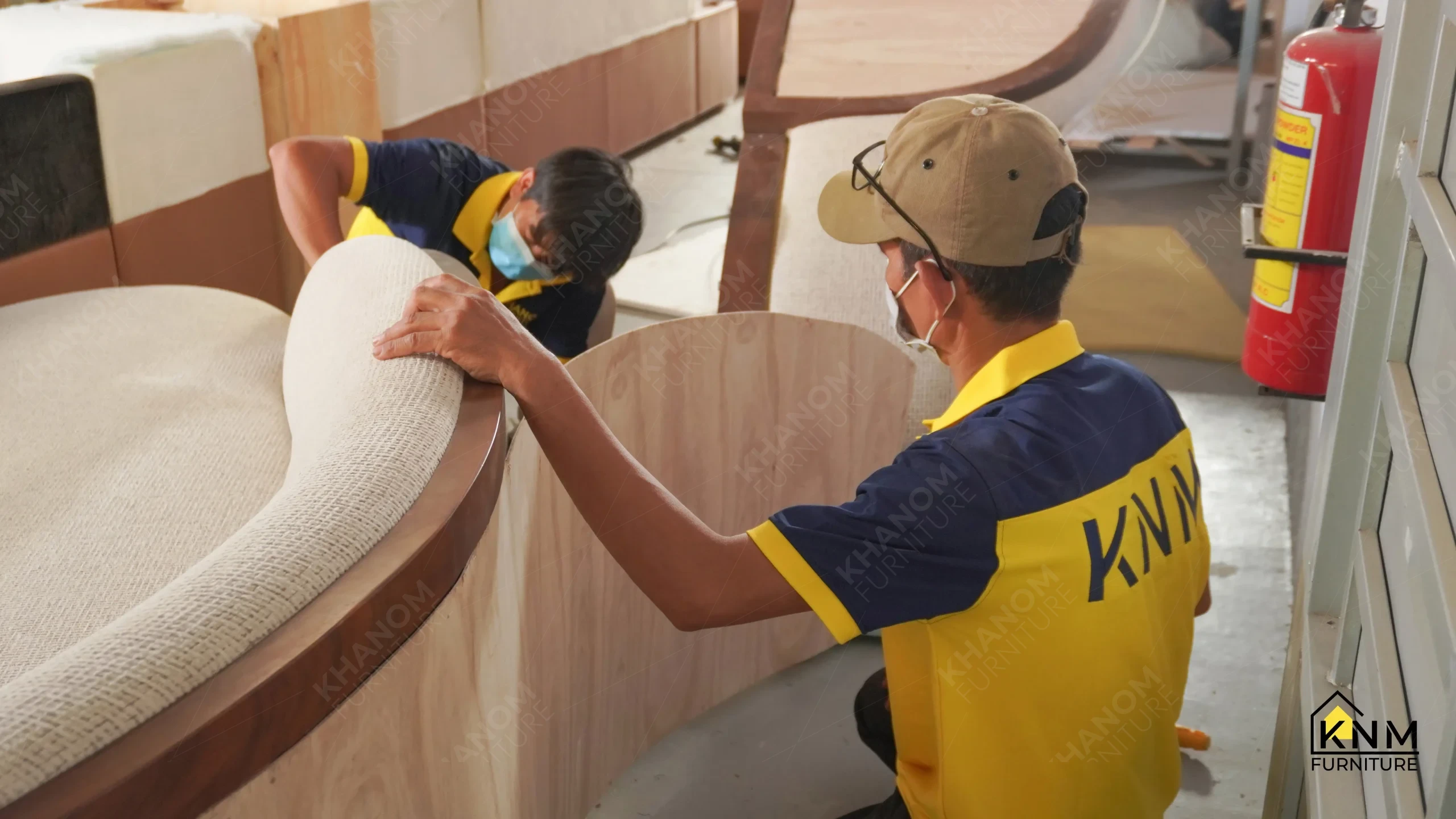
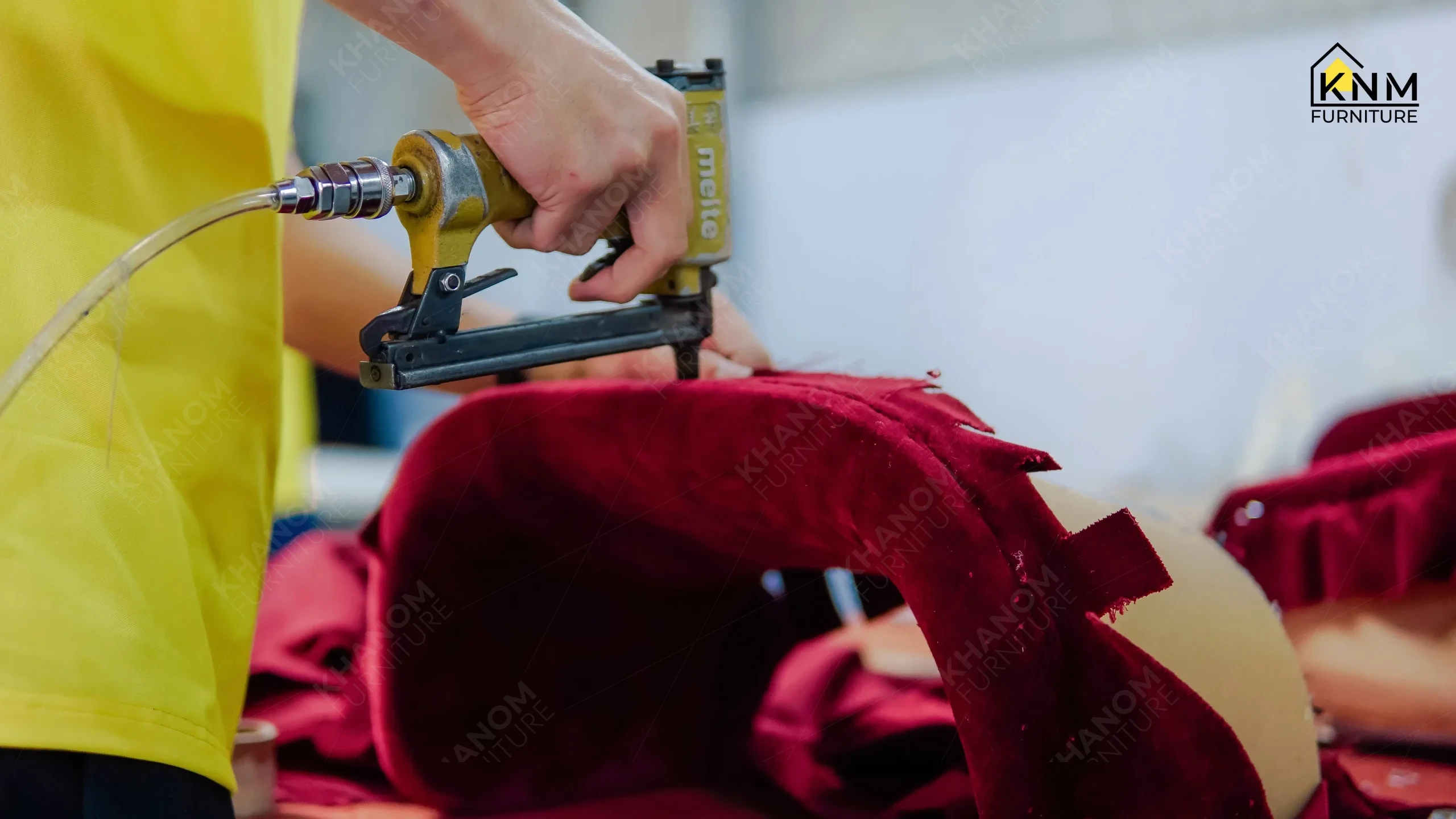
Tensioning is where “tight seat” and “tight back” construction is executed: fabric is fixed directly to the seat or back frame, with no loose cushion insert added afterward. Tension is checked at this station specifically, because inconsistency in a tight-seat or tight-back section cannot be corrected on-site after delivery without full re-upholstery. On curved or complex frames, this step also determines whether welt trim and panel seams align consistently across the piece.
Khanom Furniture (KNM Furniture) craftsmen applying cream fabric upholstery to a large curved wood-framed sofa during assembly, factory workshop Vietnam
Close-up of a Khanom Furniture (KNM Furniture) craftsman using a pneumatic staple gun to tension maroon velvet fabric onto a chair frame edge during upholstery application

5. What Finishing Steps Happen After Upholstery Is Complete?
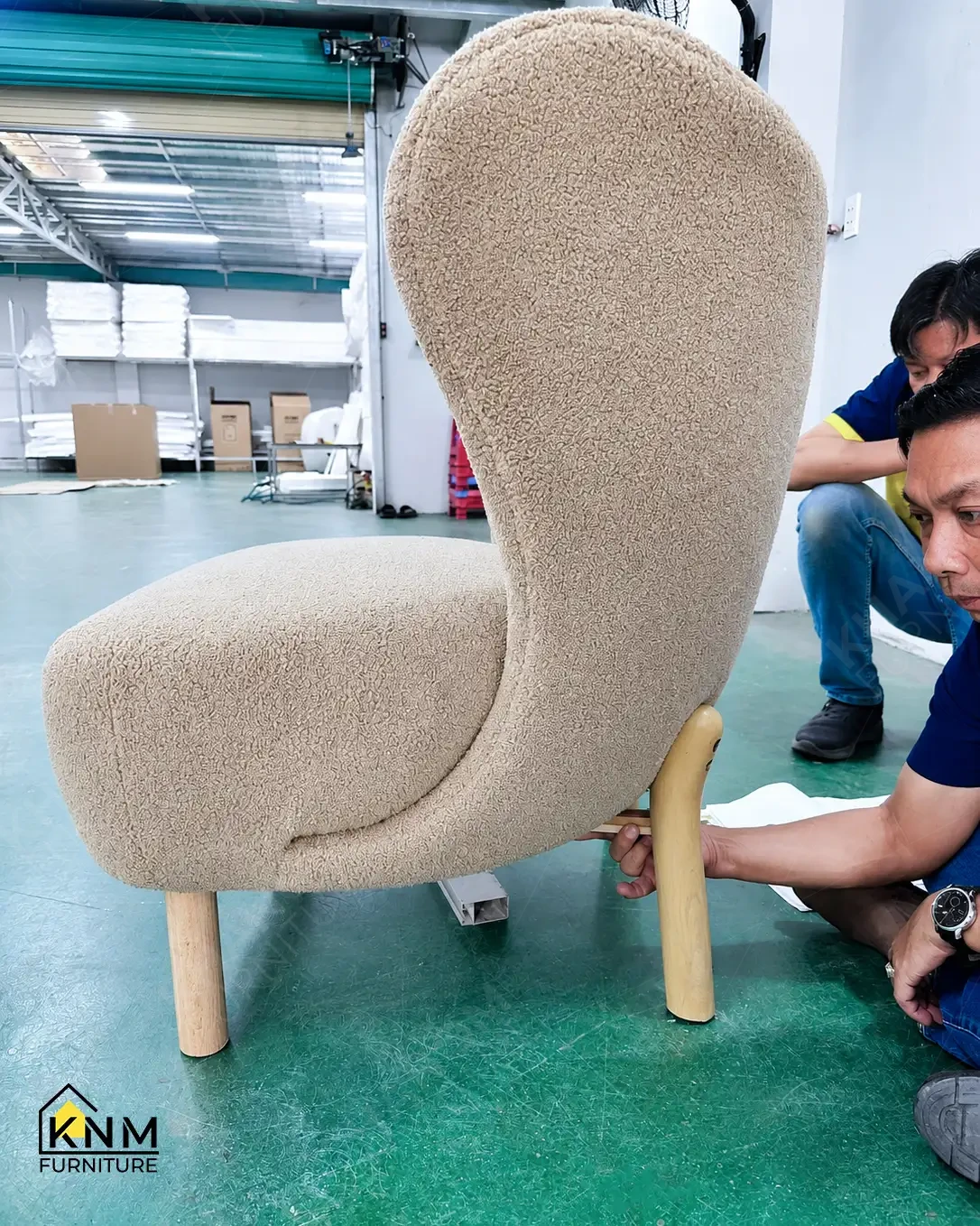
Legs, tufting buttons, and welt trim detail are attached after the main upholstery panel is secured, not before — handling a fully framed piece during leg assembly avoids putting stress on finished fabric earlier in the sequence. This is also the point where a piece is checked for overall proportion and alignment before it moves to batch staging.
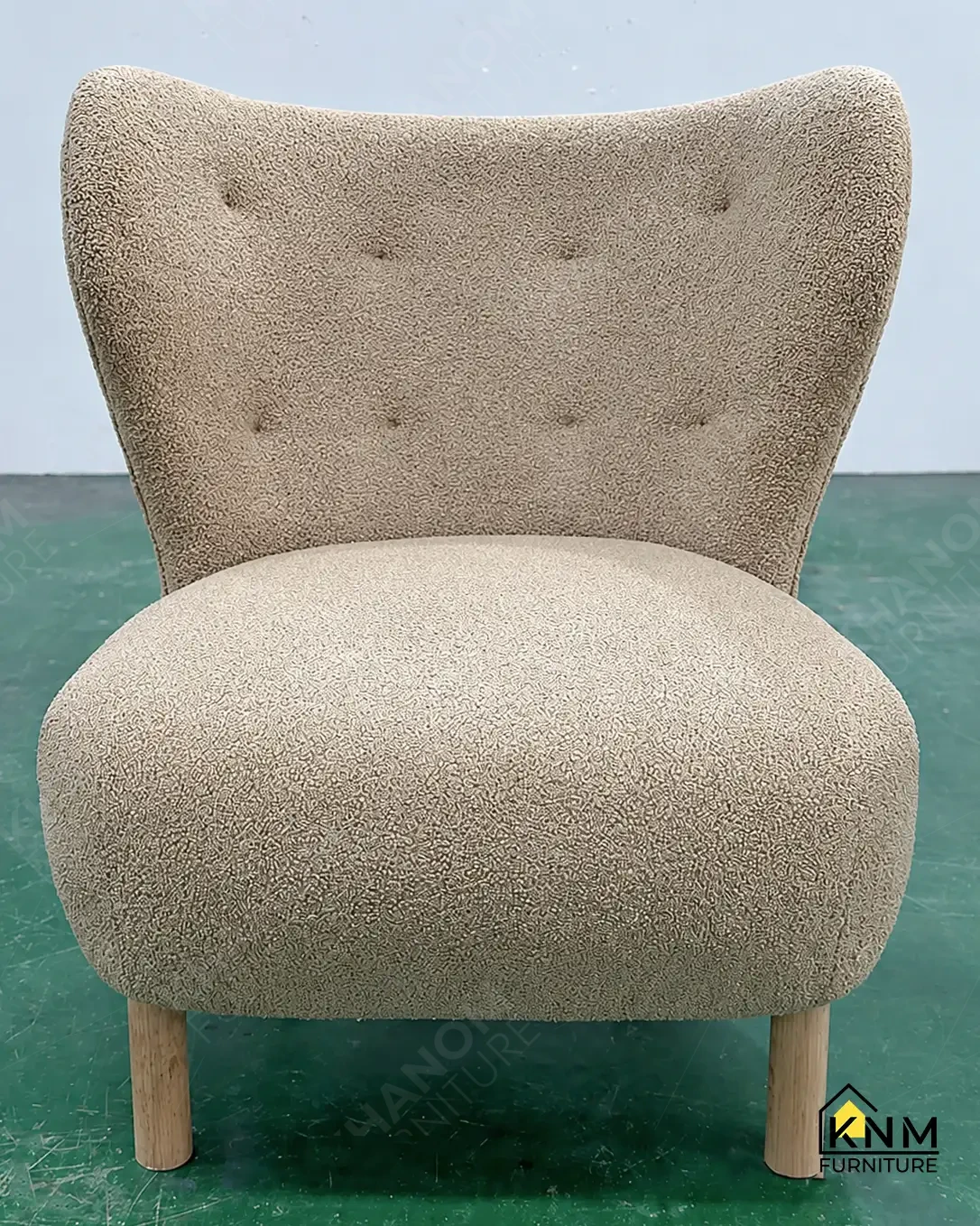
Khanom Furniture (KNM Furniture) craftsmen attaching turned wood legs to a finished boucle-upholstered lounge chair as a final assembly step, factory floor Vietnam
Tan boucle wingback lounge chair with button-tufted back and turned wood legs, finished hospitality seating unit by Khanom Furniture (KNM Furniture) Vietnam

6. How Is Finished Upholstered Seating Verified Before It Ships?
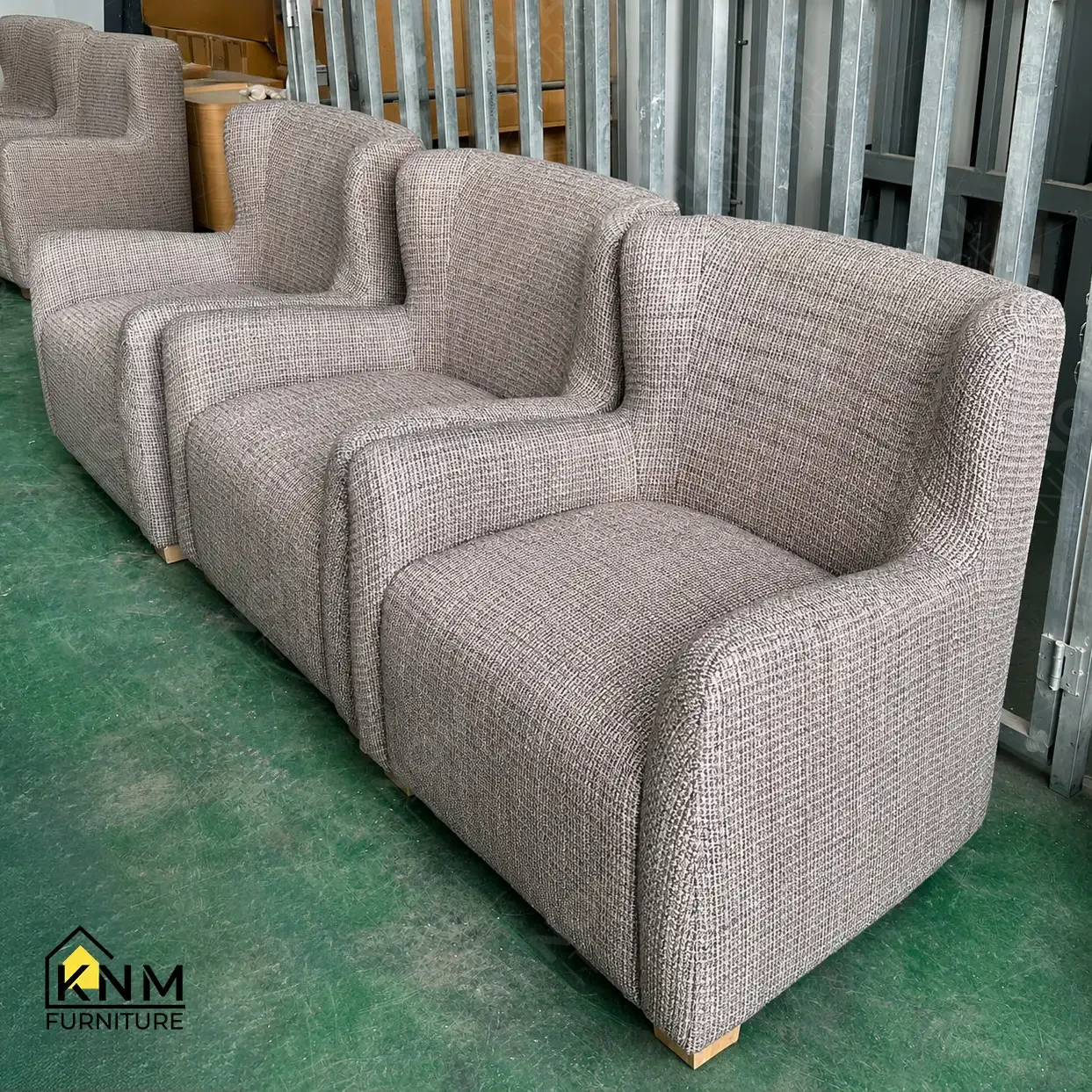
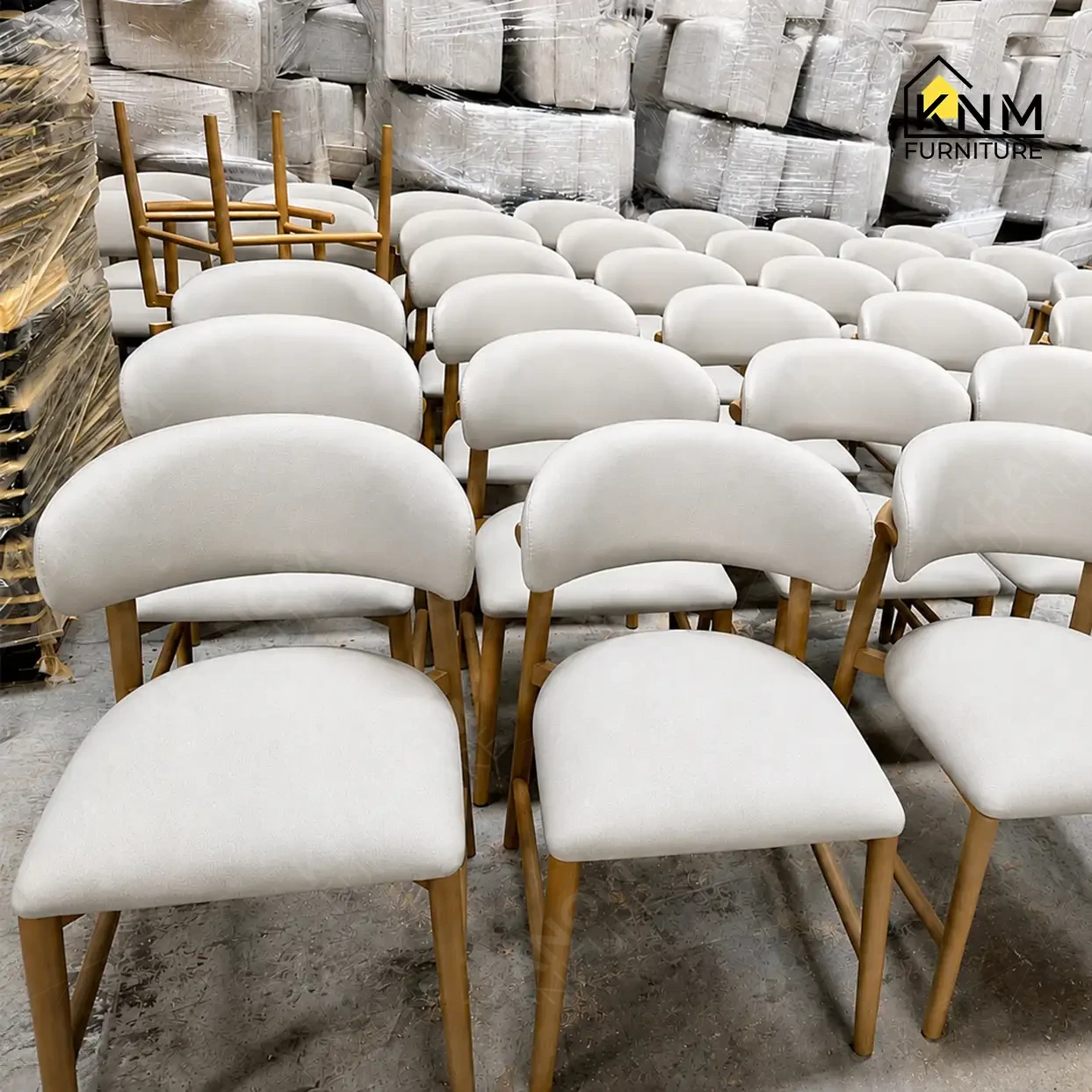
Finished units are staged side by side for a direct comparison pass — tension, pattern alignment, and color consistency are checked across the batch, not unit by unit in isolation. At hospitality project scale, a tension or color variance that passes unnoticed in one unit is not a single-unit issue; it is a variance repeated across every identical unit in the batch.
Row of finished grey tweed upholstered curved armchairs staged on the factory floor for quality inspection before export packaging, Khanom Furniture (KNM Furniture) Vietnam
Rows of finished cream upholstered dining chairs with gold metal frames staged for pre-shipment quality inspection at Khanom Furniture (KNM Furniture), Vietnam

Specifying seating for a hospitality project with COM requirements or tight-seat/tight-back construction? Send your specification package — we’ll confirm foam grade, fabric yardage, and production timeline before you commit to production.

––––––––––––––––––––––––

Frequently Asked Questions: Contract Upholstery Manufacturing

Q: What ILD (foam density) is used for hospitality seating?

Seat foam for commercial hospitality seating typically falls within a 30–50 ILD range, with seat, back, and arm positions specified separately rather than built from one generic foam grade.


Q: What does “tight seat” and “tight back” mean in upholstery?

Tight seat and tight back refer to fabric fixed directly to the seat or back frame, without a separate loose cushion insert. These sections are more sensitive to tension inconsistency, which is visible at delivery and cannot be corrected on-site.


Q: What is COM in furniture upholstery and how is it processed?

COM stands for Customer’s Own Material — fabric supplied by the client. COM yardage, pattern repeat, and bias stretch direction are confirmed against the specification, and the material is tracked separately from standard inventory to prevent cross-project mixing.


Q: Why is webbing suspension inspected before foam is applied?

A webbing tension issue does not surface until the seat is loaded in use. Inspecting the suspension system before foam padding is applied moves this check to the workbench, rather than to the installation site.


Q: How is consistency verified across a hospitality seating batch?

Finished units are staged and compared directly against each other for fabric tension, pattern alignment, and color match — a variance that passes unnoticed in one unit repeats across every identical unit in the project.

––––––––––––––––––––––––

KNM FURNITURE

Manufacturing with Material Integrity.

📩 RFQ: oanh@knmfurniture.com

📞 Hotline: +84 903 542 812

🌐 Website: knmfurniture.vn

📌 Pinterest: pinterest.com/khanomfurniture

ⓕ  Facebook: facebook.com


Related Posts