Khanom Furniture (KNM Furniture) |
WHAT HAPPENS BETWEEN AN APPROVED DRAWING AND A PRODUCTION LOCK
A look inside the revision process that stands between a design intent and a 300-room rollout.
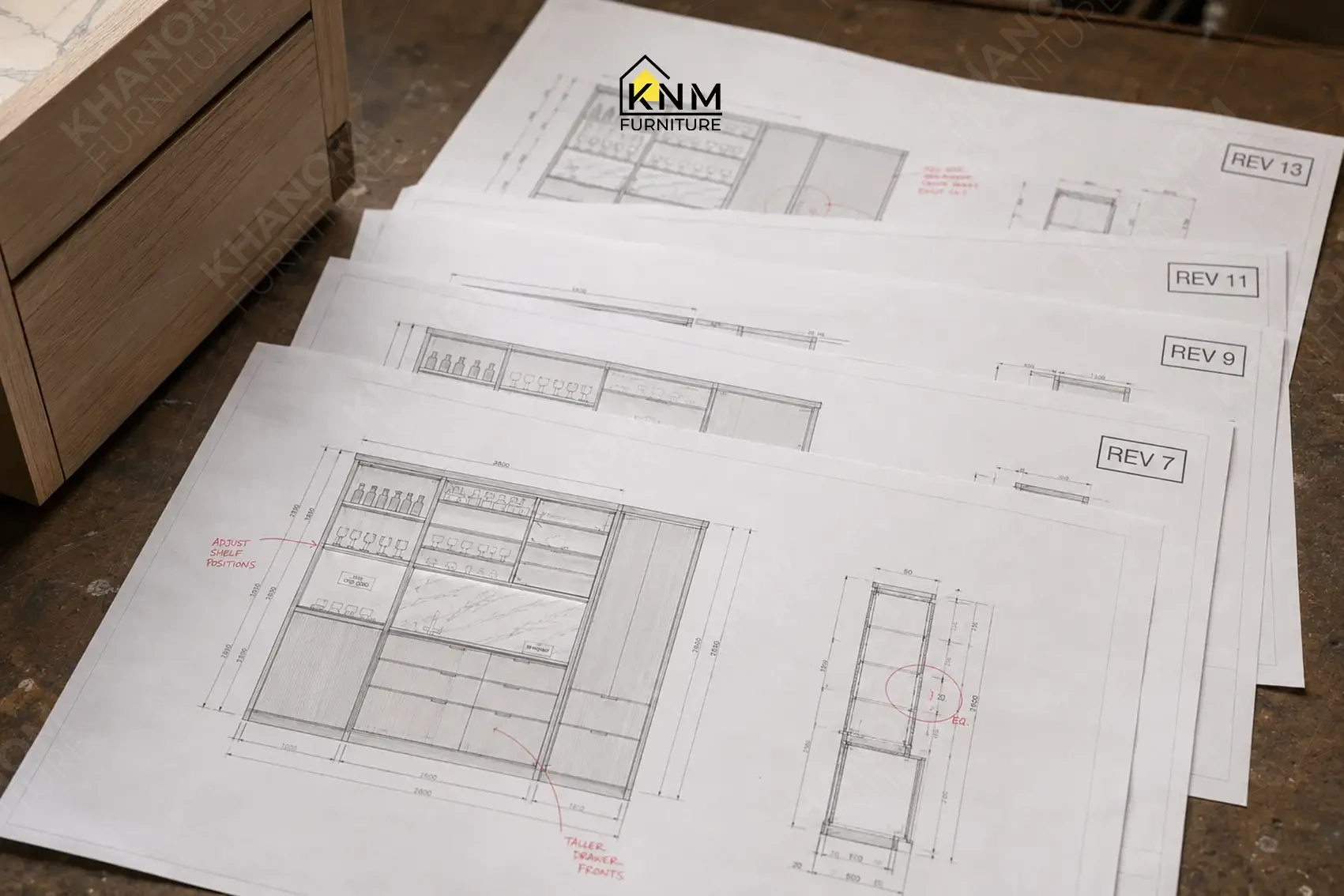
Between an approved drawing and a production lock, the drawing package is cross-checked against three site realities — GC millwork clearances, MEP rough-in positions, and specified finish materials including COM. Each pass identifies conflicts. Each revision cycle resolves one. Only after all three references align does the drawing release to production. In KNM’s 300-room mini bar and shelving unit program, that process required 13 revision cycles before production lock was reached.
- Multiplier Effect: An unresolved dimensional or detailing conflict, if it survives into a batch run, carries through to every unit in that batch – not just one.
- Role of Pre-Production: Drawing control at this stage reduces the risk of fit and clearance issues across large rollouts (e.g., 300 rooms), and the need for site-level rework tied to those conflicts.
- Verification Protocol: Production drawings are cross-checked against three site realities: GC millwork, MEP rough-ins, and the specified finish materials (including COM where applicable).
For a hospitality procurement team partnering with a hospitality furniture factory in Vietnam, the highest-risk moment in an FF&E order isn’t on the production floor. It’s earlier — in the gap between a drawing marked “approved” and the day production actually locks. A single unresolved dimension, missed in that gap, doesn’t cost one unit. Once a batch is running, it costs every unit in the batch.
At Khanom Furniture (KNM Furniture), this is the part of the process that rarely gets shown because it doesn’t produce a finished photo. It produces a stack of revised drawings. But for the team responsible for 300 identical mini bar and shelving units arriving on schedule and fitting their millwork openings — while mitigating the need for site-level rework — this stage is where that outcome is actually decided.
1. What Does the Drawing Review Stage Check Before Production Begins?
The drawing review stage checks the approved package against three site realities before a single component is cut: clearances coordinated with the GC’s millwork, MEP rough-in positions for power and ventilation, and any COM (Customer’s Own Material) specified by the design team for upholstered or finished surfaces.
At this stage, the question isn’t “can this be built?” It’s “does this drawing still match the site, the trades, and the finish specification — all three at once?” Early in a project, the honest answer is often no. That’s expected, and it’s the reason this stage exists.
2. How Many Revision Cycles Should a Hotel FF&E Program Expect Before Production Lock?
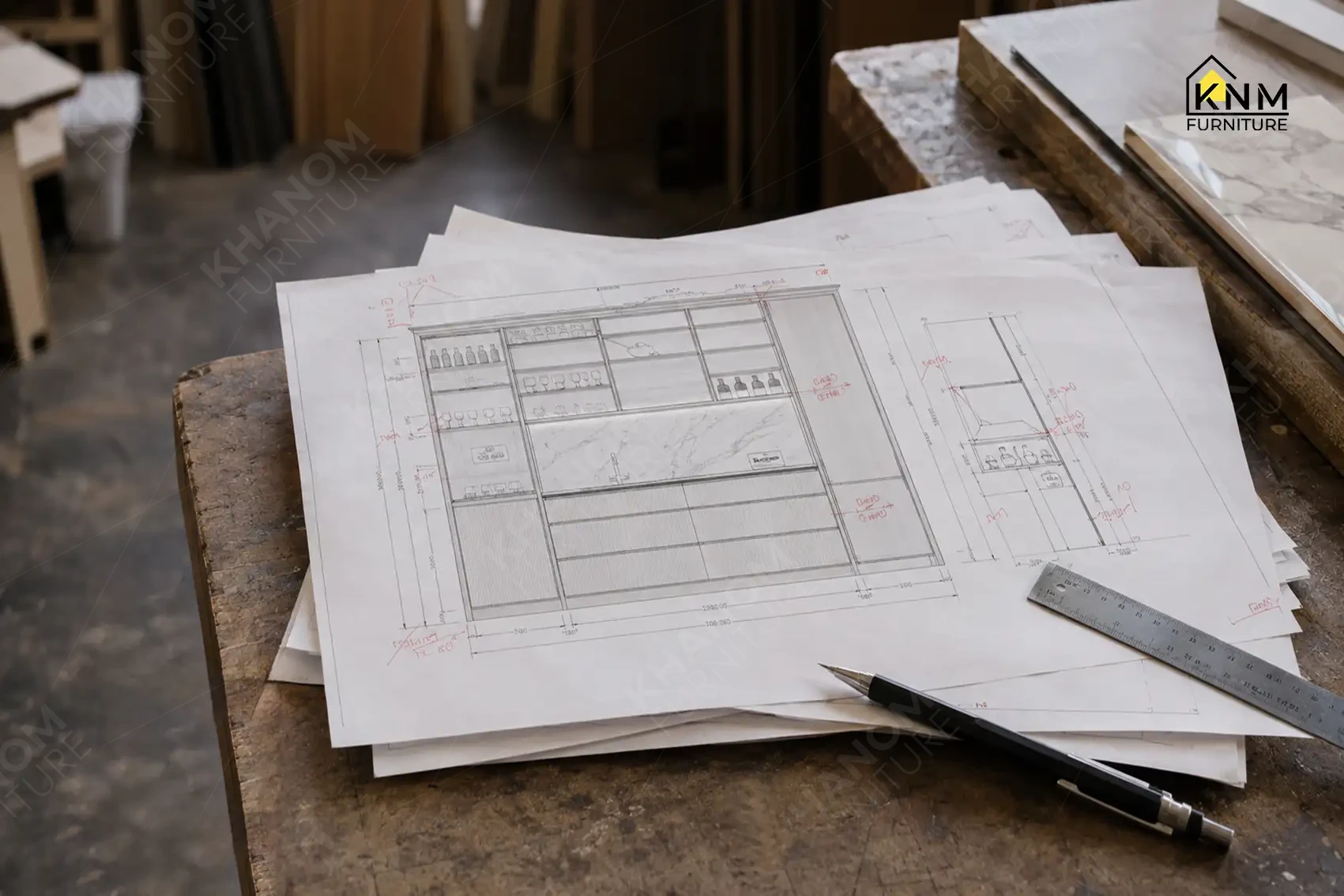
The number of revision cycles depends on project scope and the complexity of cross-trade coordination — but they should be expected, not treated as a sign that something went wrong. In KNM’s 300-room mini bar and shelving unit program, the drawing package required 13 revision cycles before production lock.
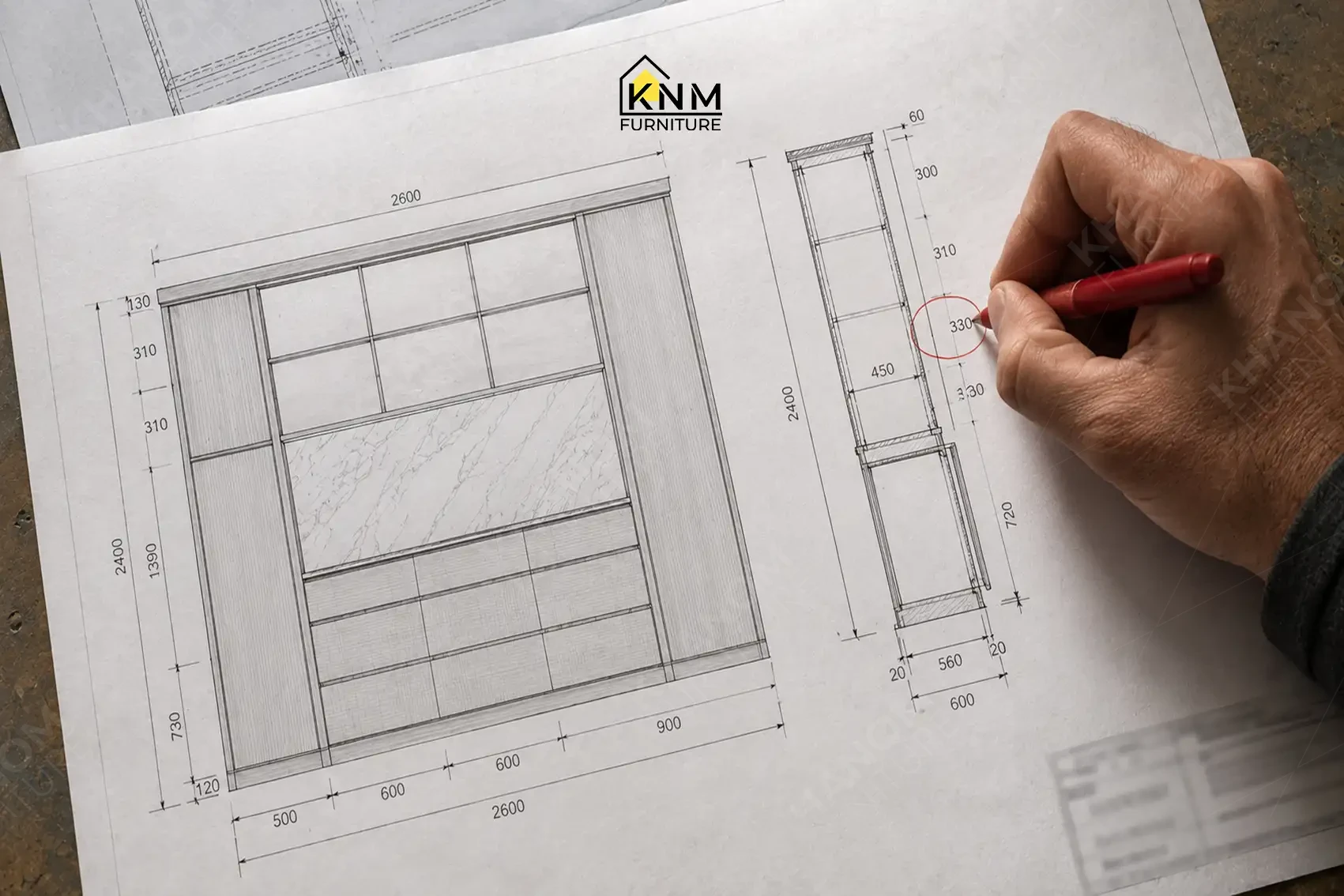
Each cycle resolved a specific conflict: a dimension that no longer matched an updated millwork detail, a hardware clearance affected by a revised MEP layout, a finish callout that needed to be confirmed against the COM sample on file.
None of those 13 cycles were about correcting a design. They were about confirming that the drawing, the site conditions, and the specified materials were all describing the same unit. Skipping any of them doesn’t remove the conflict — it just moves the conflict from a drawing, where it costs a markup and a re-send, to a production run, where it costs a batch.
3. Why Does a First Article Build Precede the Full Production Batch?
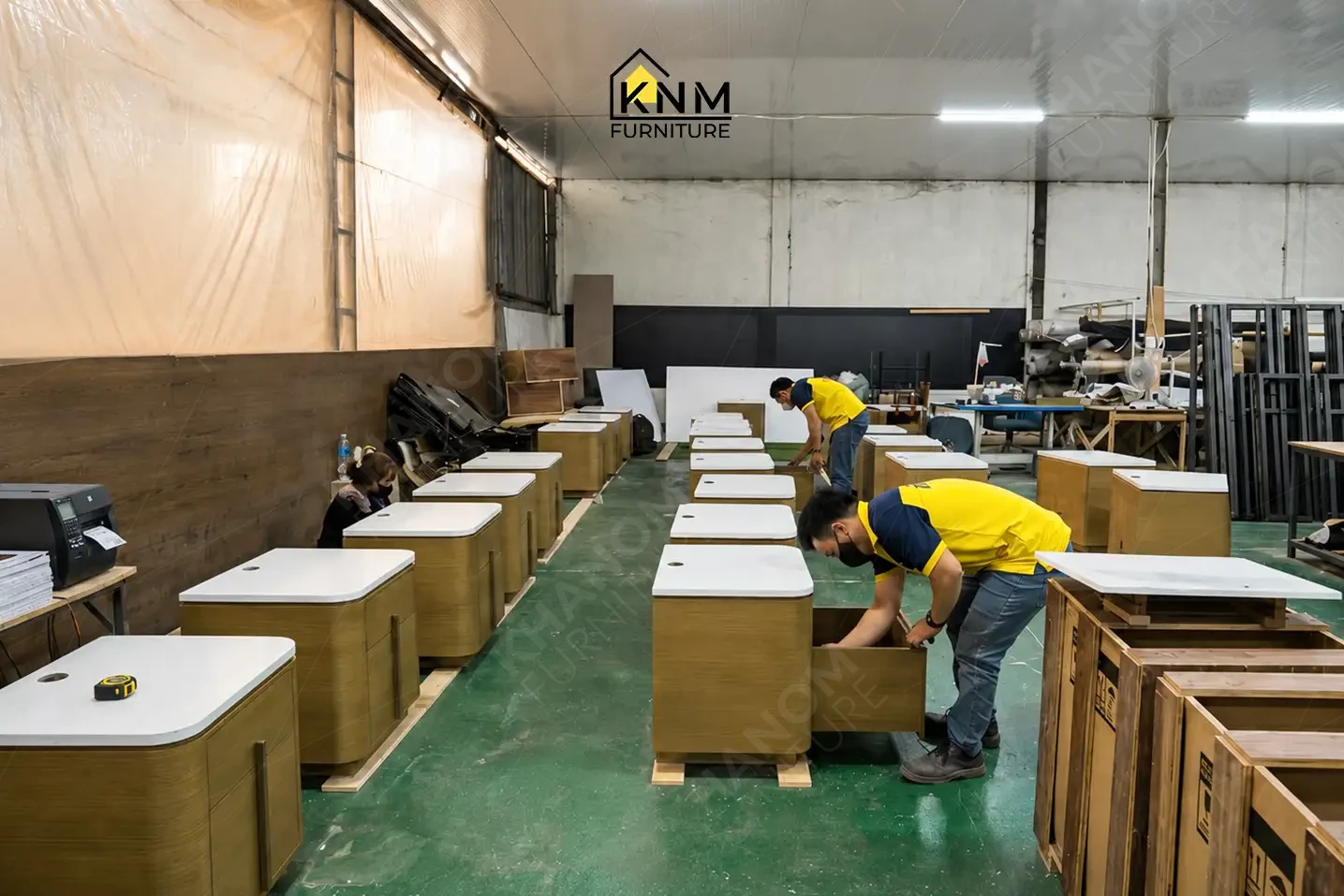
A first article build precedes the full batch because a drawing that reads correctly on paper can still surface a conflict only visible once the unit exists in three dimensions. At first article stage, that conflict costs a revision. Discovered mid-batch across 300 units, it costs a batch.
Once a drawing reaches the revision it’s expected to hold, a single physical unit is built first. This unit is checked against the locked drawing — dimensions, joinery, hardware placement, and finish — before the remaining units in the order are scheduled. This step exists for one reason: the difference between catching a conflict on one unit and catching it across 300.
4. What Does Production Lock Mean in Hospitality Furniture Manufacturing?
Production lock is the point at which the drawing package, the site coordination, and the material specification have been verified against each other enough times that the remaining risk in the run is no longer about whether the units will match the drawing — it’s down to normal manufacturing tolerances.
That’s a scoped claim, deliberately. Production lock reduces the risk of revision-related and drawing-driven conflicts surfacing mid-batch. It does not claim to remove every variable a 300-room rollout can encounter on site. Site conditions, installation sequencing, and field coordination remain the GC’s and the design team’s responsibility once units arrive.
5. What Should a Procurement Team Expect Between Drawing Approval and Production Lock?
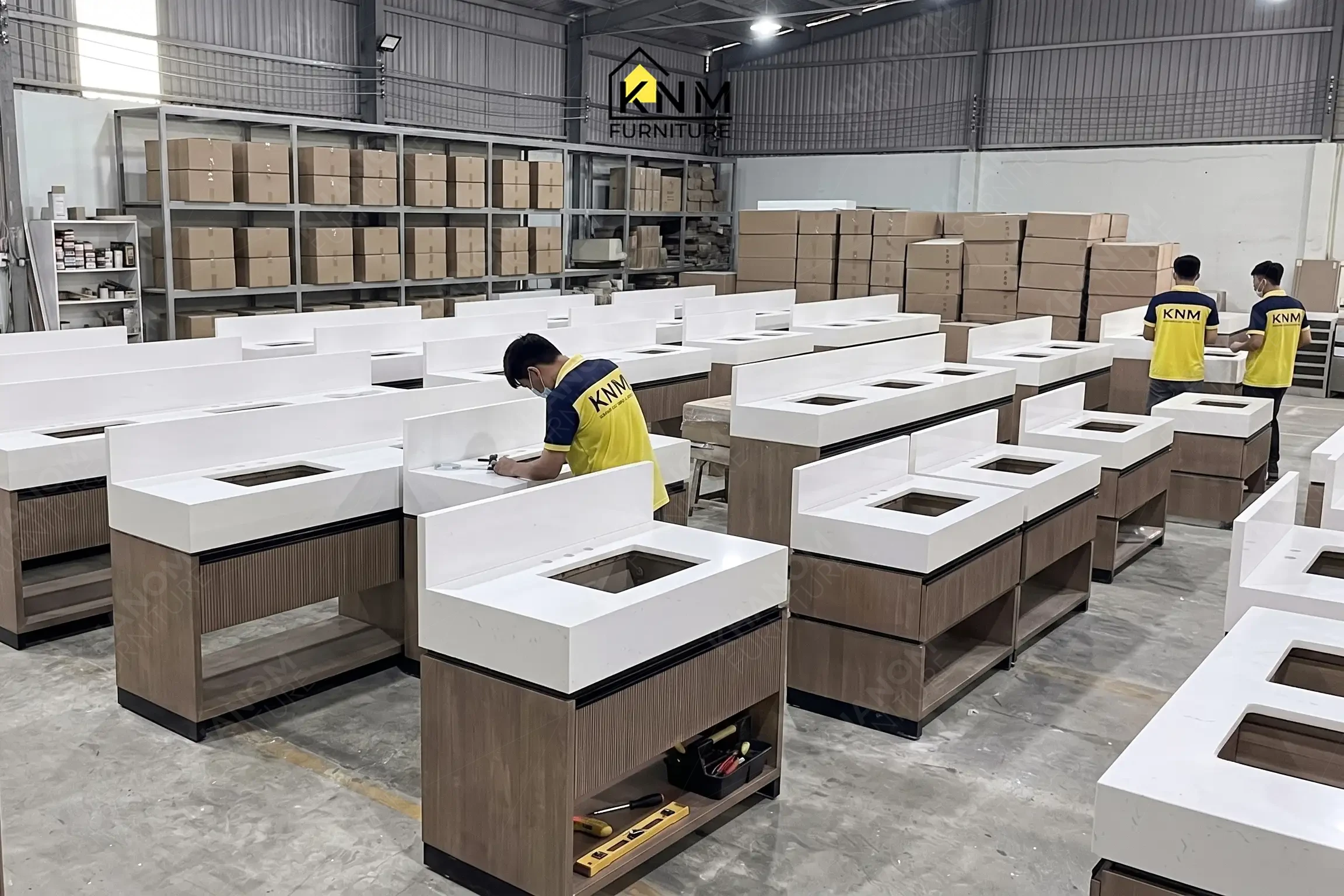
Between drawing approval and production lock, a procurement team should expect a series of revision cycles — not silence — as the drawing is cross-checked against current site data. From the outside, this stage looks like delay. From inside the process, each cycle is the mechanism that confirms the drawing package is ready for 300 units, not just one.
The drawings that arrive precise, dimensioned, and coordinated with site conditions are the reason this stage moves efficiently. The revision cycles that follow aren’t a sign something went wrong with the specification — they’re the mechanism that confirms it’s ready for 300 units, not just one.
One question worth asking any furniture factory before a multi-unit production run: “How do you ensure only the final approved revision enters fabrication?” If the answer is informal — verbal confirmation, email threads without version control — the risk is structural.
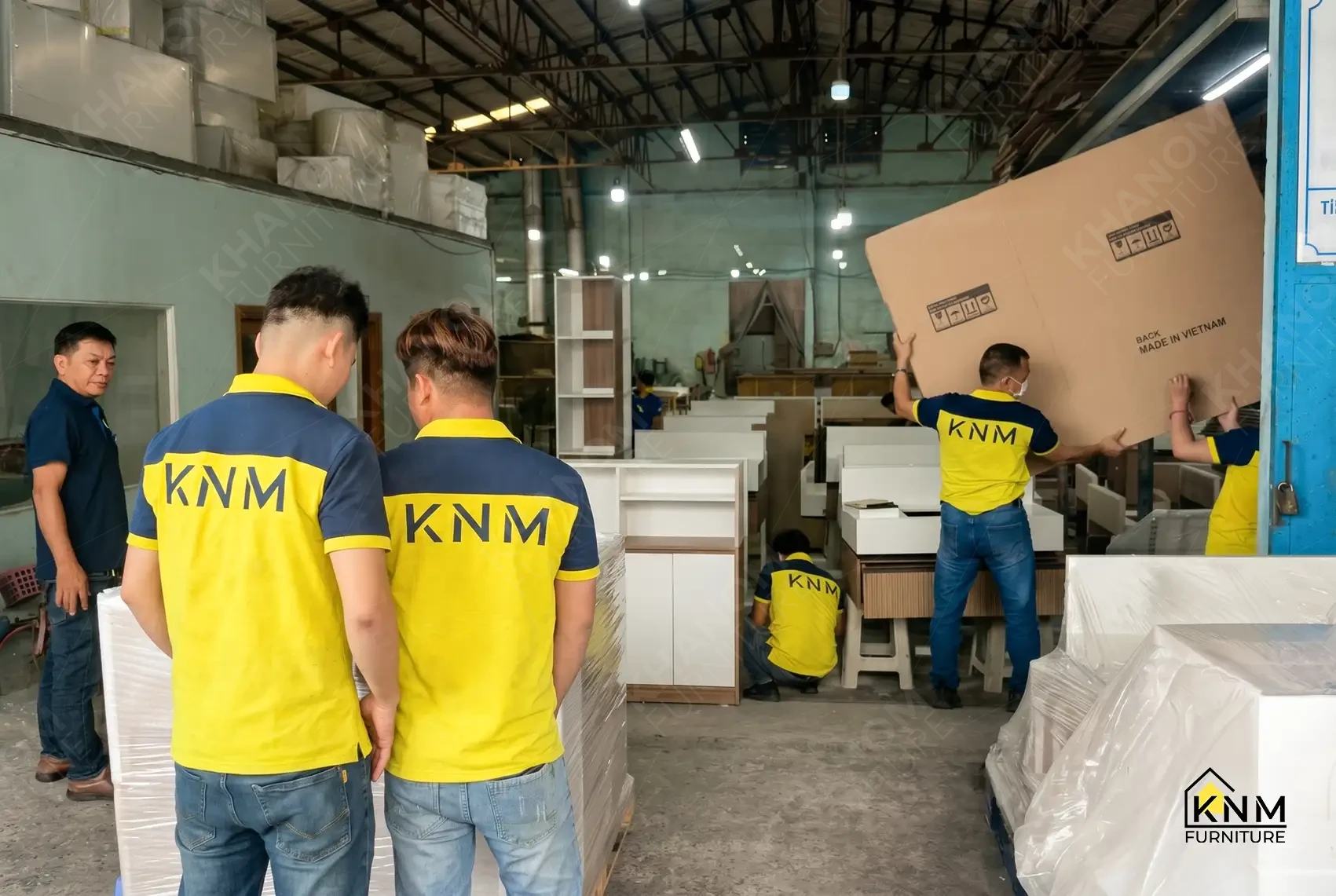
If your team is reviewing FF&E drawing packages before a multi-unit production run, save this as a reference for what the revision-to-lock process should look like at a professional furniture factory in Vietnam — and what it’s protecting against. For projects with a complete specification package, contact KNM Furniture for a feasibility review.
––––––––––––––––––––––––
Frequently Asked Questions
Q: How many revision cycles is normal for a hotel FF&E project?
The number varies by project scope and cross-trade complexity. In KNM’s 300-room hospitality FF&E program covering mini bar and shelving units, the drawing package required 13 revision cycles before production lock — each resolving a specific dimensional, hardware clearance, or finish conflict. Revision cycles are expected in multi-trade hospitality projects; what matters is that each cycle is documented and tied to a specific conflict resolved.
Q: What does production lock mean in furniture manufacturing?
Production lock is the point at which the drawing package, site coordination data, and material specifications have been verified against each other to the extent that remaining risk is within normal manufacturing tolerances — not driven by unresolved drawing conflicts. It is not a guarantee that every site variable is controlled; installation sequencing and field coordination remain the GC’s and design team’s responsibility after delivery.
Q: What should I ask a furniture factory before committing to production?
Ask: “How do you ensure only the final approved revision enters fabrication?” A disciplined factory maintains a numbered revision log, cross-checks against current site data (GC millwork, MEP rough-ins, and COM on file), and releases production only after documented sign-off. If the answer is informal or relies on email threads without version control, the conflict isn’t removed — it’s deferred to the production run.
Q: What is the highest-risk moment in an FF&E manufacturing order?
The highest-risk moment is not during production — it is in the gap between a drawing marked “approved” and the day production actually locks. An unresolved dimension at this stage does not affect one unit. Once the batch runs, it carries through to every unit in that batch.
Q: Why does a furniture factory build a first article before full production?
A first article build verifies that the locked drawing translates correctly into a physical unit — checking dimensions, joinery, hardware placement, and finish — before the remaining batch is scheduled. A conflict visible only in three dimensions costs a single revision at the first article stage. The same conflict discovered mid-batch across a 300-room order costs a batch.
––––––––––––––––––––––––
KNM FURNITURE
Manufacturing with Material Integrity.
📩 RFQ: oanh@knmfurniture.com
📞 Hotline: +84 903 542 812
🌐 Website: knmfurniture.vn
📌 Pinterest: pinterest.com/khanomfurniture
ⓕ Facebook: facebook.com