[Info] A Production Process Guide for FF&E Project Teams

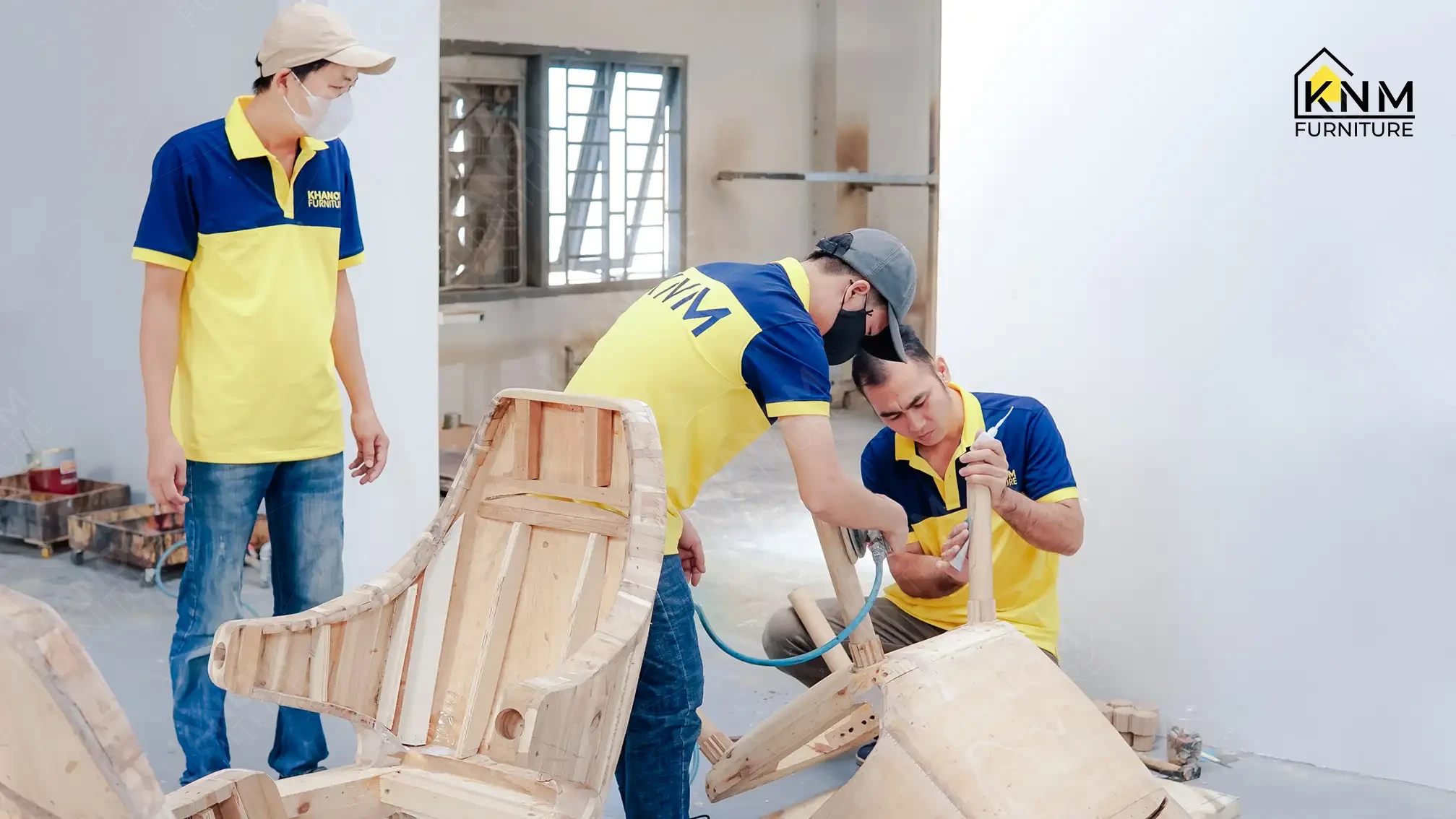
Three Khanom Furniture (KNM Furniture) craftsmen in yellow-navy uniforms assembling a solid hardwood armchair frame using a pneumatic staple gun and hand tools in a production workshop
Khanom Furniture (KNM Furniture) |

HOW HOSPITALITY FURNITURE IS MANUFACTURED

A Production Process Guide for FF&E Project Teams

How Is Hospitality Furniture Manufactured?

Hospitality furniture manufacturing follows 8 sequential stages: pre-production drawing review, material sourcing and specification, wood frame fabrication, metal frame and component fabrication, upholstery production, surface finishing, pre-shipment quality control, and export packaging. For a US-based FF&E project, the production cycle typically runs 10–16 weeks from production lock to container loading, plus 3–4 weeks ocean freight to destination port.

The 8 Stages of Hospitality Furniture Manufacturing:

  • Pre-production drawing review — revision cycles (typically 8–13) resolved before production lock is authorized
  • Material sourcing and specification — hardwood, Marine Grade Plywood, graded MDF, and COM fabric confirmed against the approved material schedule
  • Wood frame fabrication — CNC machining, mortise-and-tenon joinery, and dimensional batch verification
  • Metal frame and component fabrication — cutting, forming, welding, grinding, and powder coating; runs parallel to wood frame production and merges at the assembly stage
  • Upholstery production — foam grade selection, pattern cutting, webbing tensioning, and fabric application
  • Surface finishing — minimum 3-stage sequence: substrate preparation, base coat, and final topcoat; hand-applied on carved surfaces
  • Pre-shipment quality control — dimensional, finish, structural load, and hardware verification by batch
  • Export packaging and container loading — PE film, EPE foam, EPS blocking, and wooden crating for ocean freight to US destination

From shop drawing review to container loading — the control points that determine whether your FF&E project delivers without site-level rework.

When a specification package arrives at a hospitality furniture manufacturer, production does not begin with cutting. It begins with interpretation. Every dimension, material call-out, and finish note in that package becomes a fabrication decision — and how those decisions are controlled at each stage determines whether the final products match the approved specification, arrive on schedule, and clear the project’s punch list.

This guide outlines the complete manufacturing process as applied to hospitality FF&E projects at KNM Furniture, a Vietnam-based OEM manufacturer serving US hotel and resort projects from shop drawing to export container.

1. What Happens Before Production Starts in Hospitality Furniture Manufacturing?
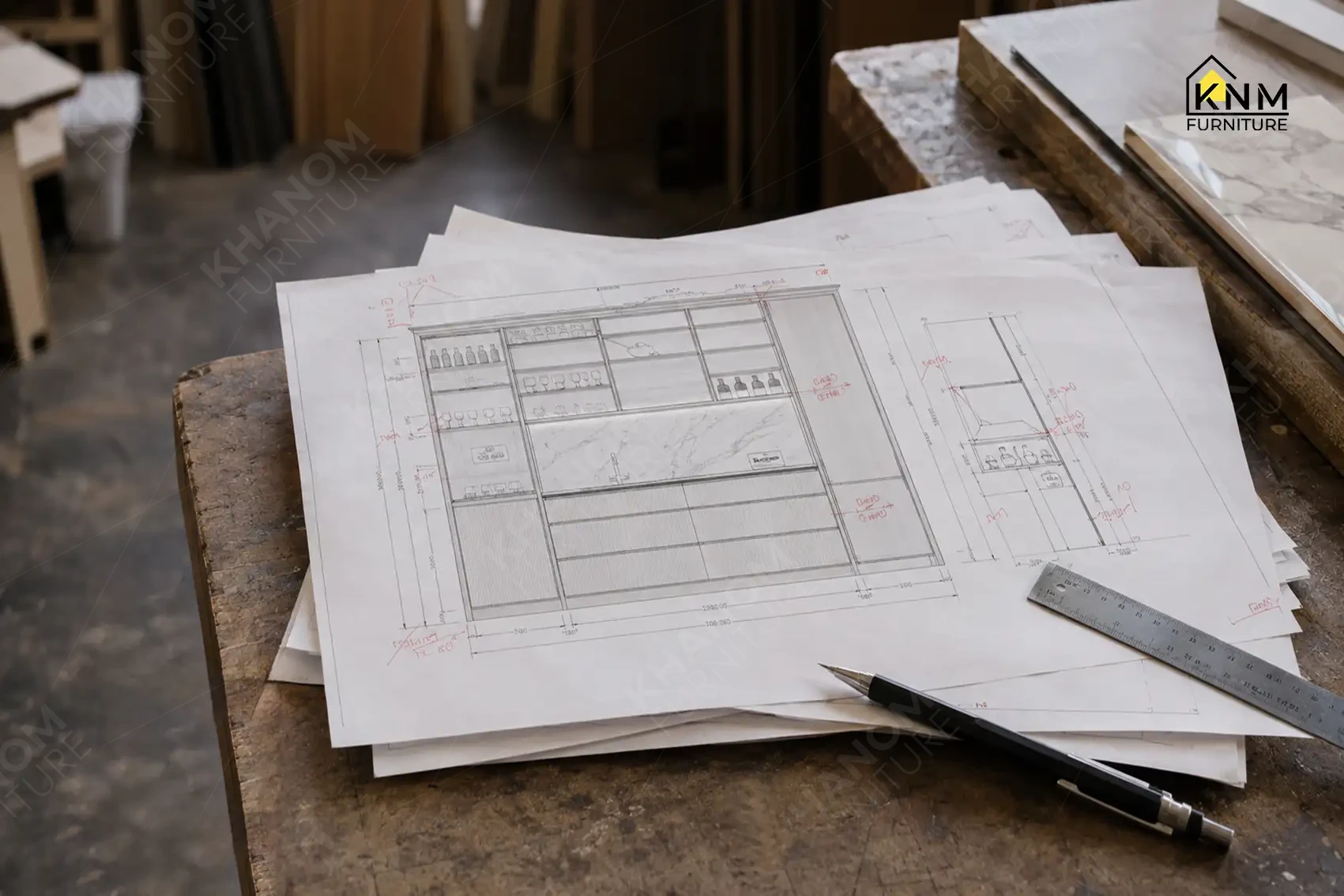
Production begins with specification review, not material ordering. Before any cutting or fabrication starts, the technical team reviews all submitted shop drawings for dimensional conflicts, material specification gaps, and scope boundary questions between furniture and adjacent trades. Every identified issue is resolved through a numbered revision cycle — each revision logged (Rev 1 through production lock) and signed off before the next stage advances.
 
On complex multi-SKU projects, the pre-production review phase typically involves 8 to 13 revision cycles before production lock is reached. This front-loaded review discipline moves the cost of resolving drawing conflicts from the installation site — where access is limited and schedules are fixed — to the workbench, where correction is straightforward.
Technical architectural drawings and elevations of a mini bar cabinet on a worktable at Khanom Furniture (KNM Furniture), a custom furniture factory Vietnam.

2. How Are Materials Sourced and Specified for Hospitality FF&E Projects?

Material selection for hospitality furniture projects is governed by the approved specification package, not the manufacturer’s standard inventory. Wood species, panel grade, surface treatment, and COM fabric specifications are confirmed against the project’s material schedule before procurement begins. Material substitutions require documented client approval and are recorded in the revision log before any production change is made.
 
Standard structural materials include:
 
  • Solid kiln-dried hardwood — dried to below 12% moisture content for interior-grade applications; species selected against the joint type and structural load specified in the shop drawing.
  • Marine Grade Plywood — for moisture-exposed substrate areas in coastal or outdoor-adjacent applications.
  • Graded MDF — for panel substrate applications where dimensional stability is prioritized.
  • COM (Customer’s Own Material) — client-supplied fabric or leather, tracked separately from production inventory; cut only after yardage, pattern repeat, and bias stretch direction are confirmed against the specification.
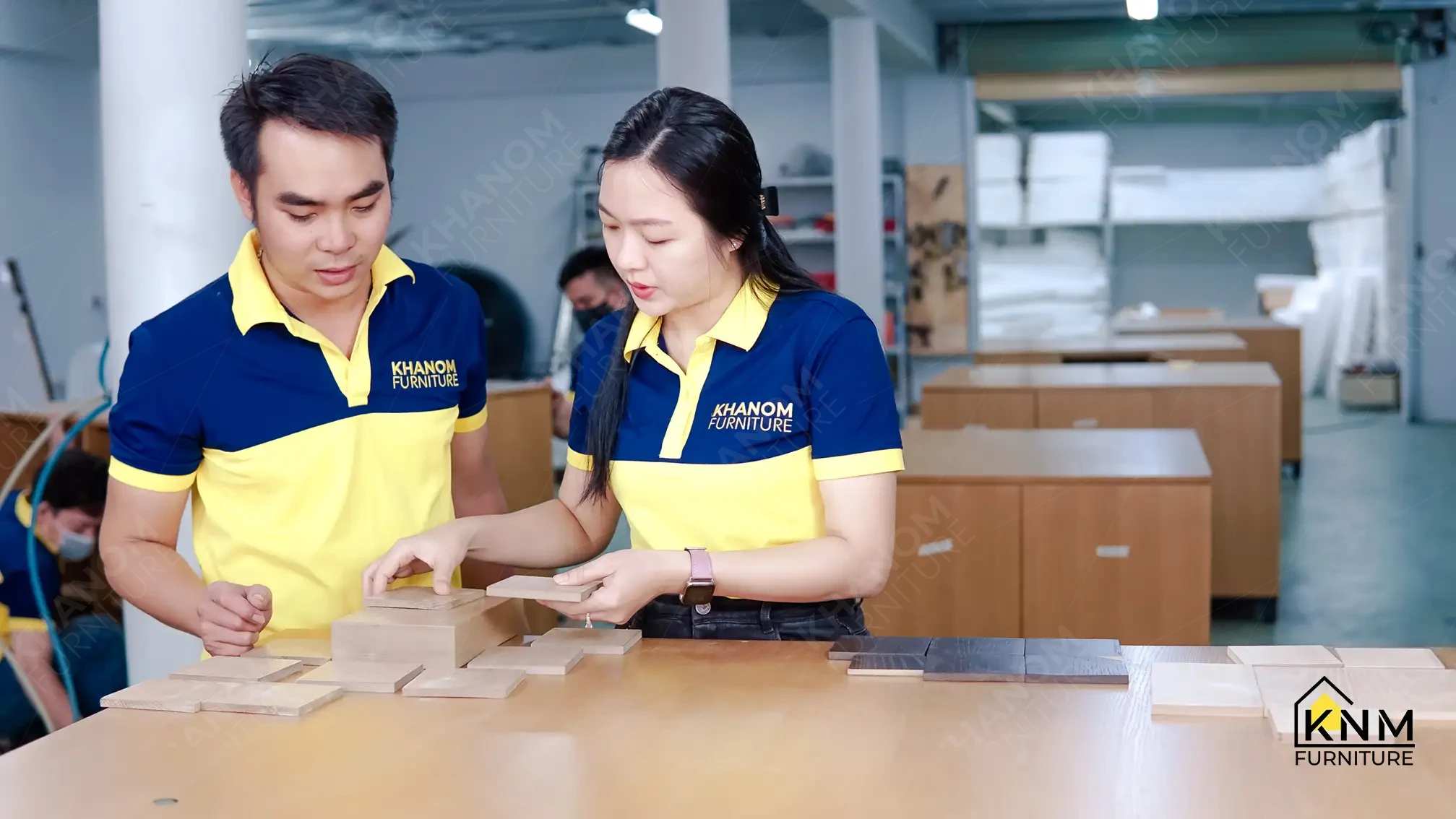
Two Khanom Furniture staff in yellow-navy uniforms reviewing multiple wood veneer finish samples on a table, with completed casegoods visible in background staging area.

3. How Is the Wood Frame Produced for Hospitality Seating and Casegoods?
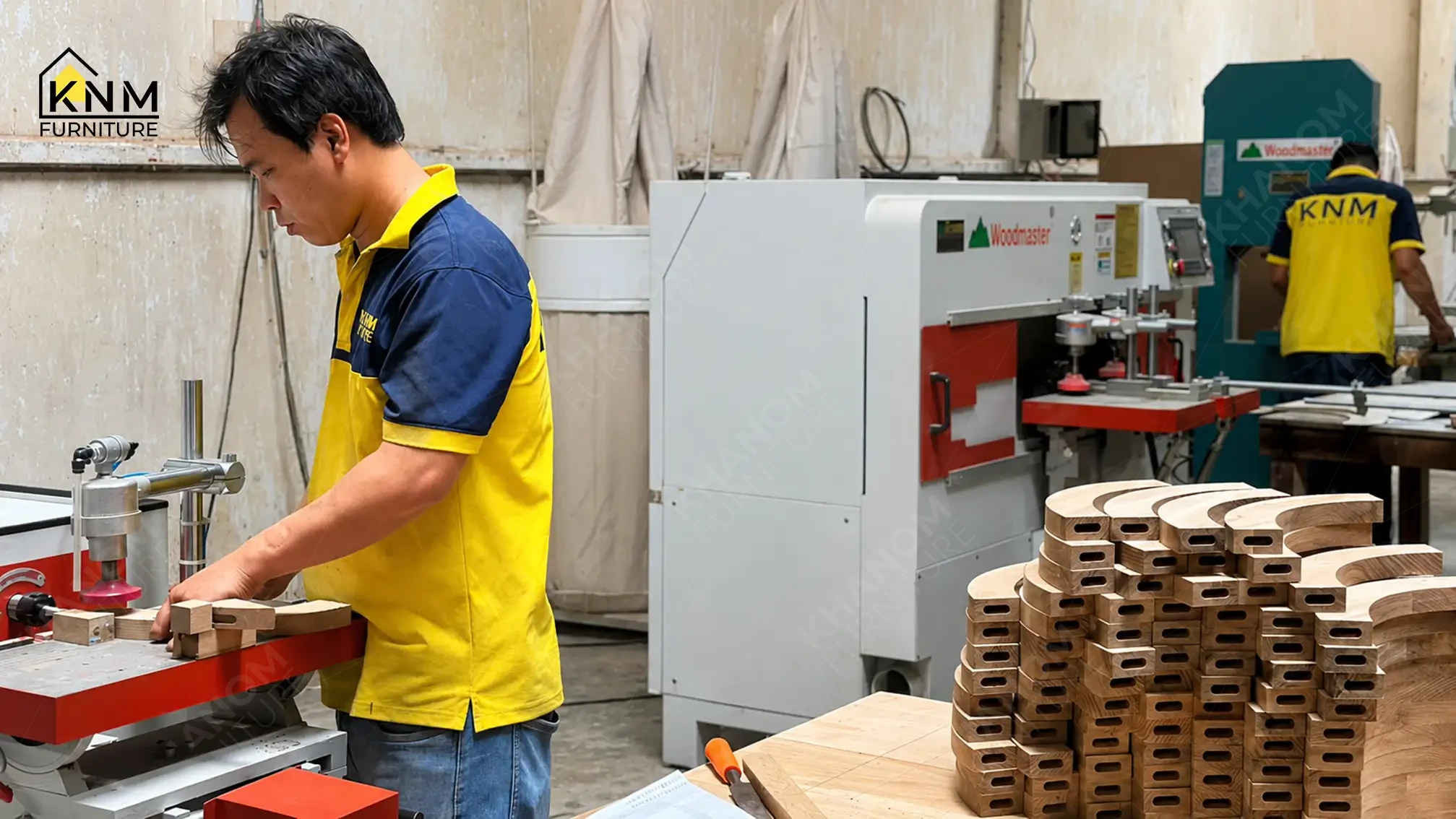
Wood frame production involves CNC machining, mortise-and-tenon joinery, and batch fabrication matched to the project’s unit count. Chair and seating frames are produced in component batches. Casegood carcasses — nightstands, media units, wardrobes, and mini bar cabinets — are built from engineered panel substrates with solid wood edge banding and hardware mounting points pre-positioned per the approved shop drawing.
 
Each component batch is dimensionally verified before assembly begins. In a 300-unit production run, one undetected frame defect does not create one problem — it creates 300 identical problems during site installation, when correction requires logistics coordination rather than a workbench adjustment.
Khanom Furniture craftsman operating CNC woodworking machinery for chair frame component batch production, stacked solid hardwood parts visible in foreground, second craftsman at machine in background.

4. How Are Metal Frames and Components Fabricated for Hospitality Furniture Projects?

Metal fabrication runs as a parallel production stream alongside wood frame production, not as a sequential step after it. Chair pedestal bases, structural leg sets, table bases, and decorative metal components are fabricated from specified steel or iron stock and integrated with the wood or upholstered assembly at a defined merge point in the production sequence.
 
The fabrication sequence for structural metal frames and components follows four stages:
 
  • Stock cutting and forming — steel or iron bar stock is cut to specified lengths and shaped to the geometry defined in the approved shop drawing; dimensional accuracy at this stage determines the alignment of all downstream mounting and integration points.
  • MIG or TIG welding — frame joints are welded to the specified configuration; weld quality is inspected for penetration depth and surface continuity before the component advances to surface preparation.
  • Grinding and surface preparation — weld seams are ground flush and the surface is prepared to an even profile to ensure consistent adhesion of the final powder coat or paint finish.
  • Powder coating — the standard finish for metal components in commercial hospitality furniture; color, gloss level, and texture are confirmed against the approved finish sample before full batch application begins.
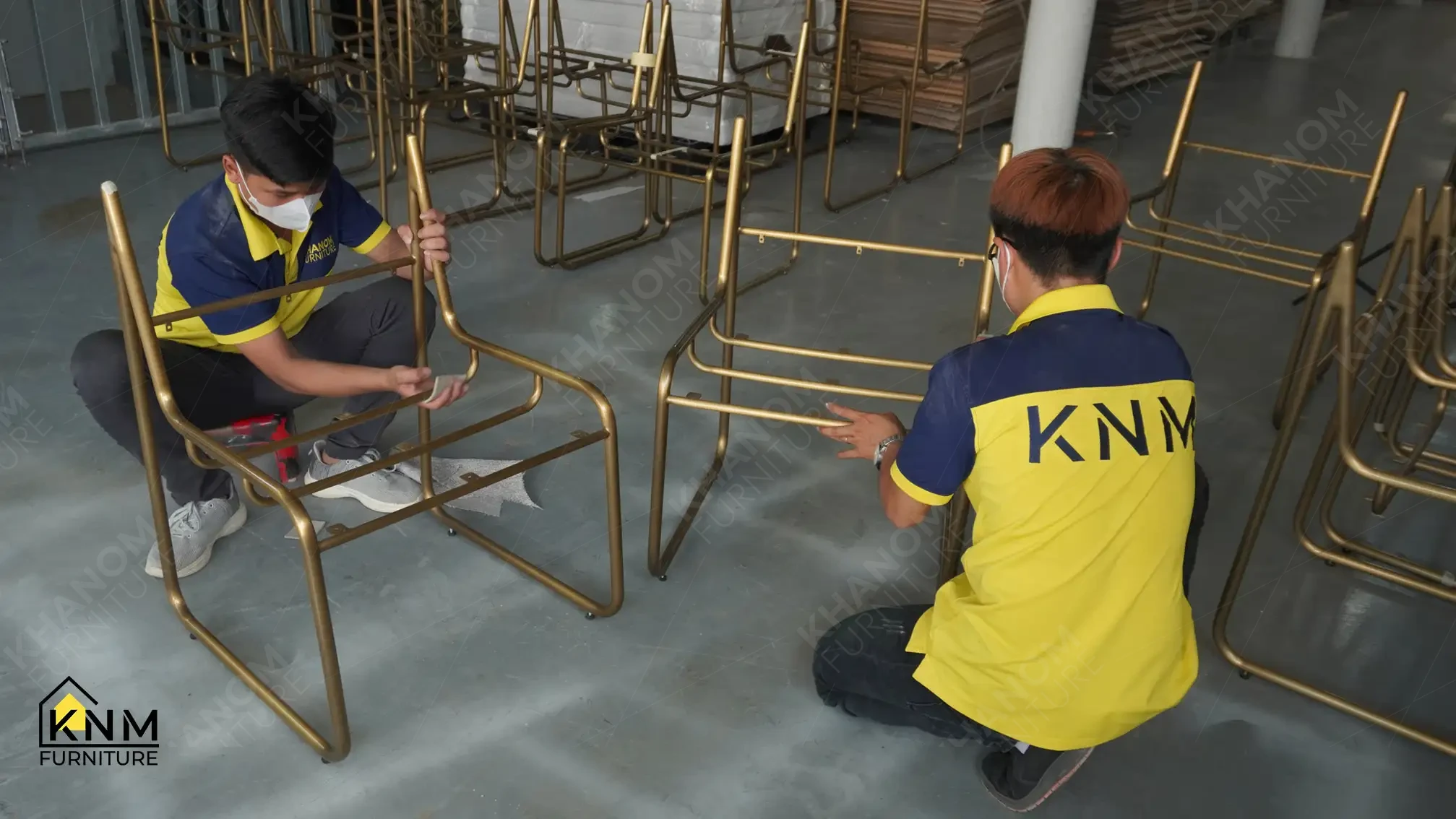
For decorative metal components — inlaid banding, surface-mounted detail strips, and accent frames — dimensional tolerances are tighter than those applied to structural frames, because a positional variance in a decorative element is visible at close range in a completed room installation where a structural tolerance would not be.
 
Metal-to-wood integration points are pre-positioned during the respective fabrication stages of each material. Mounting holes, embedded threaded inserts, and alignment points are drilled or pressed before the two materials come together at the assembly stage. Repositioning after assembly is not a minor field adjustment — it requires disassembly of the finished component and, in most cases, rework of the affected surface finish on both materials.
Technicians at Khanom Furniture (KNM) conducting manual surface preparation on batch produced gold metal chair frames at our metal factory Vietnam.

5. What Does the Upholstery Process Involve for Commercial Hospitality Seating?
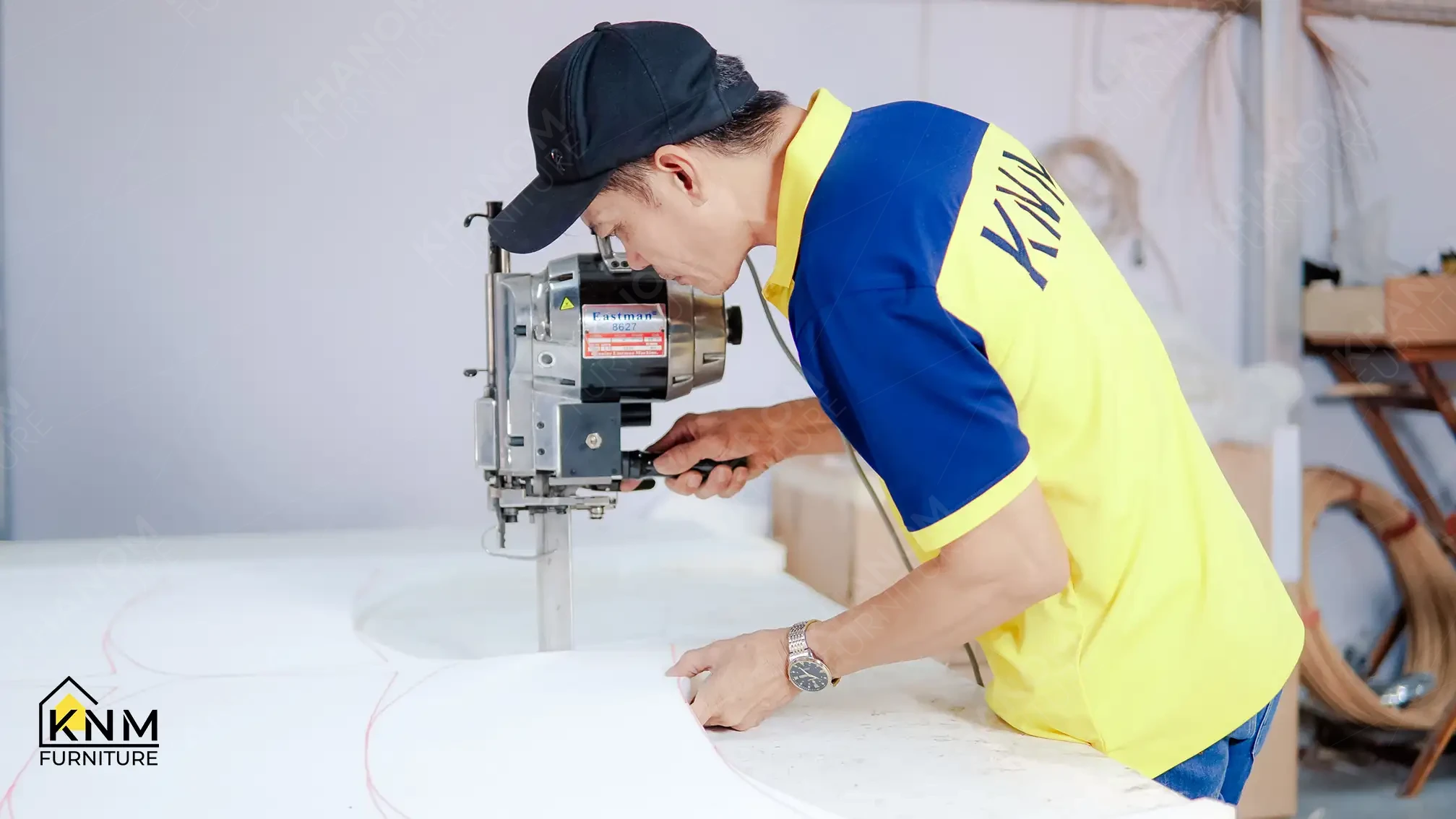
Commercial seating upholstery involves foam selection by density grade, fabric pattern layout, webbing tensioning, and final fabric application — all confirmed against the approved COM specification before the first panel is cut. These sequenced decisions determine material yield, visual pattern consistency across the production batch, and whether the finished seating shows uniform tension at delivery.
 
Foam grades are selected by section function: seat, back, and arm positions each carry different density and ILD specifications. For commercial hospitality seating, seat foam typically falls within a 30–50 ILD range, selected against the expected use cycle and seating category. The webbing suspension system is tensioned and inspected before foam application begins.
 
Tight seat and tight back sections — where fabric is fixed directly to the frame without loose cushions — are particularly sensitive to tension inconsistency, which is visible at delivery and cannot be corrected on-site without full re-upholstery.
KNM upholstery craftsman operating an Eastman Model 8627 straight-knife cutting machine to cut white batting or foam sheeting on a large cutting table.

6. How Is Surface Finishing Applied to Hospitality Furniture?
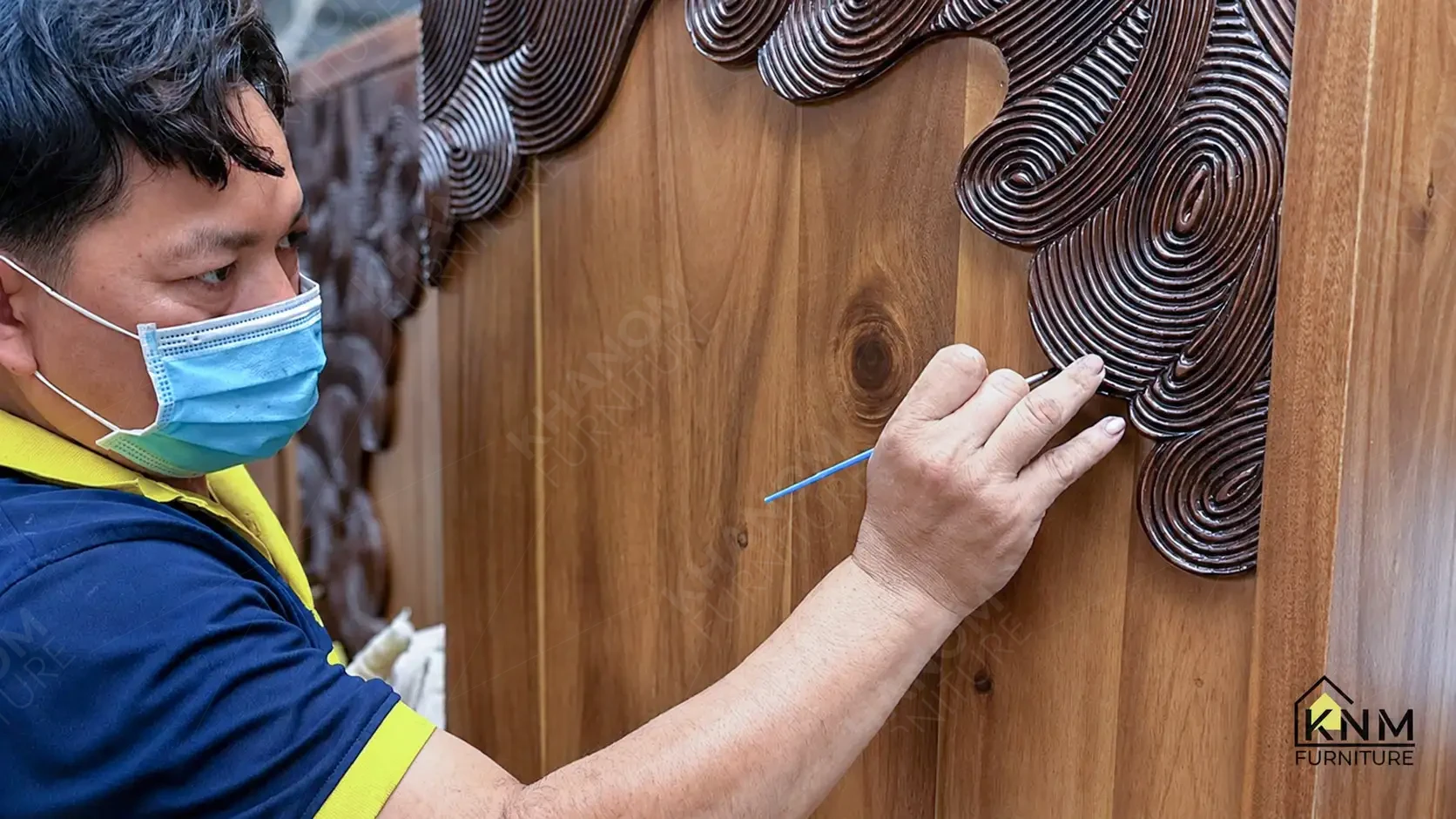
Surface finishing for hospitality furniture follows a minimum three-stage sequence: substrate preparation (sanding from 120 to 220 grit progressively), base coat application, intermediate sanding, and final topcoat. Sheen level, undertone, and any hand-applied effects — wire brushing, distressing, antiquing — are confirmed against the approved finish sample before the full production batch proceeds.
 
Hand finishing is required for carved or profiled surfaces where mechanical application does not achieve consistent coverage depth in recessed areas. Finish sign-off on the first production unit is the critical checkpoint before committing the full batch to the topcoat line.
Khanom Furniture craftsman applying hand detail finish with a fine brush to an intricately carved solid wood headboard panel featuring swirl motif in dark walnut stain.

7. What Quality Control Steps Occur Before Hospitality Furniture Ships?
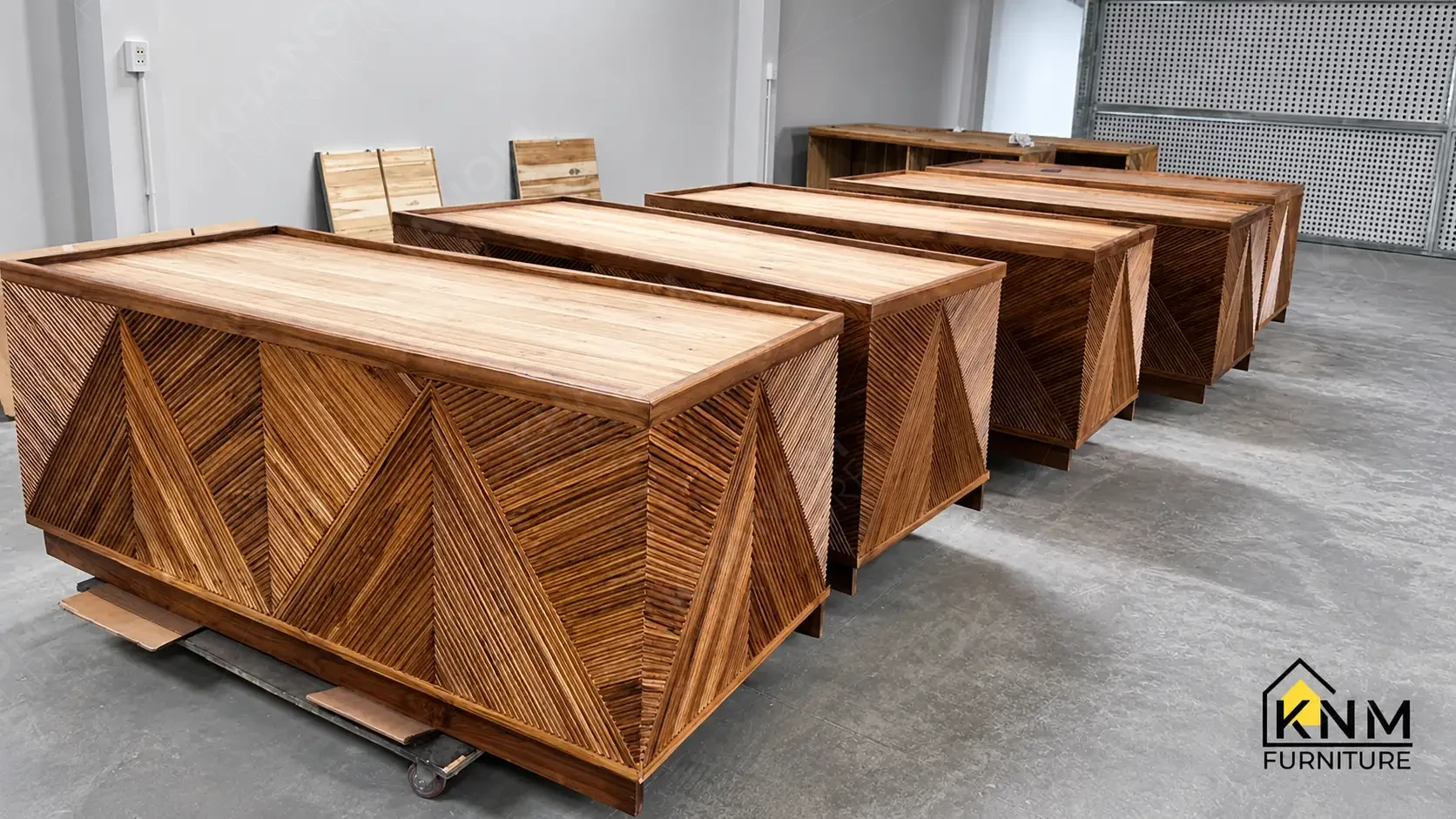
Pre-shipment QC for FF&E projects covers four levels of verification:
 
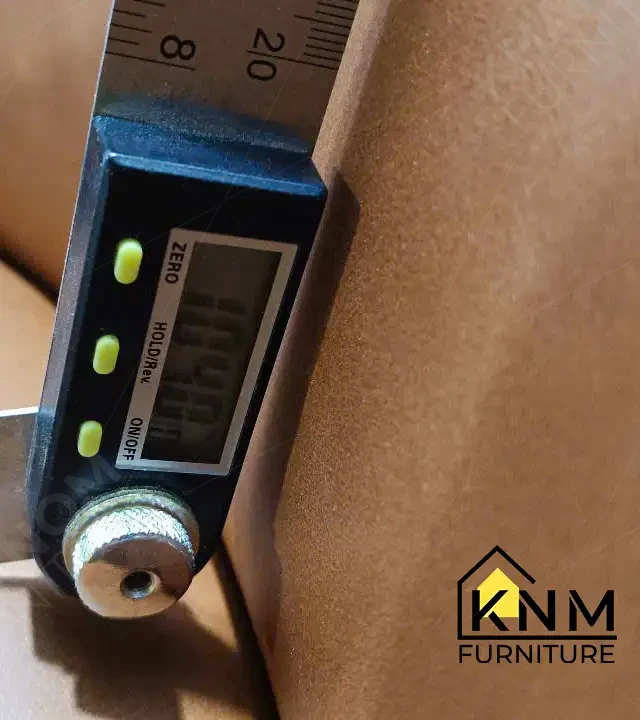
Dimensional inspection confirms critical measurements against the approved shop drawing — including angular dimensions verified with a digital angle gauge at specified back and seat angles.
 
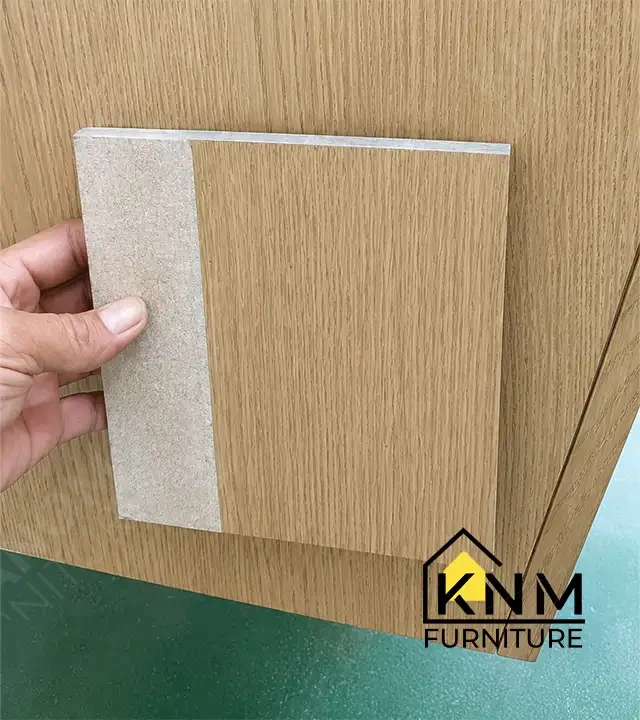
Finish comparison is conducted by direct swatch-to-surface comparison under consistent lighting: color accuracy, grain direction, and sheen level are evaluated against the approved finish sample.
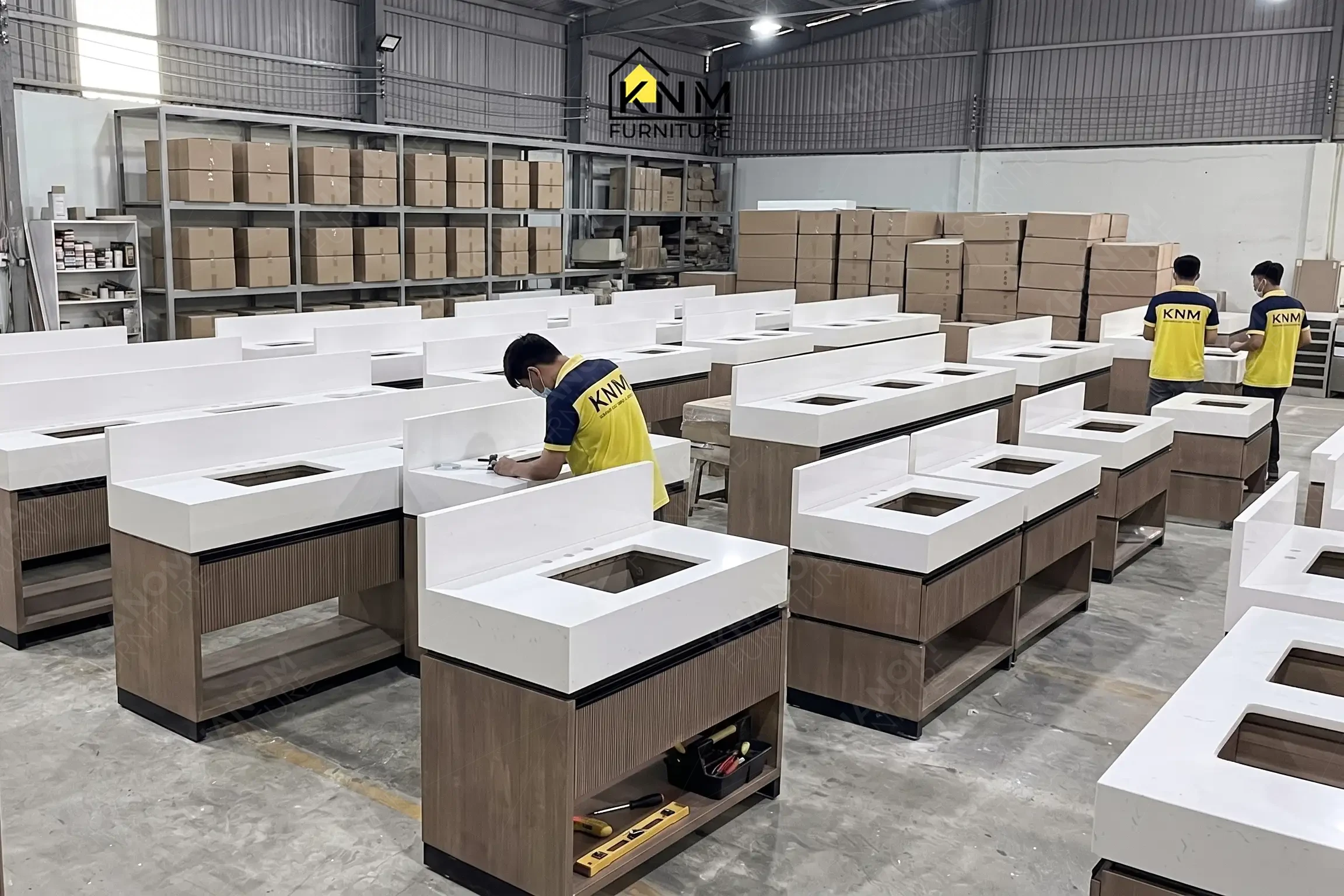
Five identical finished solid wood bar counter units with diagonal reed-panel decorative detail staged side-by-side for pre-shipment quality inspection at Khanom Furniture (KNM Furniture) Vietnam.
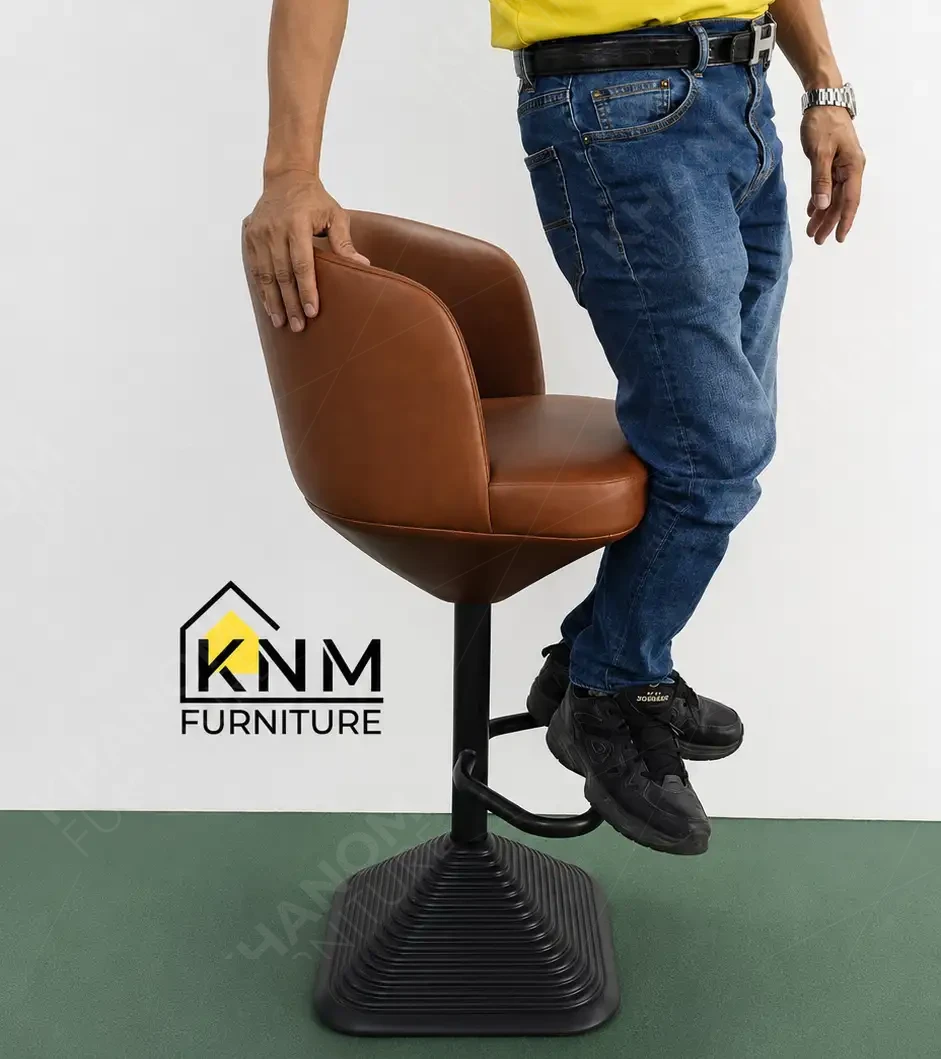
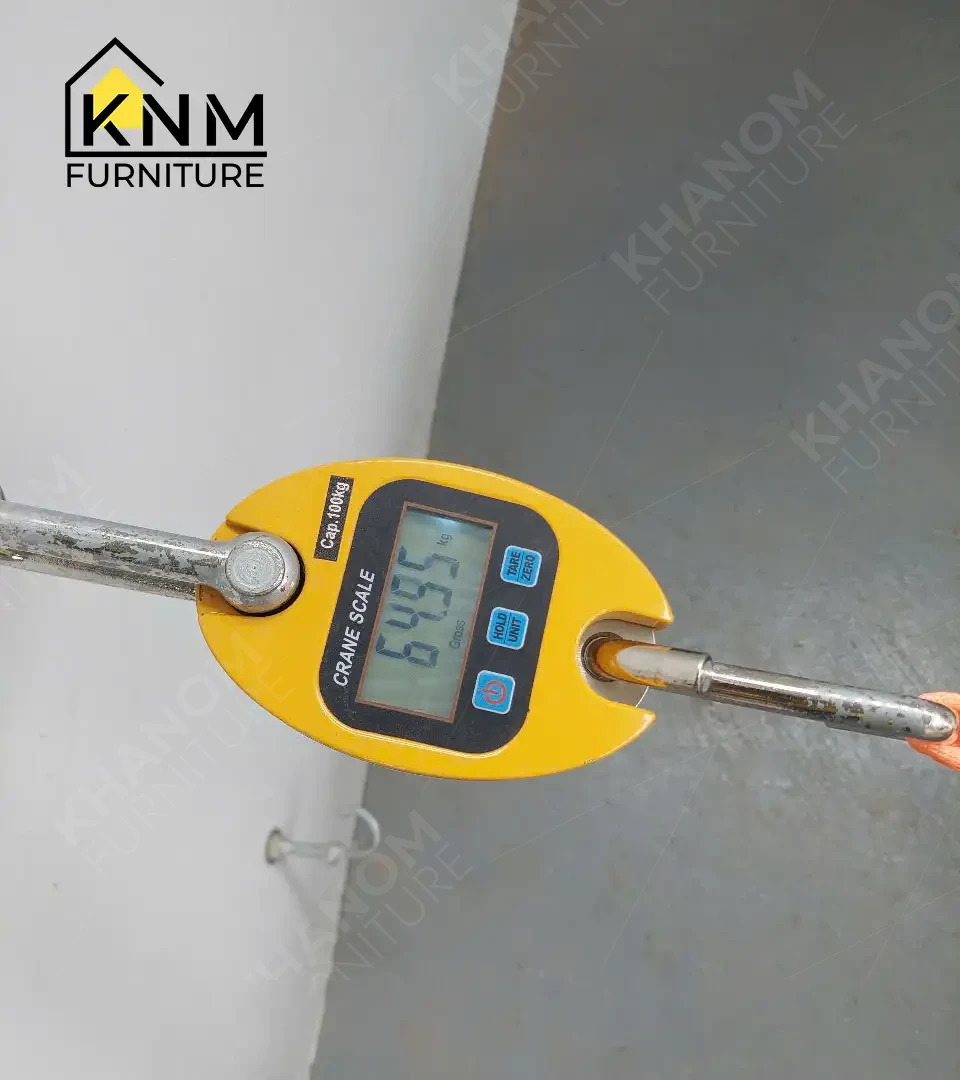
Structural load testing applies documented test forces to simulate commercial dynamic use conditions, including off-axis and rearward load scenarios. Applied loads are recorded using calibrated crane scales, with test values documented by batch.
 
Hardware and functional verification covers drawer travel, door swing, hinge adjustment, and lock engagement — checked across each completed unit before packaging clearance is issued.
 
Units that do not pass internal inspection thresholds are flagged, corrected, and re-inspected. QC records are documented by batch and SKU and available for client review on request. At a 300-room project scope, a defect identified at the destination site is not a single-unit correction — it is a site access event, a logistics coordination problem, and an installation schedule disruption.
Khanom Furniture QC technician performing a physical stability and off-axis load test on a brown leather upholstered barstool with metal pedestal base, simulating dynamic commercial use conditions.
Yellow digital crane scale (100 kg capacity) recording applied load during furniture structural testing at KNM Furniture, KNM logo visible in upper corner.
Digital protractor angle gauge measuring the backrest angle of a brown leather upholstered chair against specification during Khanom Furniture (KNM Furniture) pre-shipment QC inspection, steel rule visible.
Khanom Furniture quality inspector holding an approved veneer finish swatch sample directly against a completed casegood door panel for color and grain comparison during pre-shipment QC.

8. How Is Hospitality Furniture Packaged for International Export Shipment?

Packaging for international hospitality FF&E shipments uses a layered protection system matched to transit risk by surface type, edge profile, and load condition:
 
  • PE film — surface isolation layer; prevents adhesive transfer from foam and provides a moisture barrier against humidity variation in transit.
  • EPE foam — 20–30mm cushioning on surfaces and edges; absorbs vibration and transit shock without applying contact pressure to finished surfaces.
  • EPS foam — positional blocking; maintains the product’s position within the carton under lateral dynamic load during container transit.
  • Wooden crating — compression load-bearing frame; designed to sustain stacking loads from other cartons during container transport without structural deformation.
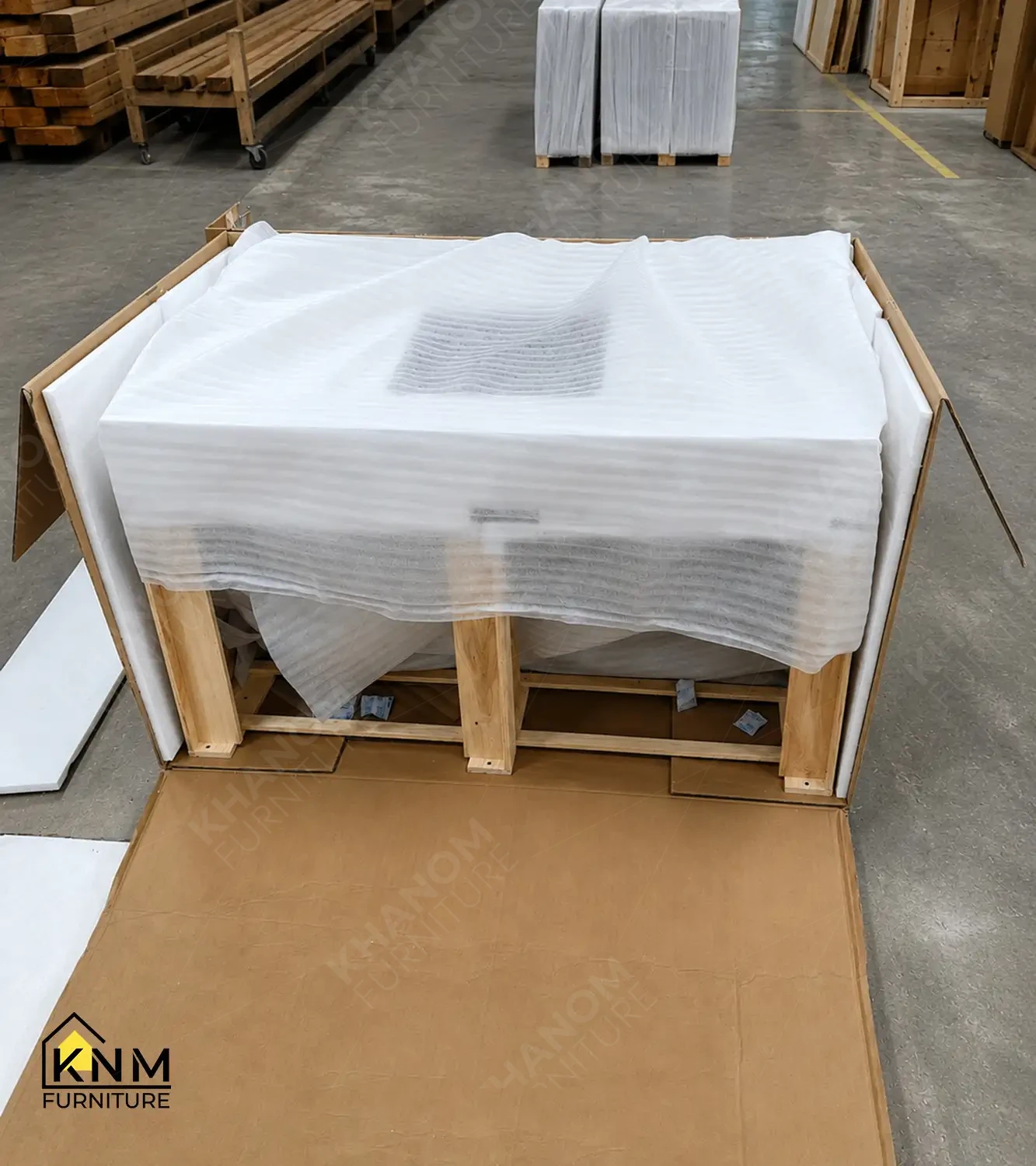
Each carton is labeled with project name, item description, unit count, orientation indicators, and country of origin. Container loading sequence is planned to distribute weight and align with the destination unloading access sequence.
Interior of an opened Khanom Furniture (KNM Furniture) wooden export crate showing furniture piece wrapped in white EPE foam cushioning positioned inside a wooden structural cradle, packaging layers visible.
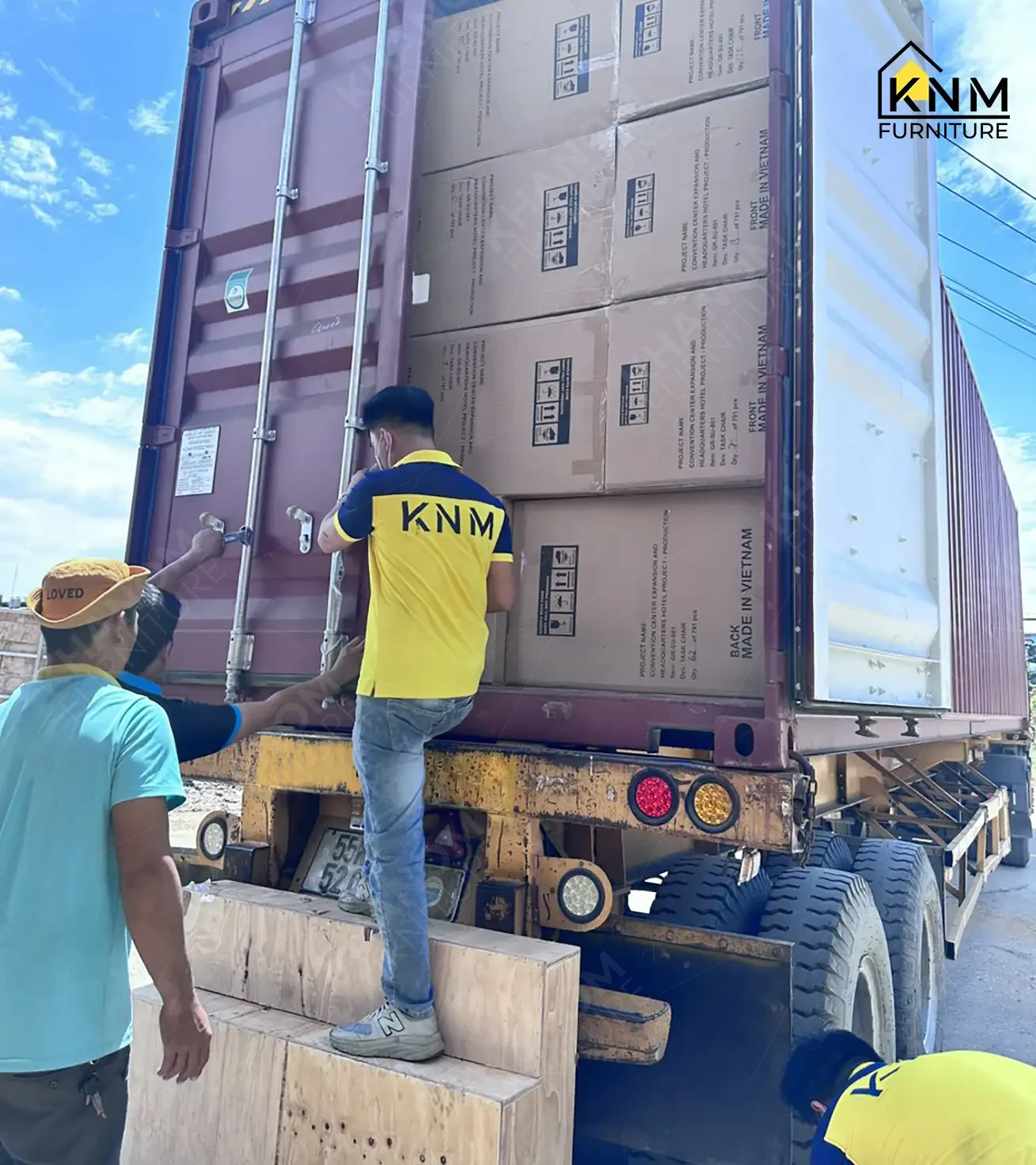
Khanom Furniture (KNM Furniture) logistics team loading labeled project cartons into a shipping container for ocean freight export to the United States, KNM logo visible upper left.
Working on a hospitality FF&E project? KNM Furniture manufactures exclusively for US-based hotel and resort projects, working from client-supplied shop drawings and specifications.
 
Send your specification package → we’ll confirm scope and production feasibility .

––––––––––––––––––––––––

Frequently Asked Questions: Hospitality Furniture Manufacturing

Q: How long does hospitality furniture manufacturing take from specification to delivery?

Lead time for hospitality FF&E projects typically ranges from 10 to 16 weeks from production lock, depending on SKU complexity, batch quantity, and finishing requirements. Pre-production review and revision cycles add 2 to 4 weeks before production lock. Ocean freight to US ports adds 3 to 4 weeks from container loading. Total project-to-delivery window is typically 15 to 24 weeks from receipt of the complete specification package.


Q: How many revision cycles is normal for hotel FF&E production?

The number of revision cycles depends on project complexity and the completeness of the initial specification package. Projects with multiple SKUs and cross-trade scope dependencies may require 8 to 13 revision cycles before production lock. Revision cycles completed before production lock do not affect the delivery schedule — revisions that reach the production floor unresolved do.


Q: What materials are used in commercial hospitality furniture manufacturing?

Common structural materials include solid kiln-dried hardwood (dried to below 12% moisture content for interior applications), Marine Grade Plywood for moisture-exposed or coastal environments, and graded MDF for panel substrates requiring dimensional stability. Seating frames use solid hardwood species selected for joint type and structural load per the approved shop drawing.


Q: What does COM mean in hospitality furniture manufacturing?

COM stands for Customer’s Own Material — fabric or leather supplied by the client rather than selected from the manufacturer’s inventory. COM processing requires confirming yardage requirements, pattern repeat, and bias stretch direction before cutting begins. COM fabric is tracked separately from standard production inventory to prevent cross-project material contamination.


Q: What is production lock in furniture manufacturing?

Production lock is the point at which all project stakeholders have approved the final shop drawing revision, and the drawing is frozen for fabrication. No further revisions are accepted after production lock without reopening the revision cycle and reassessing the delivery timeline impact. Production lock marks the critical transition between the specification phase and the fabrication phase.

––––––––––––––––––––––––

KNM FURNITURE

Manufacturing with Material Integrity.

📩 RFQ: oanh@knmfurniture.com

📞 Hotline: +84 903 542 812

🌐 Website: knmfurniture.vn

📌 Pinterest: pinterest.com/khanomfurniture

ⓕ  Facebook: facebook.com


Related Posts