Khanom Furniture (KNM Furniture) |
HOW HOSPITALITY FURNITURE IS MANUFACTURED
A Production Process Guide for FF&E Project Teams
How Is Hospitality Furniture Manufactured?
Hospitality furniture manufacturing follows 8 sequential stages: pre-production drawing review, material sourcing and specification, wood frame fabrication, metal frame and component fabrication, upholstery production, surface finishing, pre-shipment quality control, and export packaging. For a US-based FF&E project, the production cycle typically runs 10–16 weeks from production lock to container loading, plus 3–4 weeks ocean freight to destination port.
The 8 Stages of Hospitality Furniture Manufacturing:
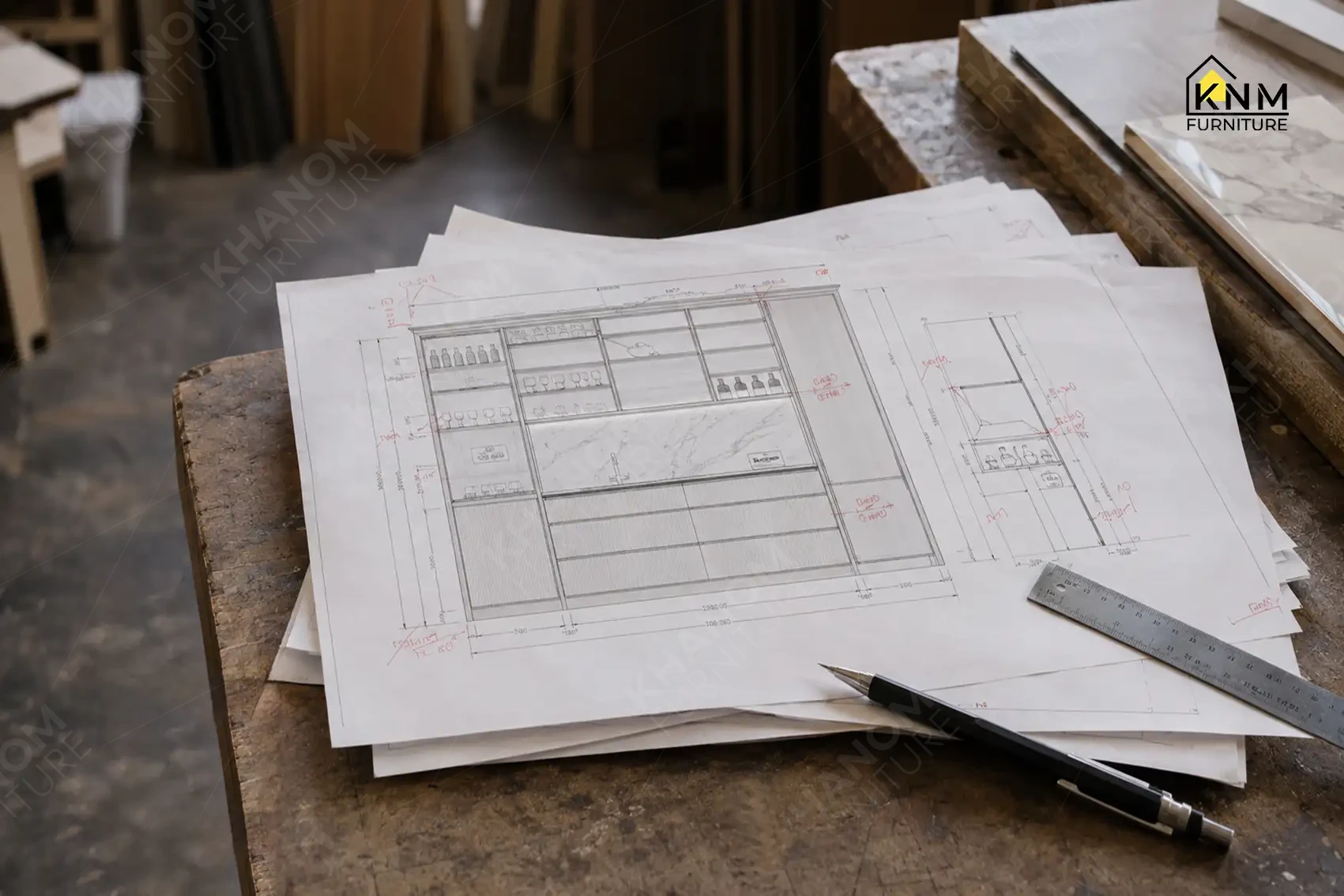
- Pre-production drawing review — revision cycles (typically 8–13) resolved before production lock is authorized
- Material sourcing and specification — hardwood, Marine Grade Plywood, graded MDF, and COM fabric confirmed against the approved material schedule
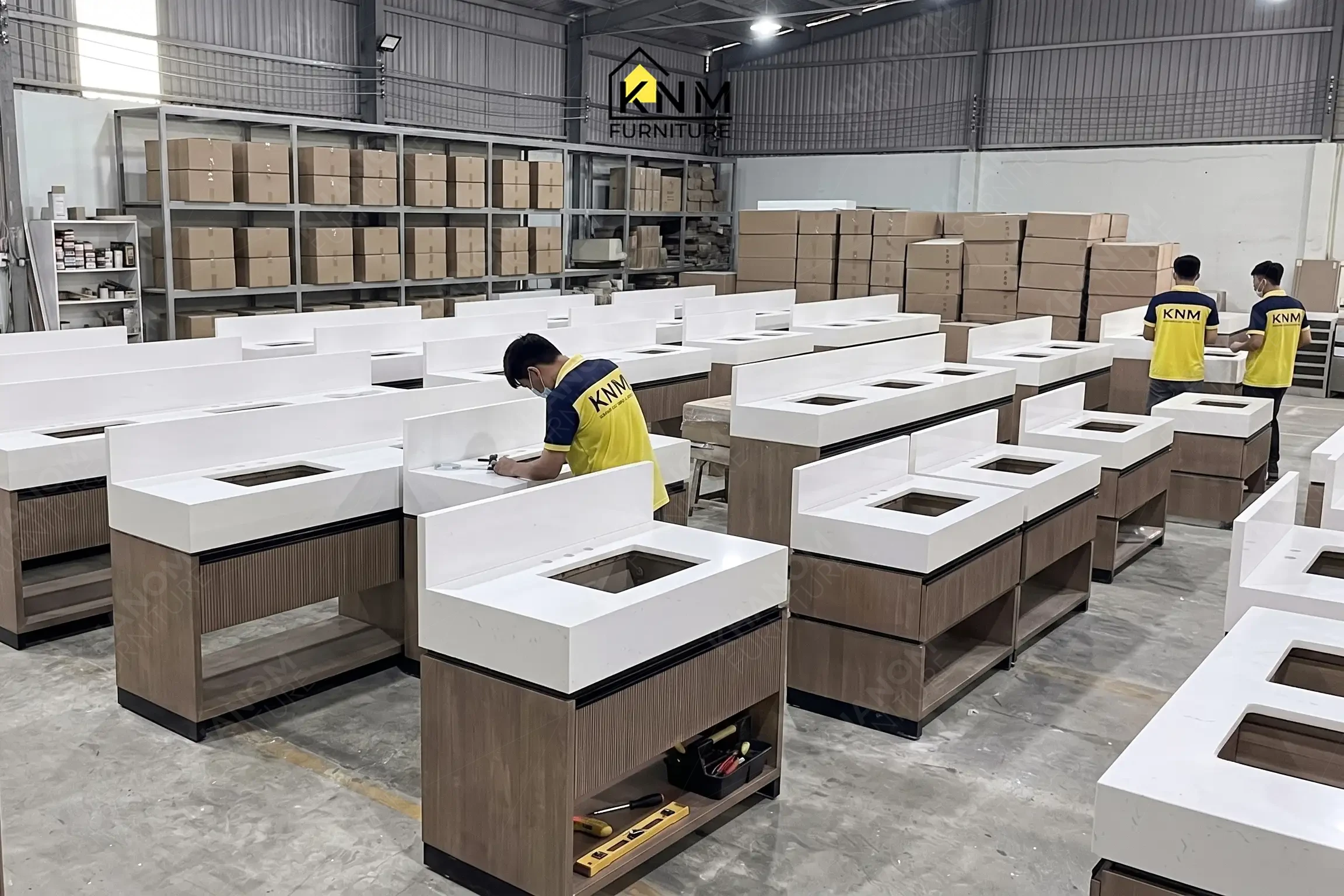
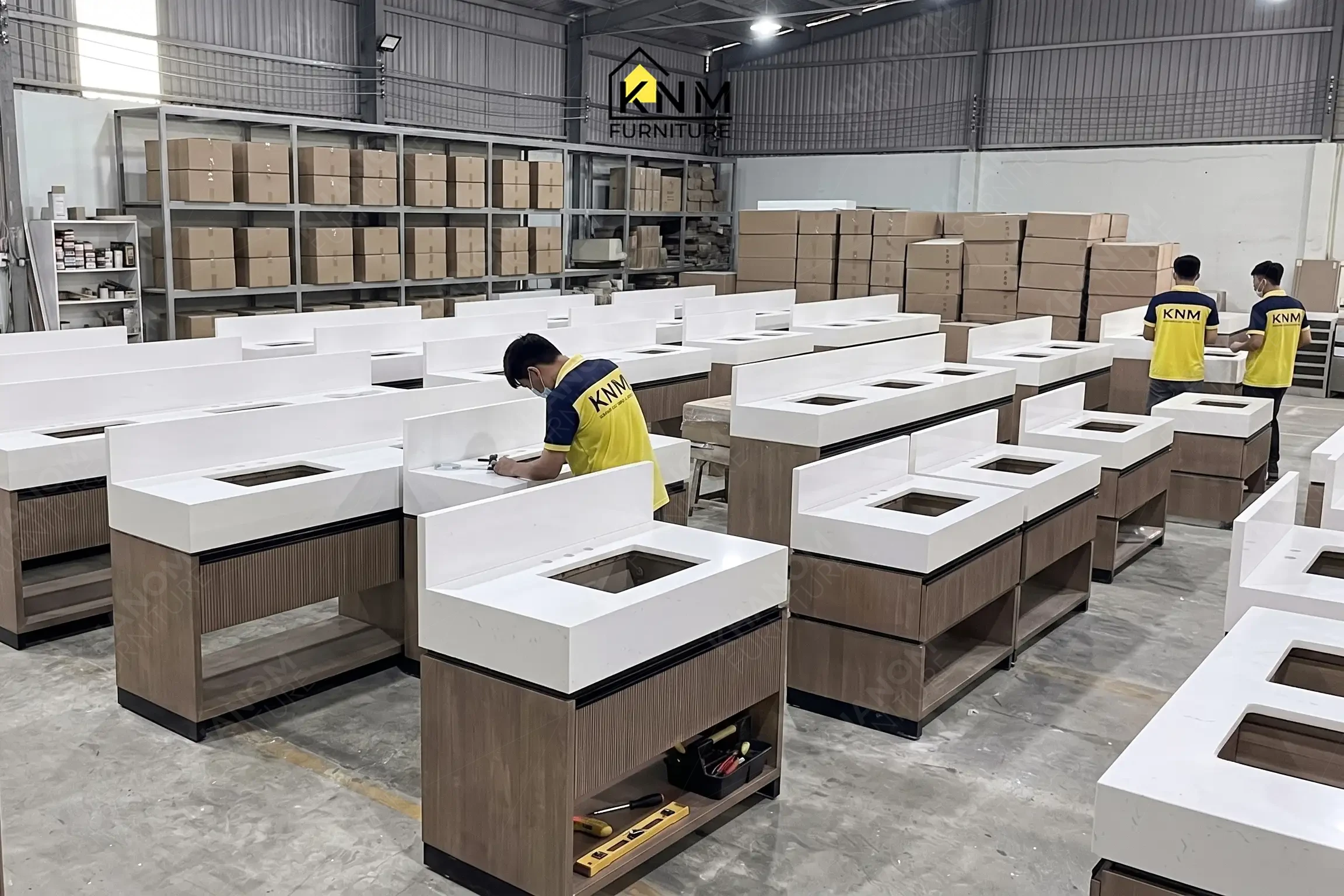
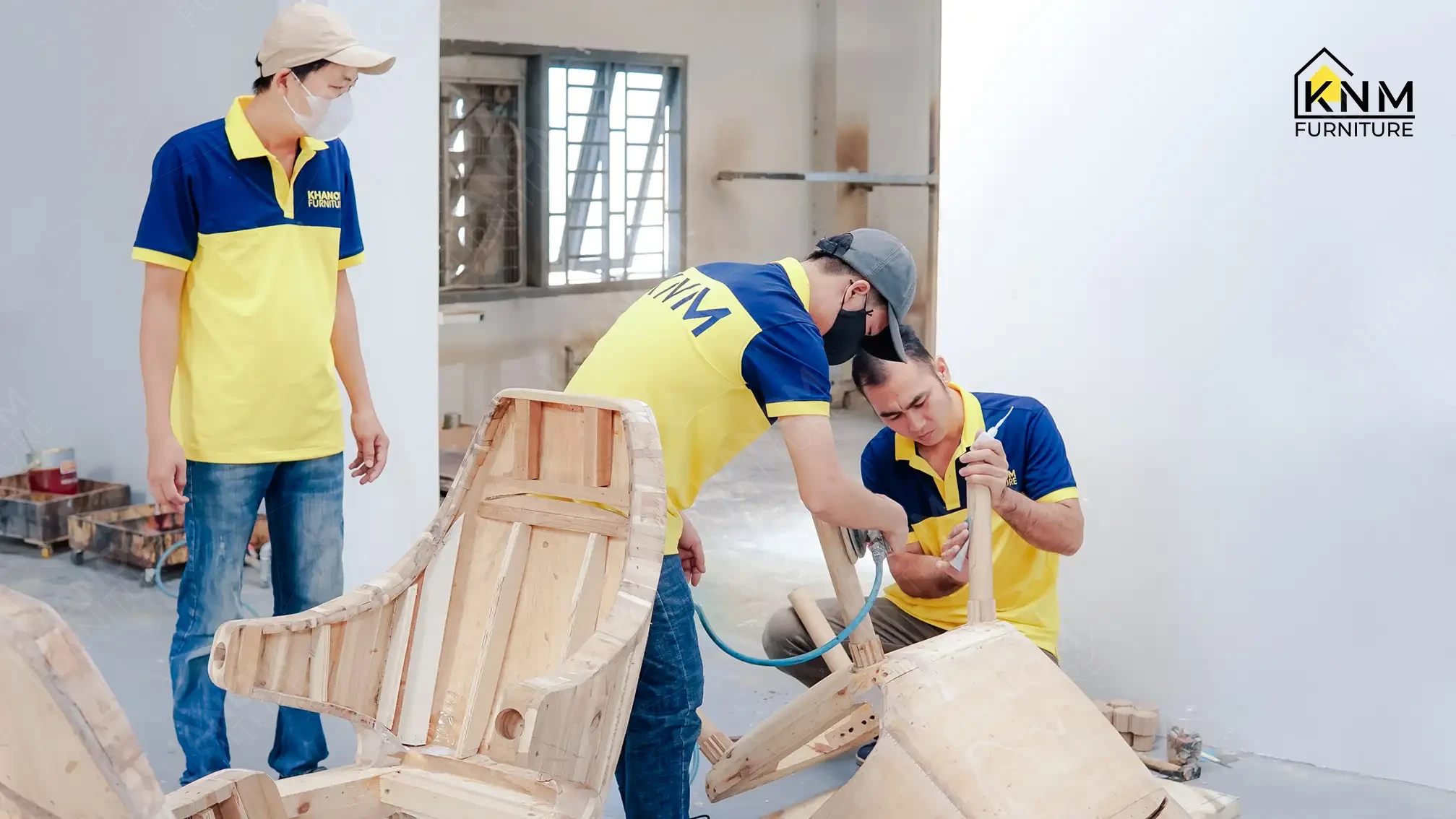
- Wood frame fabrication — CNC machining, mortise-and-tenon joinery, and dimensional batch verification
- Metal frame and component fabrication — cutting, forming, welding, grinding, and powder coating; runs parallel to wood frame production and merges at the assembly stage
- Upholstery production — foam grade selection, pattern cutting, webbing tensioning, and fabric application
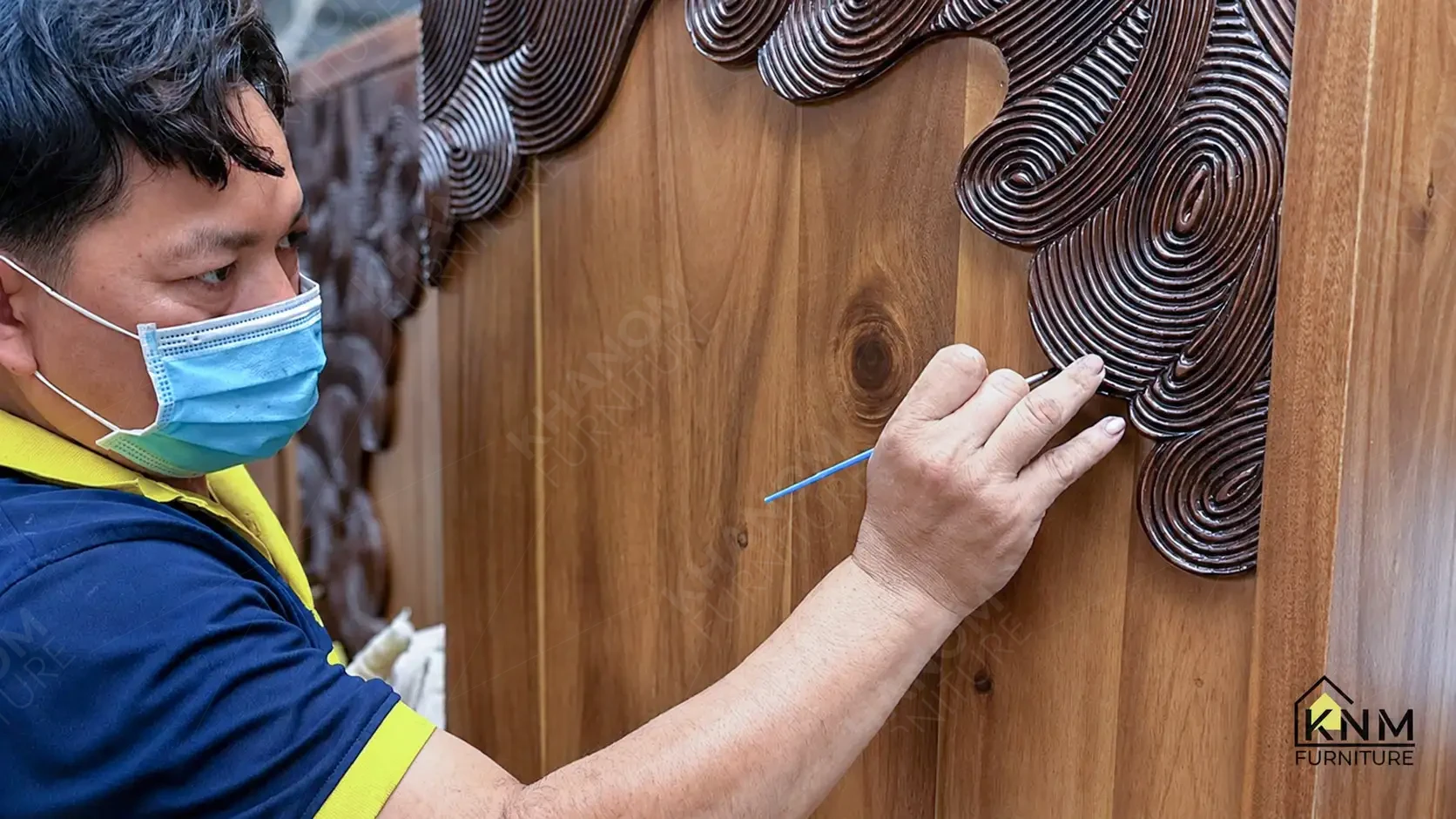
- Surface finishing — minimum 3-stage sequence: substrate preparation, base coat, and final topcoat; hand-applied on carved surfaces
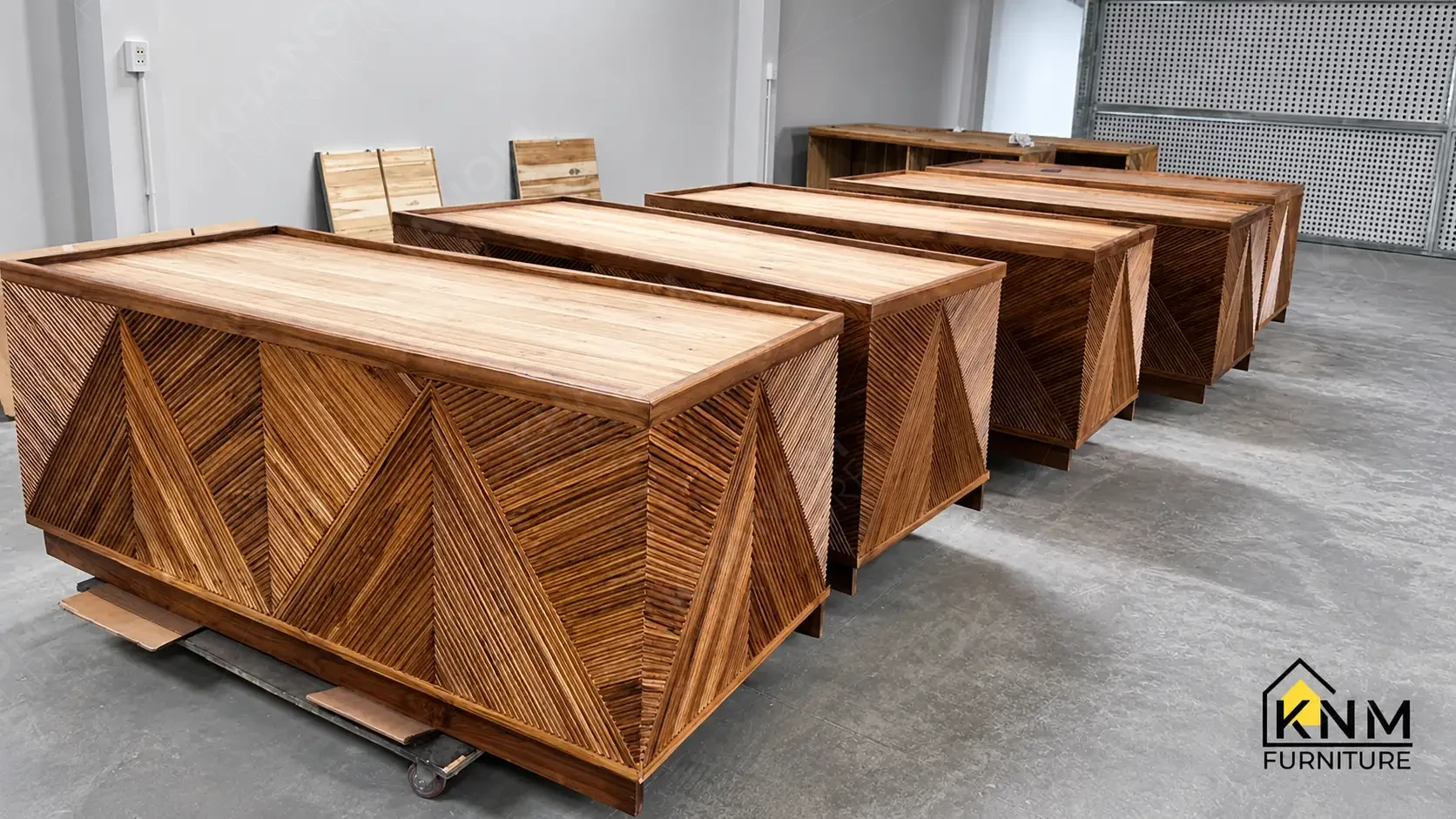
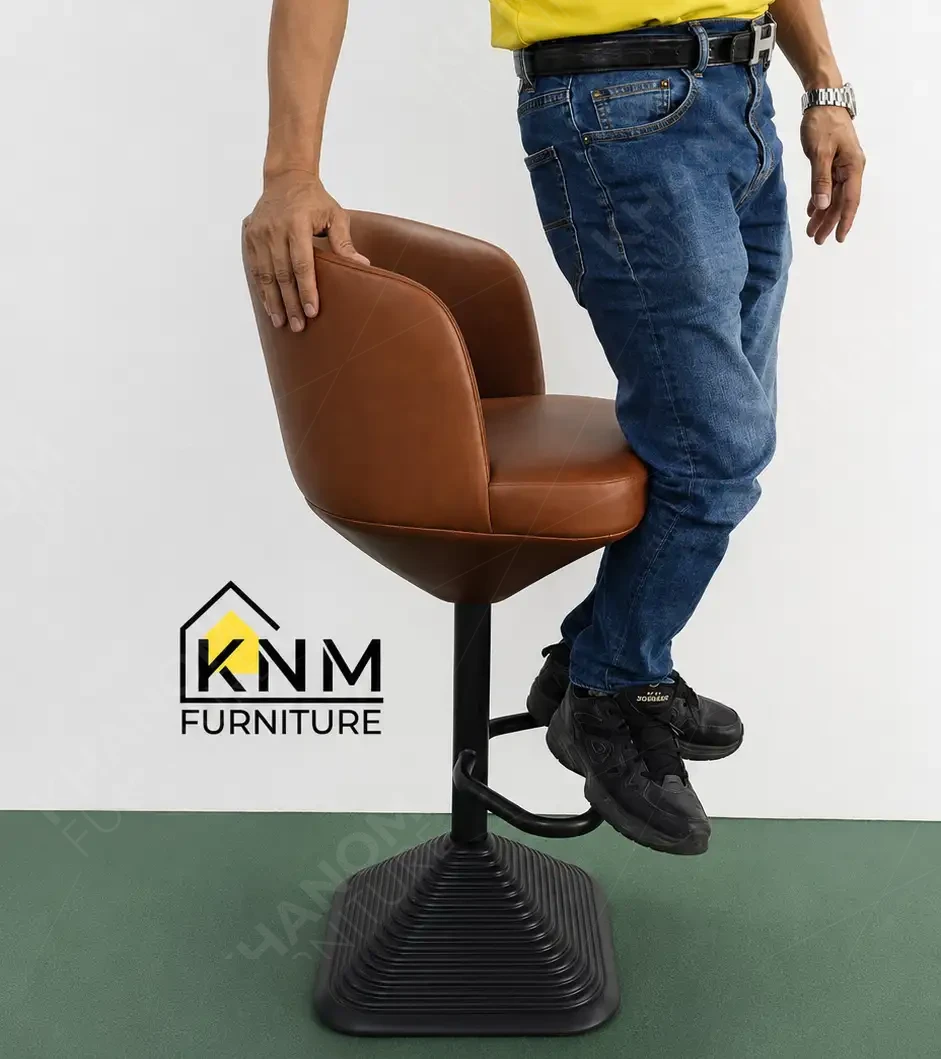
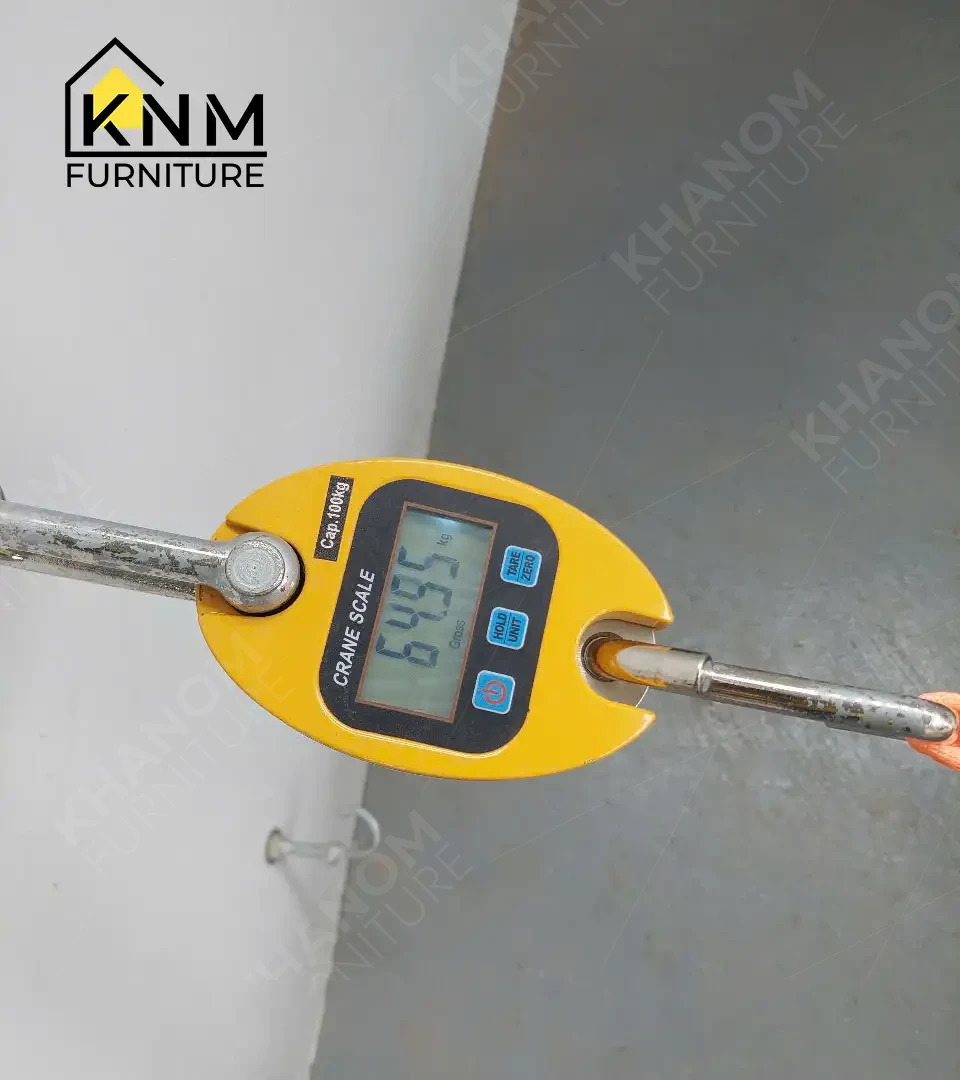
- Pre-shipment quality control — dimensional, finish, structural load, and hardware verification by batch
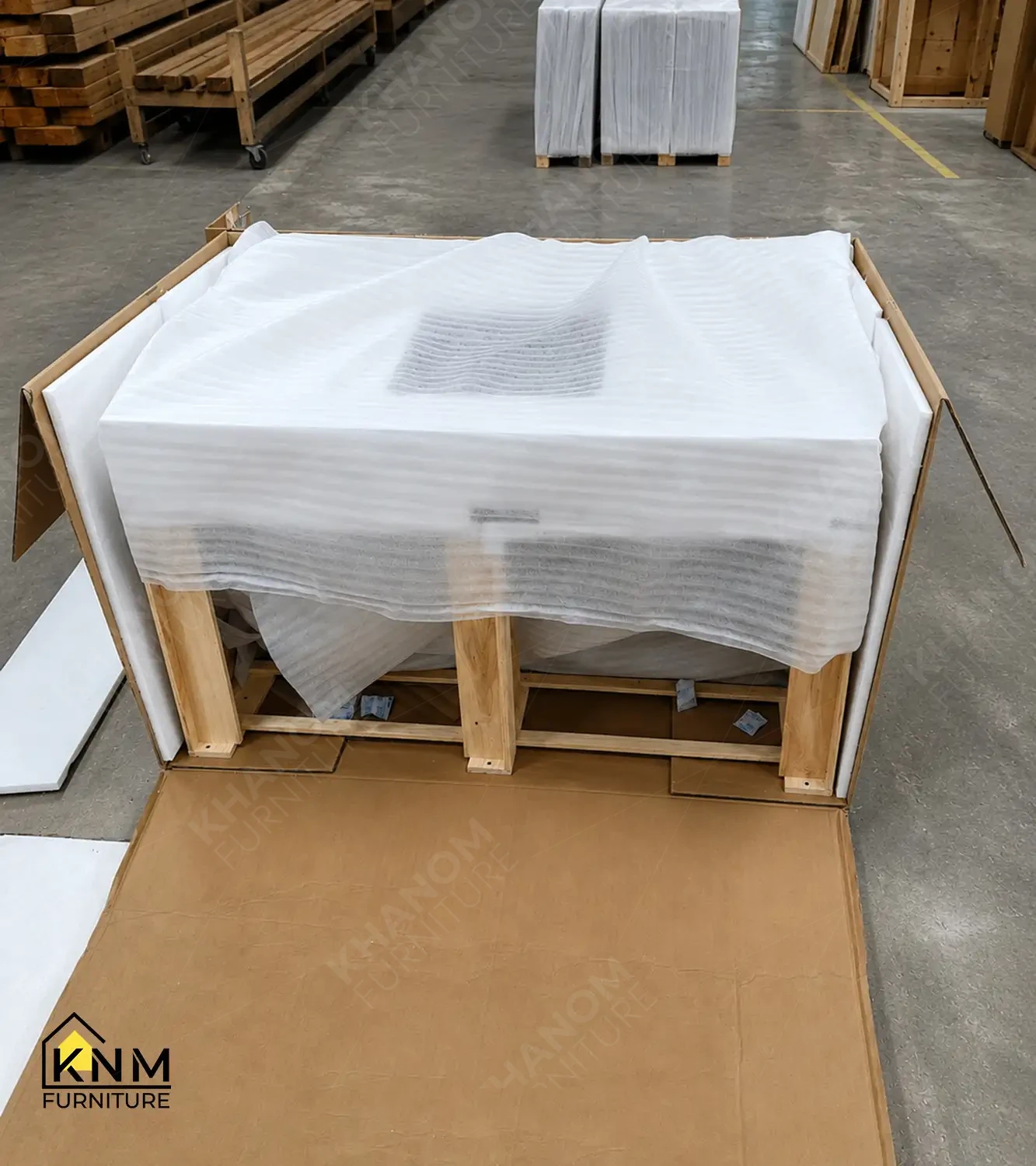
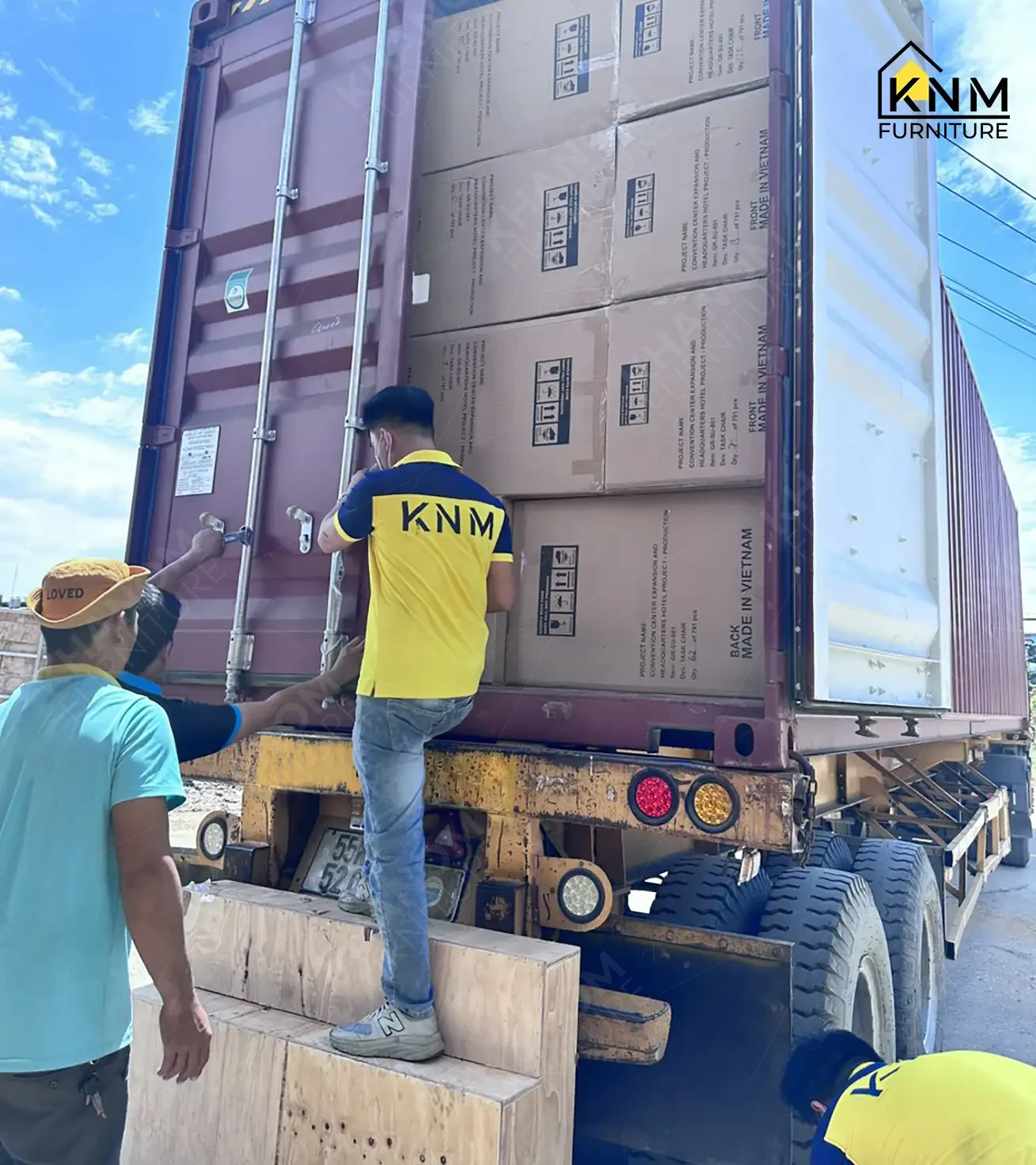
- Export packaging and container loading — PE film, EPE foam, EPS blocking, and wooden crating for ocean freight to US destination
From shop drawing review to container loading — the control points that determine whether your FF&E project delivers without site-level rework.
When a specification package arrives at a hospitality furniture manufacturer, production does not begin with cutting. It begins with interpretation. Every dimension, material call-out, and finish note in that package becomes a fabrication decision — and how those decisions are controlled at each stage determines whether the final products match the approved specification, arrive on schedule, and clear the project’s punch list.
This guide outlines the complete manufacturing process as applied to hospitality FF&E projects at KNM Furniture, a Vietnam-based OEM manufacturer serving US hotel and resort projects from shop drawing to export container.
1. What Happens Before Production Starts in Hospitality Furniture Manufacturing?
2. How Are Materials Sourced and Specified for Hospitality FF&E Projects?
- Solid kiln-dried hardwood — dried to below 12% moisture content for interior-grade applications; species selected against the joint type and structural load specified in the shop drawing.
- Marine Grade Plywood — for moisture-exposed substrate areas in coastal or outdoor-adjacent applications.
- Graded MDF — for panel substrate applications where dimensional stability is prioritized.
- COM (Customer’s Own Material) — client-supplied fabric or leather, tracked separately from production inventory; cut only after yardage, pattern repeat, and bias stretch direction are confirmed against the specification.
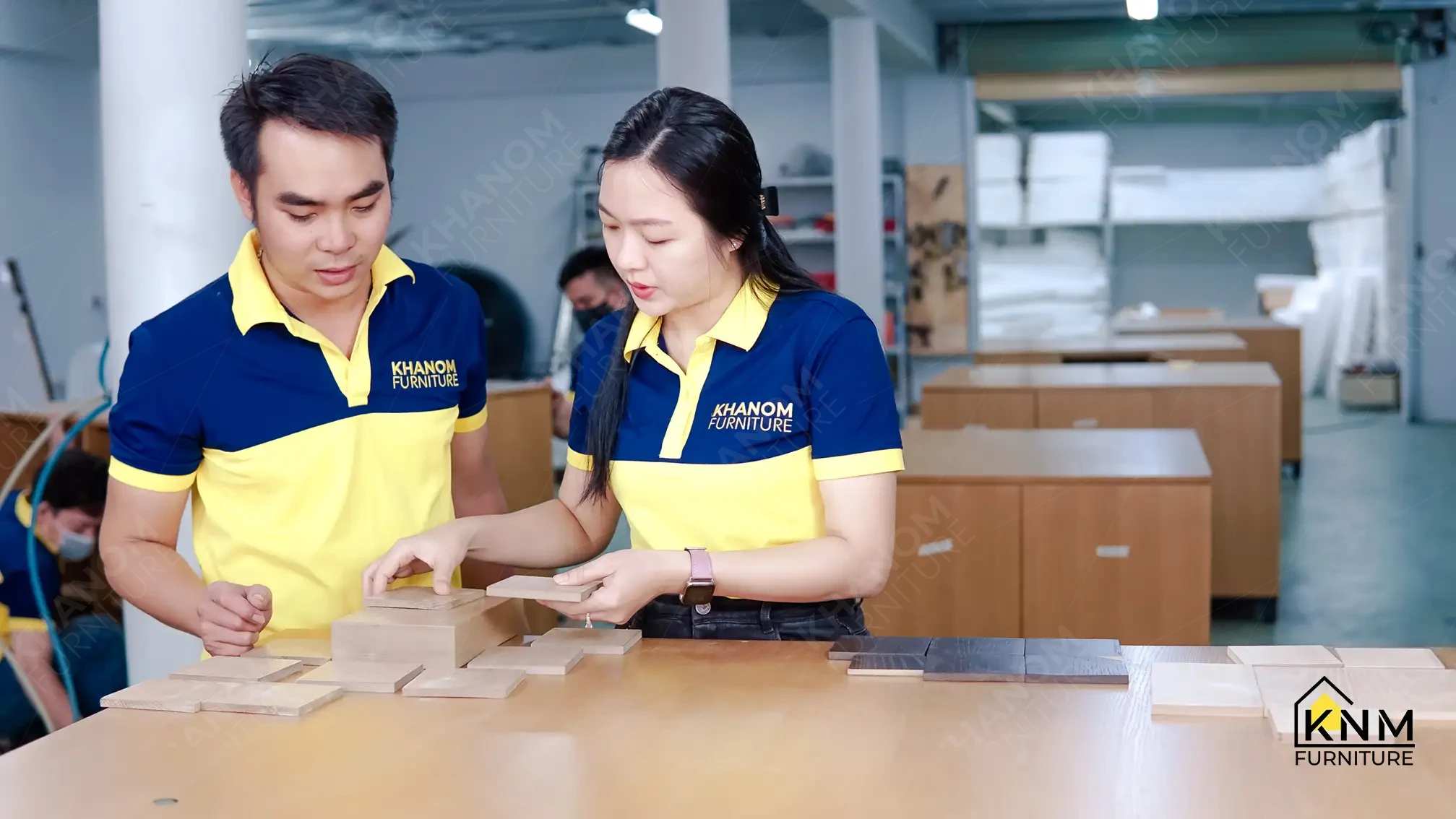
3. How Is the Wood Frame Produced for Hospitality Seating and Casegoods?
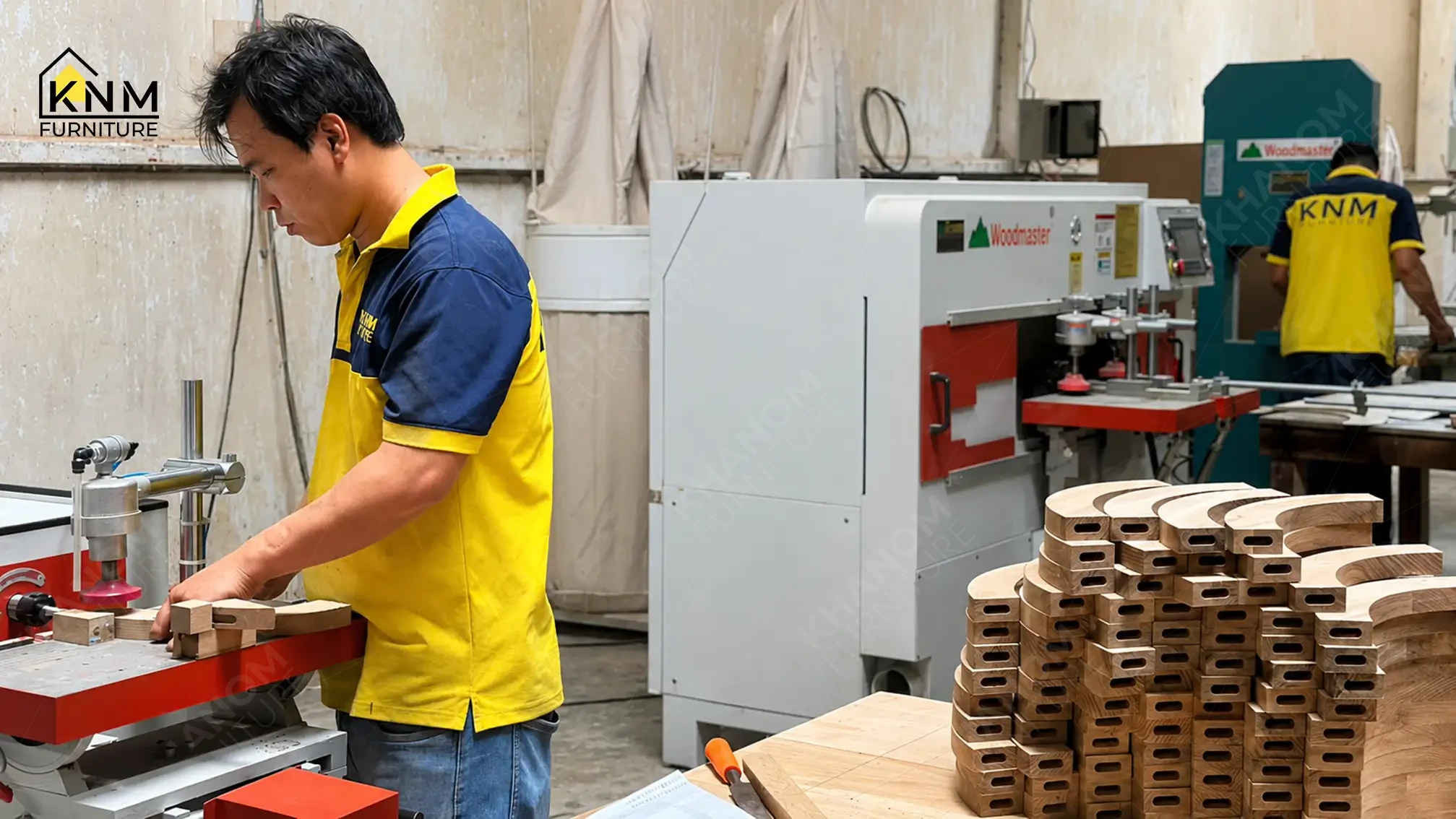
4. How Are Metal Frames and Components Fabricated for Hospitality Furniture Projects?
- Stock cutting and forming — steel or iron bar stock is cut to specified lengths and shaped to the geometry defined in the approved shop drawing; dimensional accuracy at this stage determines the alignment of all downstream mounting and integration points.
- MIG or TIG welding — frame joints are welded to the specified configuration; weld quality is inspected for penetration depth and surface continuity before the component advances to surface preparation.
- Grinding and surface preparation — weld seams are ground flush and the surface is prepared to an even profile to ensure consistent adhesion of the final powder coat or paint finish.
- Powder coating — the standard finish for metal components in commercial hospitality furniture; color, gloss level, and texture are confirmed against the approved finish sample before full batch application begins.
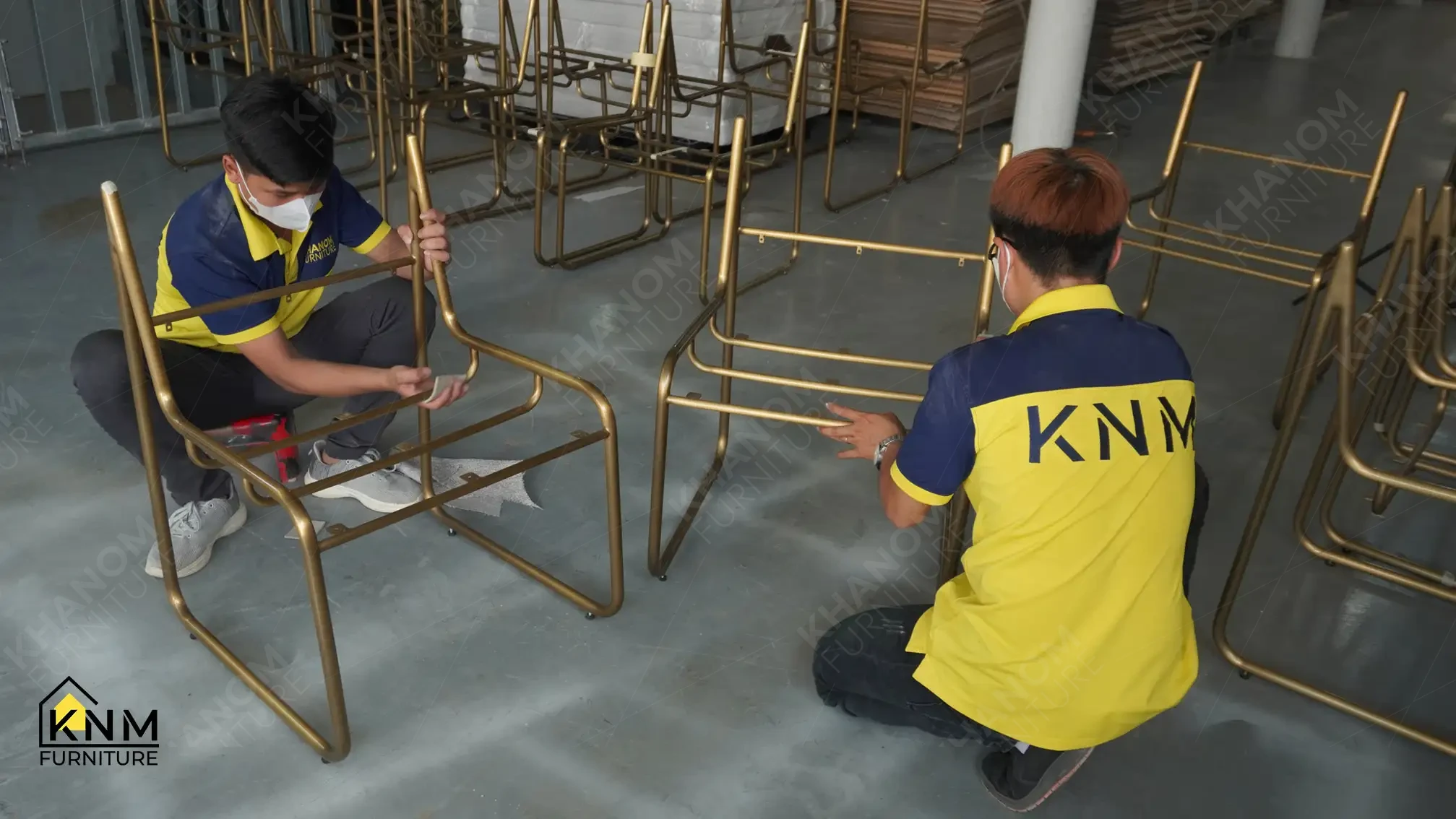
5. What Does the Upholstery Process Involve for Commercial Hospitality Seating?
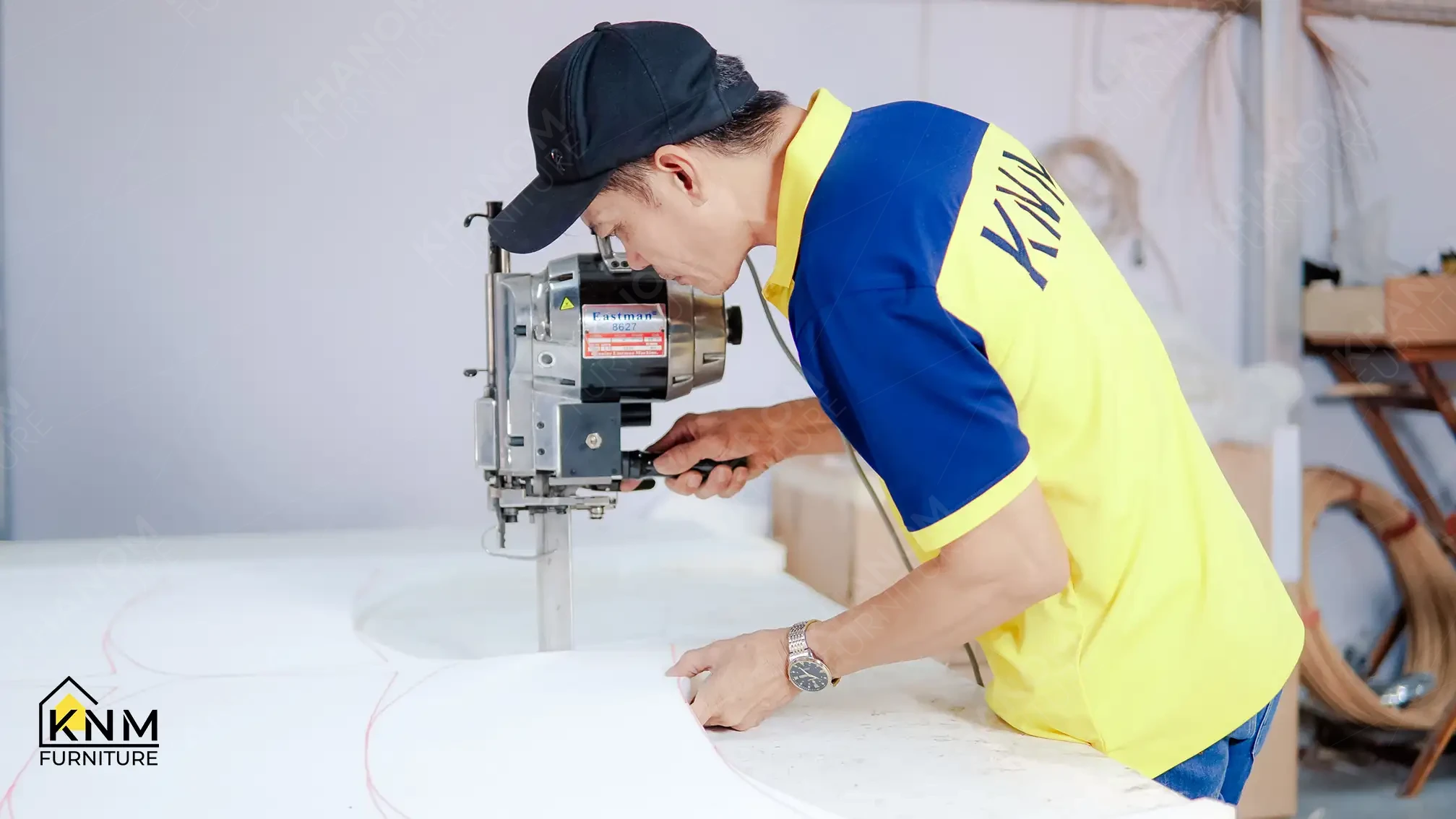
6. How Is Surface Finishing Applied to Hospitality Furniture?
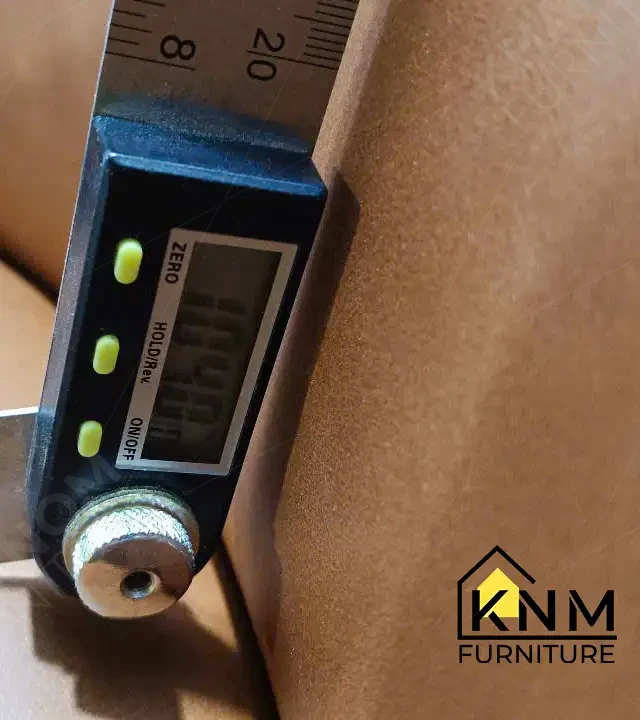
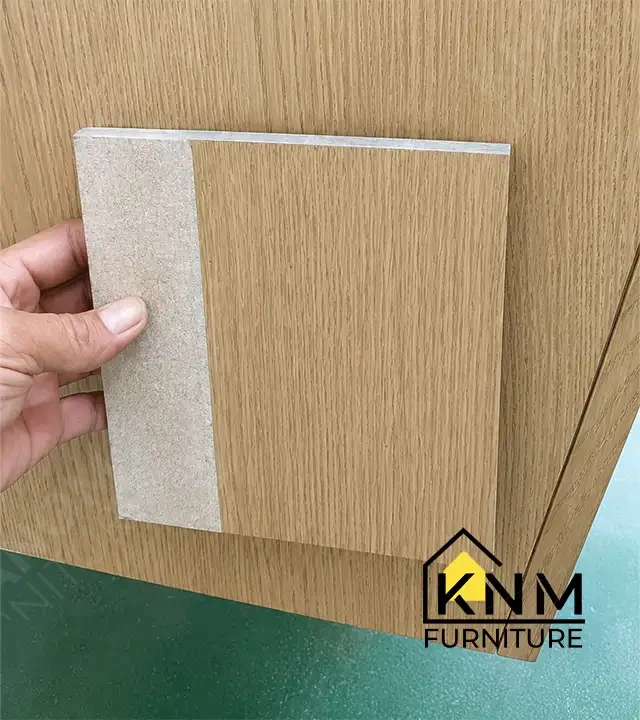
7. What Quality Control Steps Occur Before Hospitality Furniture Ships?
8. How Is Hospitality Furniture Packaged for International Export Shipment?
- PE film — surface isolation layer; prevents adhesive transfer from foam and provides a moisture barrier against humidity variation in transit.
- EPE foam — 20–30mm cushioning on surfaces and edges; absorbs vibration and transit shock without applying contact pressure to finished surfaces.
- EPS foam — positional blocking; maintains the product’s position within the carton under lateral dynamic load during container transit.
- Wooden crating — compression load-bearing frame; designed to sustain stacking loads from other cartons during container transport without structural deformation.
––––––––––––––––––––––––
Frequently Asked Questions: Hospitality Furniture Manufacturing
Q: How long does hospitality furniture manufacturing take from specification to delivery?
Lead time for hospitality FF&E projects typically ranges from 10 to 16 weeks from production lock, depending on SKU complexity, batch quantity, and finishing requirements. Pre-production review and revision cycles add 2 to 4 weeks before production lock. Ocean freight to US ports adds 3 to 4 weeks from container loading. Total project-to-delivery window is typically 15 to 24 weeks from receipt of the complete specification package.
Q: How many revision cycles is normal for hotel FF&E production?
The number of revision cycles depends on project complexity and the completeness of the initial specification package. Projects with multiple SKUs and cross-trade scope dependencies may require 8 to 13 revision cycles before production lock. Revision cycles completed before production lock do not affect the delivery schedule — revisions that reach the production floor unresolved do.
Q: What materials are used in commercial hospitality furniture manufacturing?
Common structural materials include solid kiln-dried hardwood (dried to below 12% moisture content for interior applications), Marine Grade Plywood for moisture-exposed or coastal environments, and graded MDF for panel substrates requiring dimensional stability. Seating frames use solid hardwood species selected for joint type and structural load per the approved shop drawing.
Q: What does COM mean in hospitality furniture manufacturing?
COM stands for Customer’s Own Material — fabric or leather supplied by the client rather than selected from the manufacturer’s inventory. COM processing requires confirming yardage requirements, pattern repeat, and bias stretch direction before cutting begins. COM fabric is tracked separately from standard production inventory to prevent cross-project material contamination.
Q: What is production lock in furniture manufacturing?
Production lock is the point at which all project stakeholders have approved the final shop drawing revision, and the drawing is frozen for fabrication. No further revisions are accepted after production lock without reopening the revision cycle and reassessing the delivery timeline impact. Production lock marks the critical transition between the specification phase and the fabrication phase.
––––––––––––––––––––––––
KNM FURNITURE
Manufacturing with Material Integrity.
📩 RFQ: oanh@knmfurniture.com
📞 Hotline: +84 903 542 812
🌐 Website: knmfurniture.vn
📌 Pinterest: pinterest.com/khanomfurniture
ⓕ Facebook: facebook.com