
Khanom Furniture (KNM Furniture) |
CONTAINER LOADING DISCIPLINE FOR HOSPITALITY FF&E EXPORT
How Vietnam OEM Manufacturers Prepare Furniture for the Journey to US Project Sites
Most FF&E project teams closely track furniture through production, mock-up sign-off, and production lock. What happens between that final sign-off and arrival at the US installation site is less frequently documented — but the decisions made in those final steps directly determine whether hundreds of identical pieces arrive ready to install, or require sorting, inspection, and claims handling before a single unit reaches the floor.
This article documents how KNM Furniture prepares hospitality FF&E for container export to the US: the packaging system, loading sequence, and chain of custody decisions that govern each shipment from factory floor to sealed door.
| Specification | Detail |
|---|---|
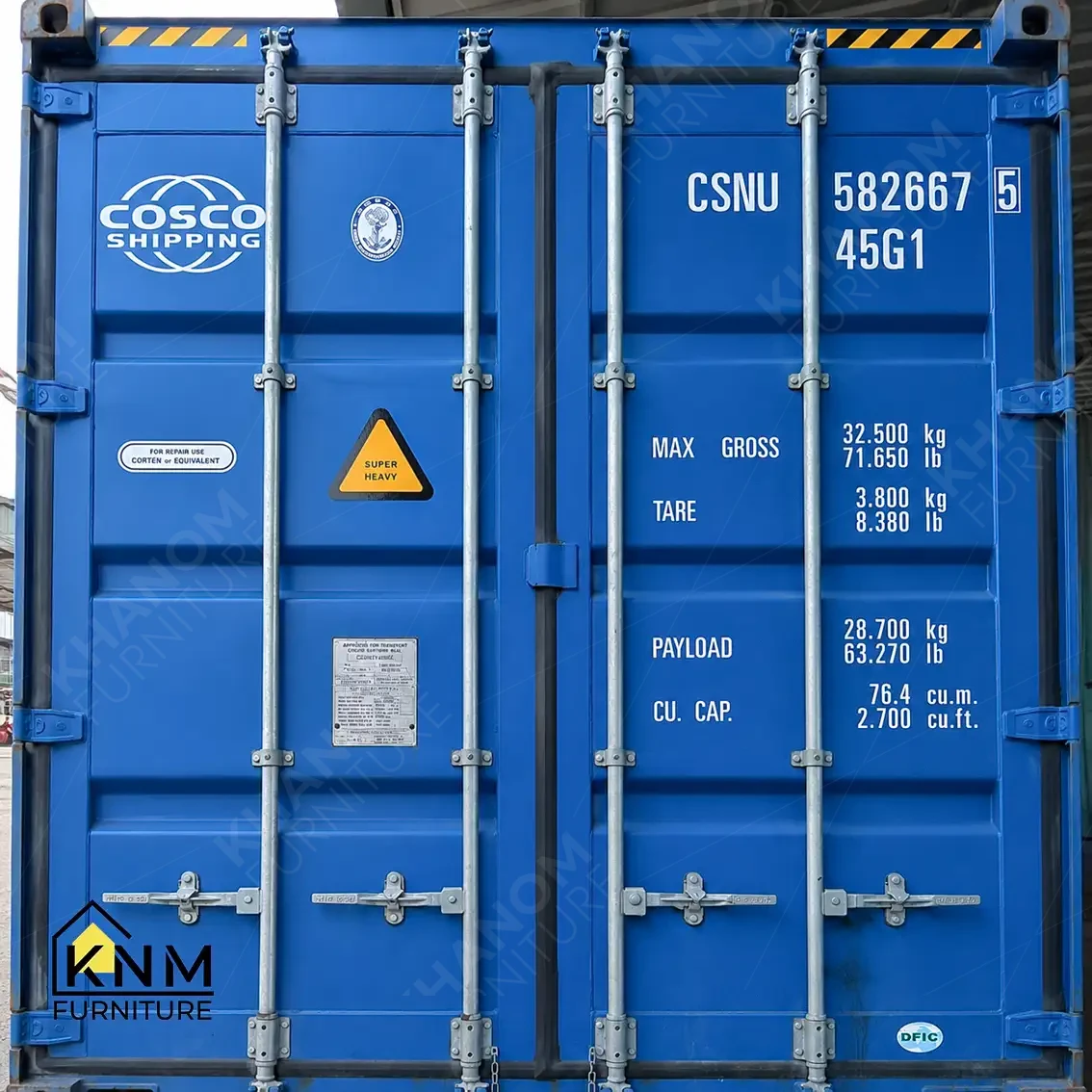
| Container type | 40-foot High-Cube (ISO type 45G1) |
| Internal volume | 76.4 cubic meters / 2,700 cubic feet |
| Max payload capacity | ~28,700–28,800 kilograms |
| Packaging sequence | PE film → Cardboard facing → Wooden crating or batten bracing |
| Seal type | Carrier-issued bolt seal — tamper-evident, one-time-use |
| Cross-referenced against | Bill of Lading + US Customs commercial invoice |
| Loading record | Per-SKU packaging specification + loading photographs before door closure |
1. Why Does Container Loading Strategy Affect FF&E Project Outcomes?
A 40-foot high-cube container provides approximately 76.4 cubic meters of usable space at a net payload capacity of up to 28,800 kilograms. But volumetric and weight capacity alone don’t determine whether hotel furniture arrives at the US destination in the same condition it left the factory floor.
How pieces are packaged, sequenced, and secured inside the container determines whether finish surfaces, joinery connections, and hardware components survive multi-week ocean transit and port handling operations.
For hospitality FF&E projects at scale, the risk compounds with repetition. A single inconsistent packaging decision doesn’t create one damaged piece — it creates a category of damage that repeats across every unit loaded under the same conditions. In a project where the same SKU loads across multiple containers, that category of damage multiplies before the first container is opened.
Packaging and loading discipline is not a logistics function separate from production. It is the final quality gate before custody transfers to the ocean carrier.
2. What Packaging System Does KNM Use for Hospitality Furniture Shipping?
KNM’s container packaging system separates surface protection from structural containment into distinct layers. Each layer addresses a different failure mode during transit — surface abrasion, localized impact, and structural deformation under stacking loads are three different problems that require three different solutions.
📦 PE film — surface isolation layer: Applied directly to finished surfaces — lacquered wood, veneer panels, upholstered components — before any other packaging material makes contact. PE film prevents finish abrasion from cardboard fiber, moisture migration, and direct contact with adjacent surfaces during transit movement. PE film is a surface isolation layer. It does not absorb impact.
🪵 Cardboard facing — impact distribution layer: Applied over PE film to distribute localized impact forces across a larger surface area during loading, unloading, and handling. Cardboard facing is the layer that takes direct contact with forklifts, pallet edges, and container walls. It is replaceable and expendable by design.
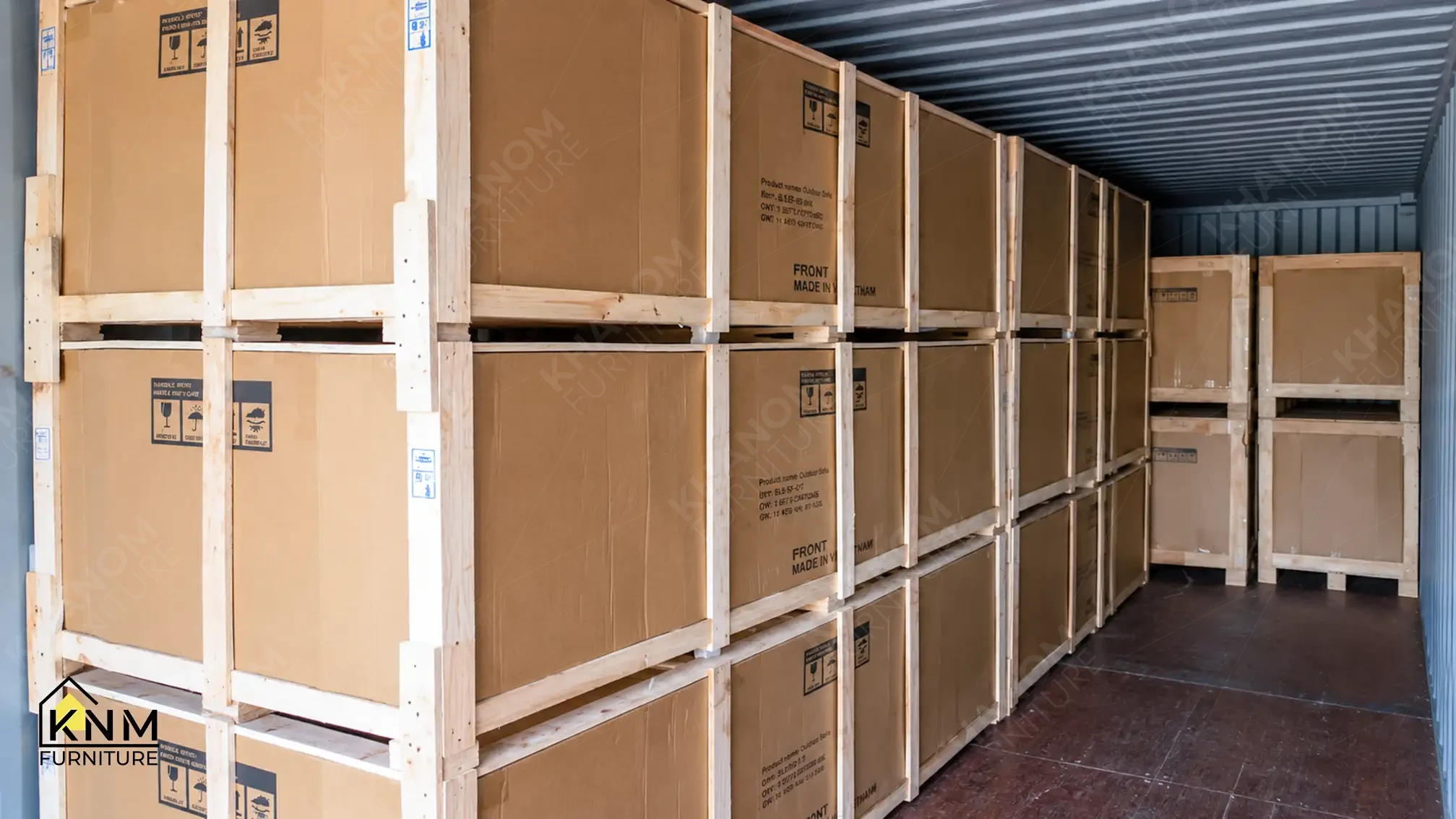
🪵 Wooden crating — structural containment: Used for large casegood pieces — wardrobes, dresser units, media consoles, shelving units — where dimensional integrity and stacking stability require a rigid external structure. Wooden crating bears compression loads from units stacked above and prevents structural deformation under shipping loads. The packaged dimensions per crated unit are factored into container space planning at the project level before production starts — not reconciled against available container volume at the point of loading.
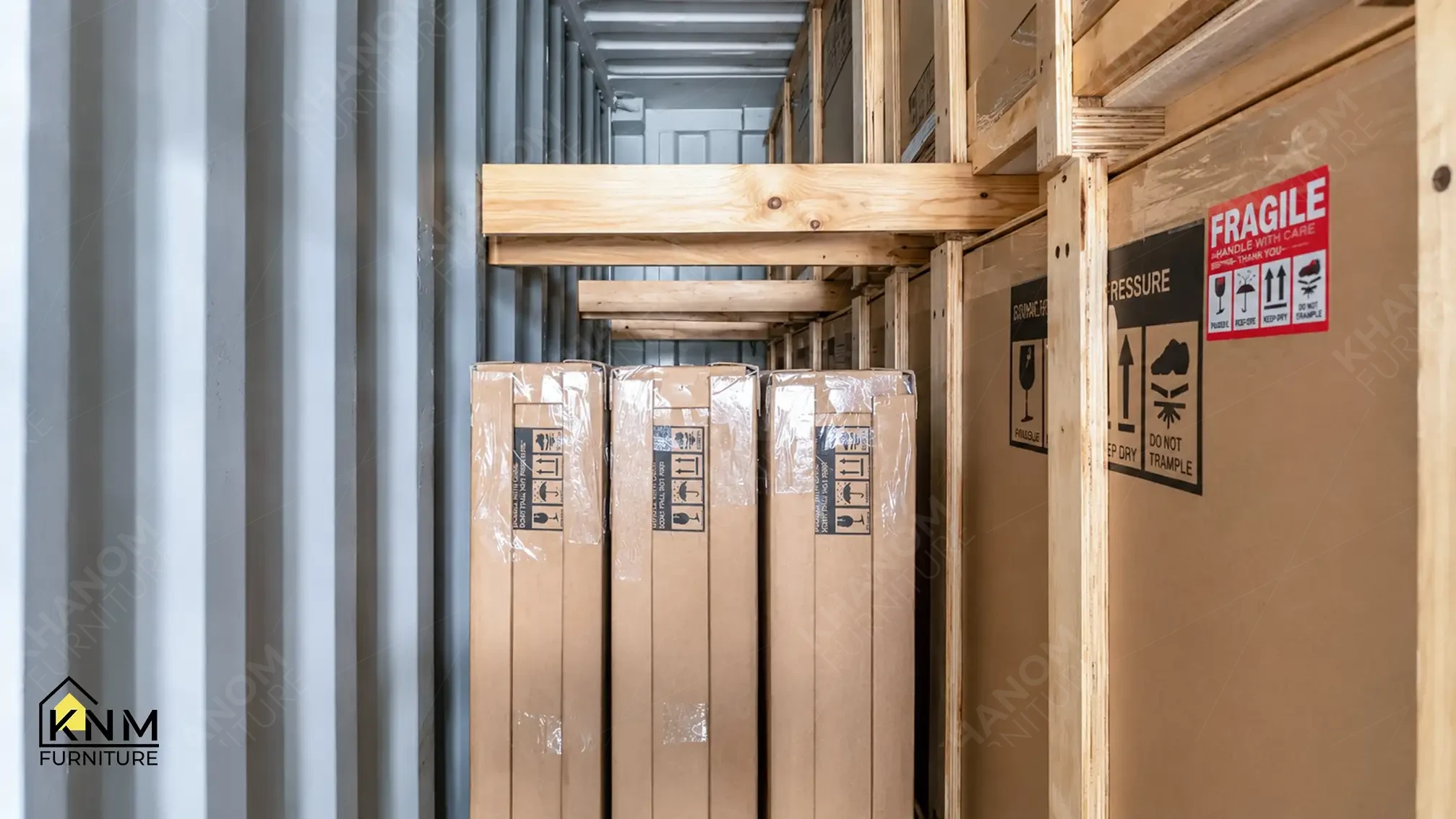
⚙️ Wooden battens and cross-bracing — positional blocking: Applied to secure elongated and vertical pieces — table legs, metal frame components, panel sections — that cannot be crated individually without prohibitive volume cost. Battens are positioned to distribute load contact across the full length of the piece, not at single-point positions that would concentrate stress at joinery connections or finish edges.
3. How Does KNM Sequence the Loading of a 40HQ Container for FF&E Projects?
Loading sequence for hospitality FF&E is determined by three factors in combination: packaged unit weight, packaged unit height, and installation sequence at the destination site.
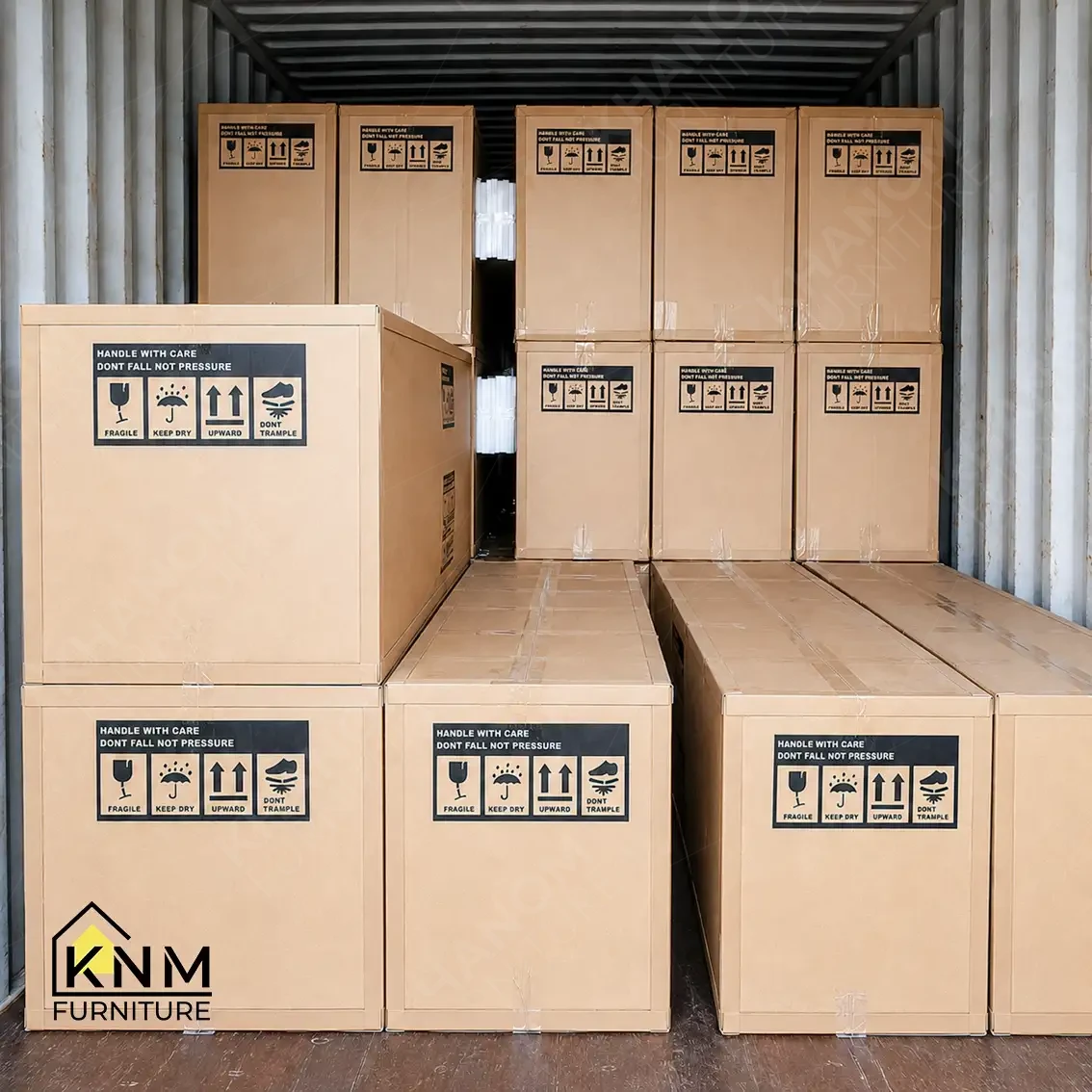
Heavy, structurally stable units — typically wooden-crated casegood pieces — load first, positioned against the container’s front wall to anchor the load configuration. This creates a stable base and ensures that the heaviest freight is positioned for transit load distribution.
Taller or more dimensionally sensitive pieces load next, secured with wooden cross-bracing to the container’s structural side rails to limit lateral movement during ocean transit and port crane handling.
Vertical components — leg assemblies, frame sections, panel stacks — load along the container walls in the remaining space, secured individually with battens. Vertical orientation maximizes space utilization for elongated pieces that cannot lie flat without creating uneven compression loads on pieces below.
Where pallet-loaded carton configurations are used, cargo restraint straps are applied in a cross-pattern to limit forward and lateral movement under vessel motion.
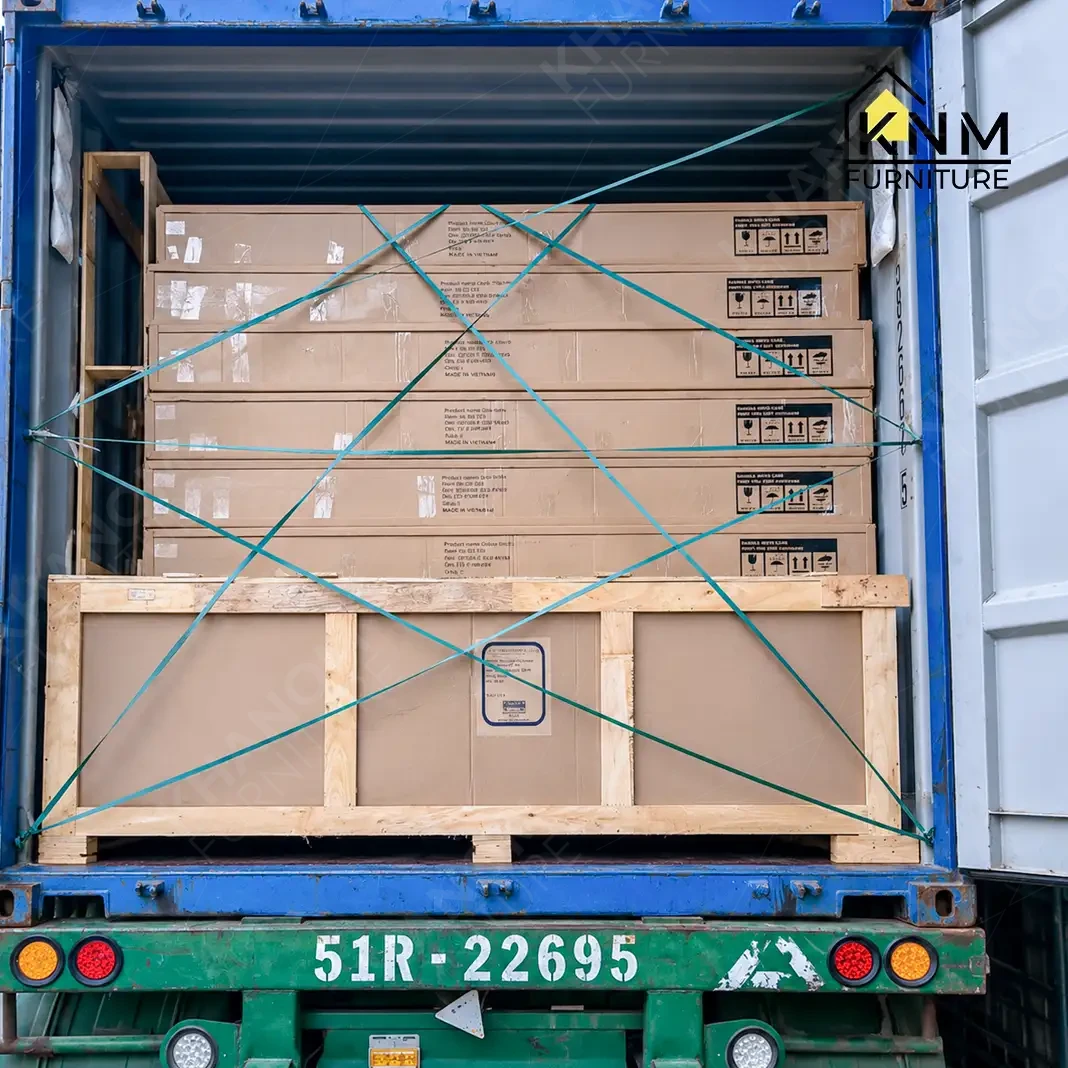
4. What Does the Container Seal Confirm at the Point of Shipment?
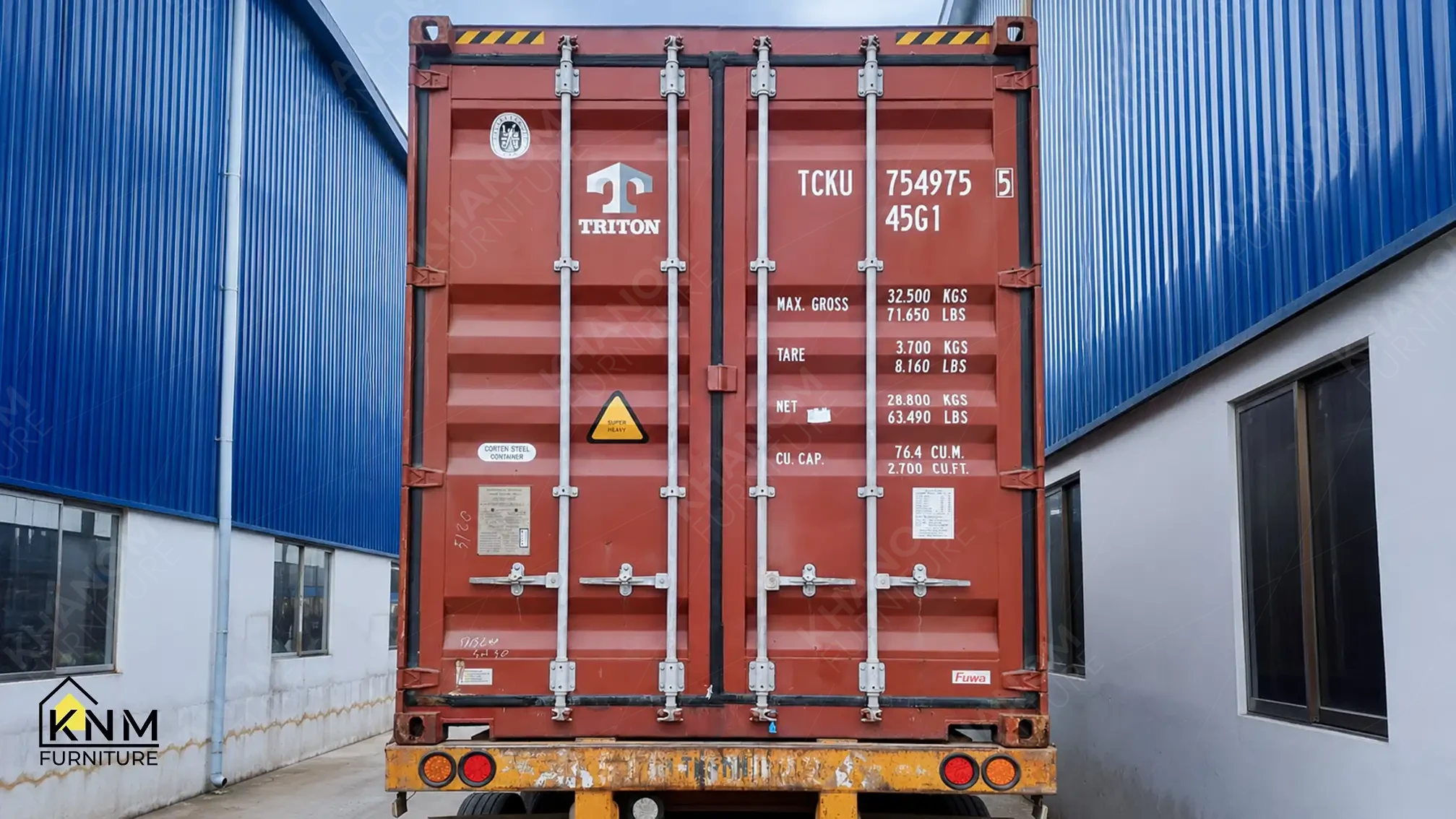
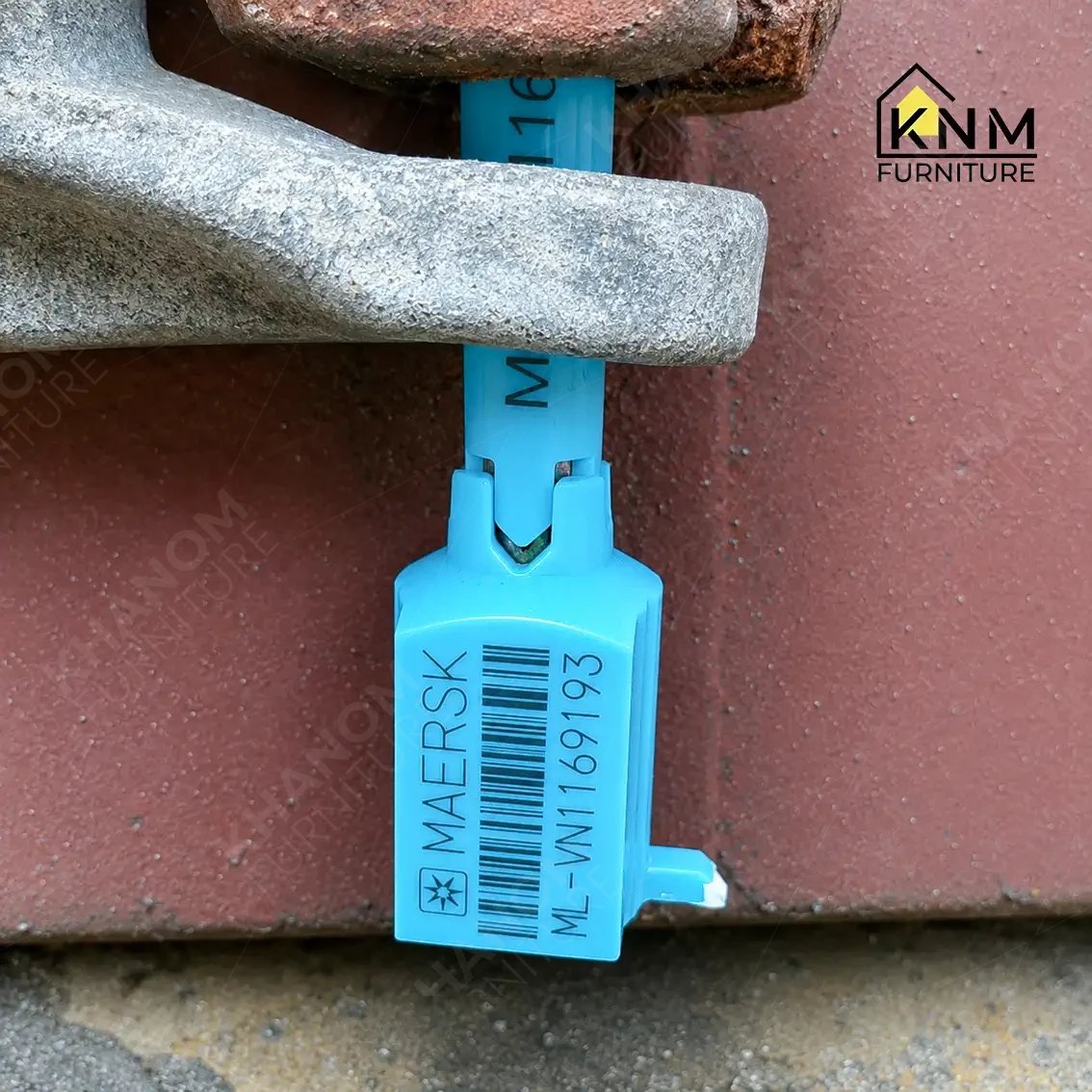
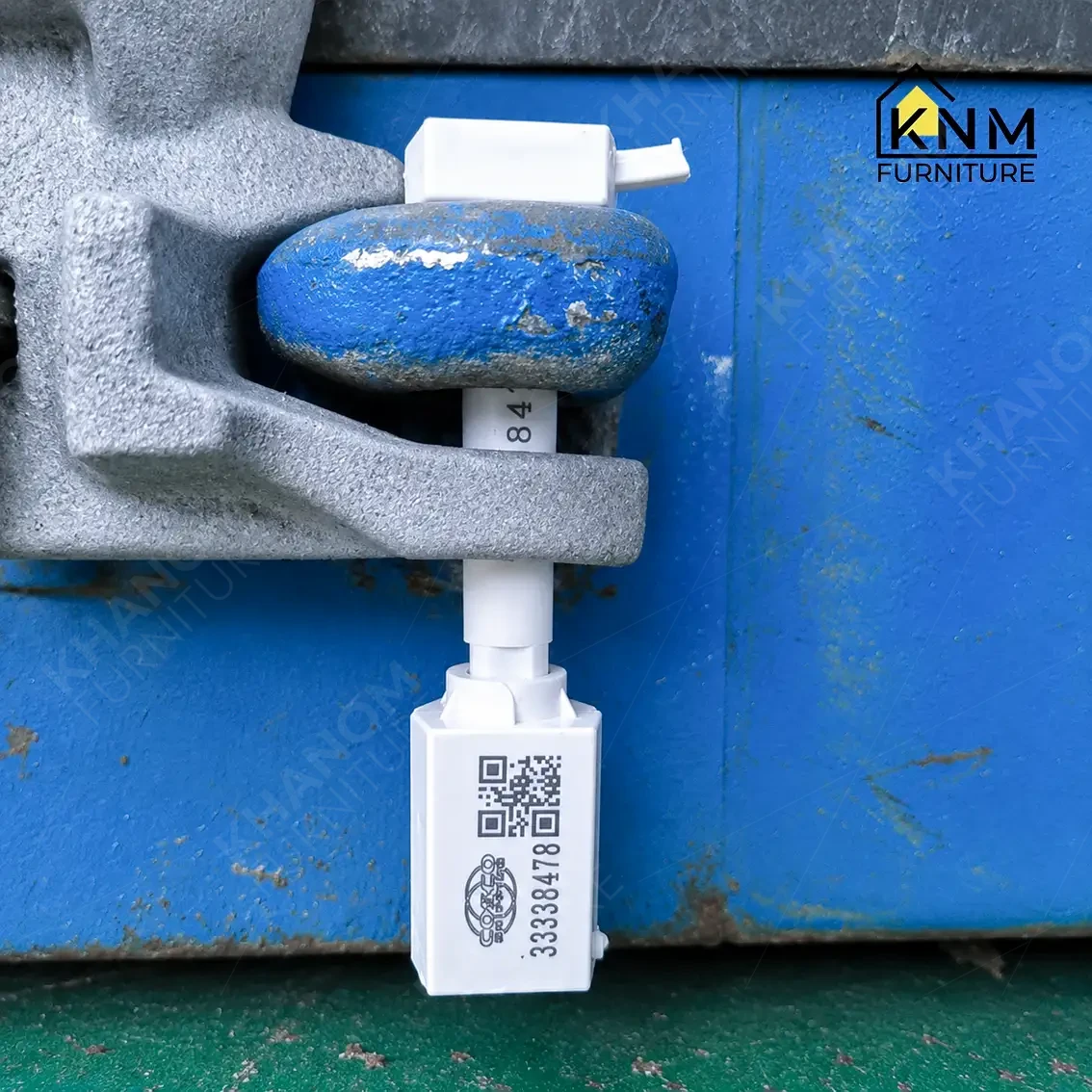
When the container doors close and the shipping carrier’s bolt seal is applied, the seal confirms one specific thing: the cargo condition at the time of loading is locked and documented. It does not guarantee delivery condition — that depends entirely on the packaging and loading discipline applied before the doors closed.
The seal number, container identification number, and loading documentation create a traceable chain of custody from factory to destination port. For US Customs clearance under CBP requirements, the seal number must match the documentation submitted with the Bill of Lading and commercial invoice. A broken or mismatched seal detected at the destination port initiates an inspection protocol that can delay site delivery by 3–7 business days — a delay that most FF&E installation schedules cannot absorb once contractors are mobilized on site.
The seal is a documentation checkpoint. The protection of the cargo is determined by what happened in the hours before it was applied
5. What Should a Procurement Manager Ask About Container Loading Before Production Starts?
The question is not “how do you ship?” The question is: “How do you document packaging decisions for each SKU in this project, and what is your process if transit damage is identified at the destination?”
A clear, specific answer to that question reveals whether the manufacturer treats packaging as a documented process with defined accountability, or as a variable decision made at the point of loading by whoever is on the floor that day.
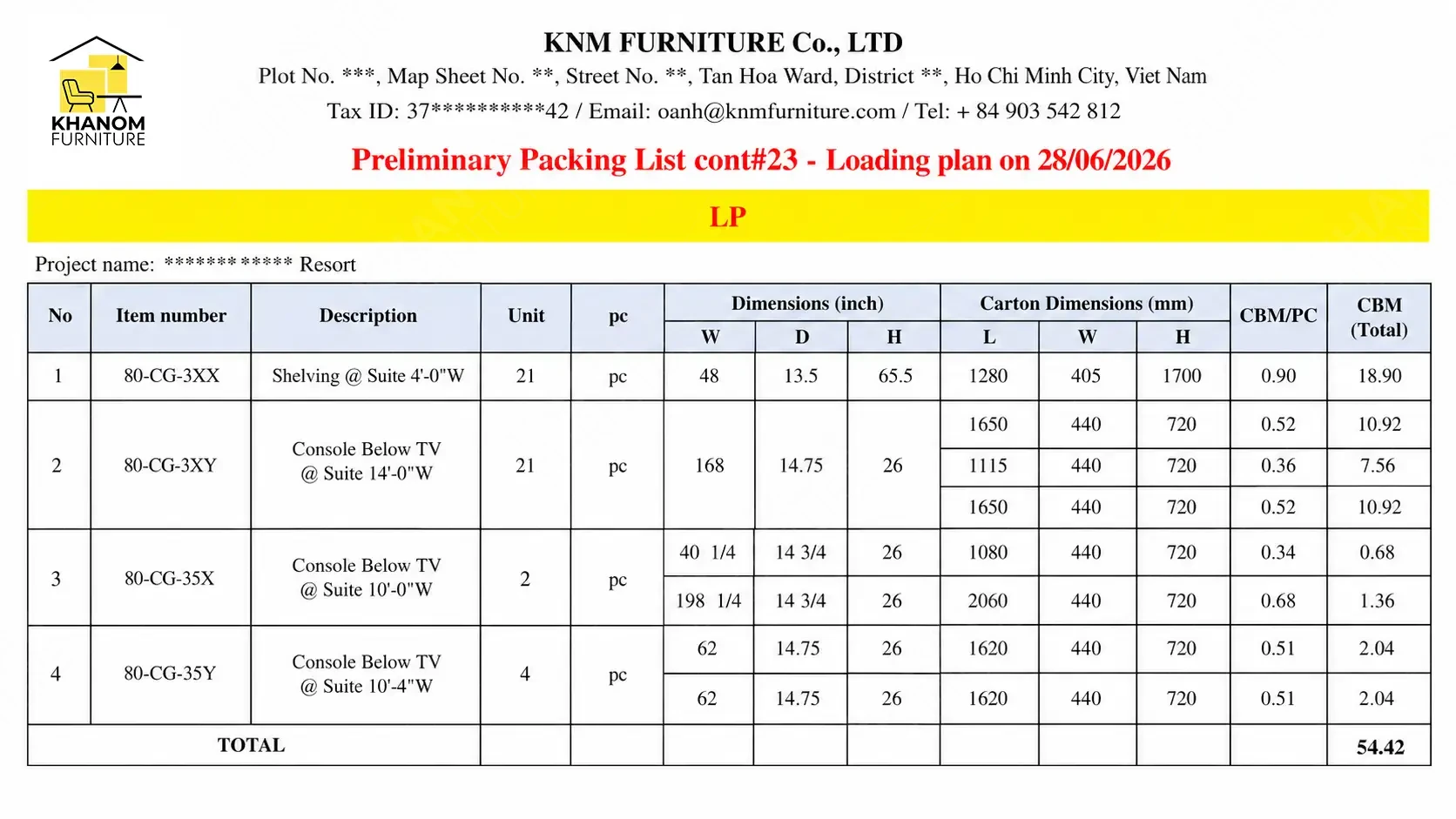
For a multi-container FF&E project — where shipments may load across different dates with different loading crews — undocumented packaging decisions create inconsistent arrival conditions across containers. The first container may arrive cleanly. The third may not. With no packaging documentation, the source of the inconsistency cannot be isolated, and the next shipment carries the same unresolved risk.
6. From Production Lock to Destination Port
From the moment production lock is confirmed to the moment the container doors are sealed, the decisions that protect FF&E in transit follow the same logic as revision control in manufacturing: document each decision, assign responsibility, and make the record traceable before the next stage begins.
Furniture that arrives at the US installation site ready to install is not the result of careful handling somewhere in the logistics chain. It is the result of packaging discipline applied at the factory, before custody transfers to anyone else.
Working on a US hospitality FF&E project? Send us your SKU list — we’ll outline the packaging approach specific to your pieces before production starts.
––––––––––––––––––––––––
FAQ — Container Loading for Hospitality FF&E
Q: How much usable space is in a 40-foot high-cube container for furniture export?
A: A 40HQ container provides approximately 76.4 cubic meters of usable internal volume at a net payload capacity of around 28,700–28,800 kilograms. How many pieces that represents depends entirely on the packaged dimensions and weight of each individual SKU. Wooden crating adds to the base dimensions of each packaged unit and is factored into container space planning before production starts — not calculated at the point of loading.
Q: What packaging layers are used for hotel furniture during ocean freight from Vietnam?
A: A layered system addressing three distinct failure modes: PE film for surface isolation against finish abrasion, cardboard facing for localized impact distribution during handling, and wooden crating or wooden battens for structural containment and positional blocking under transit loads. Each layer is applied in sequence and addresses a problem the layer below it cannot.
Q: What is a container bolt seal and why does it matter for FF&E logistics?
A: A bolt seal is a one-time-use tamper-evident lock applied by the shipping carrier at the point of container loading. The seal number is recorded on the Bill of Lading and must match US Customs documentation at the destination port. A seal breach or mismatch triggers a CBP inspection protocol that typically adds 3–7 business days to the delivery timeline — a delay that most FF&E installation schedules cannot absorb once contractors are mobilized on site.
Q: How long does ocean freight from Vietnam to the US take for hospitality furniture projects?
A: Industry freight estimates for Vietnam–US lanes typically place ocean transit at 18–25 days to West Coast ports, with East Coast adding approximately 7–10 days. Freight forwarders handling this lane commonly estimate total lead time — including booking, customs clearance, and inland transport — at 35–50 days from container loading date. This full window should be confirmed with your freight forwarder and factored into the production lock date, not treated as buffer time after production completes.
Q: How do FF&E manufacturers document container loading for damage claims?
A: Documented loading records include the packaging specification per SKU, loading sequence photographs taken before the doors close, the container identification number, and the carrier seal number cross-referenced against the Bill of Lading. If a damage claim arises at the destination, this documentation isolates whether damage originated in the packaging layer, the loading sequence, or post-loading handling — which determines where liability sits and how the claim is processed.
––––––––––––––––––––––––
KNM FURNITURE
Manufacturing with Material Integrity.
📩 RFQ: oanh@knmfurniture.com
📞 Hotline: +84 903 542 812
🌐 Website: knmfurniture.vn
📌 Pinterest: pinterest.com/khanomfurniture
ⓕ Facebook: facebook.com


